Energy Markets Rebound As Refinery Disruptions And Storm Risks Emerge

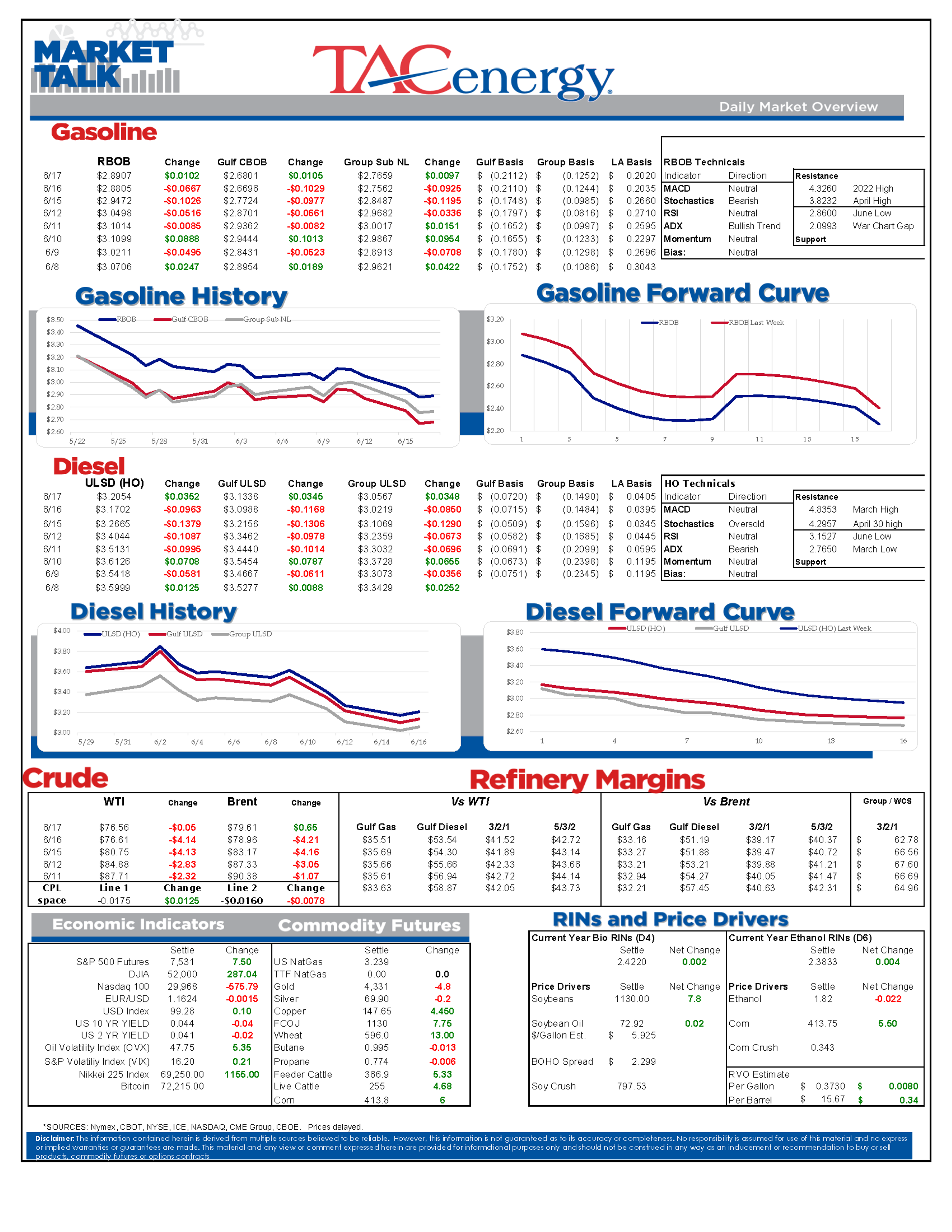
Energy markets are seeing a modest bounce Wednesday after 4 days of heavy selling pushed prices to a 3 month low. Multiple refinery threats seem to be contributing to the recovery, although the moves so far pale in comparison to what we saw from the peace announcement that still needs plenty of work to be implemented.
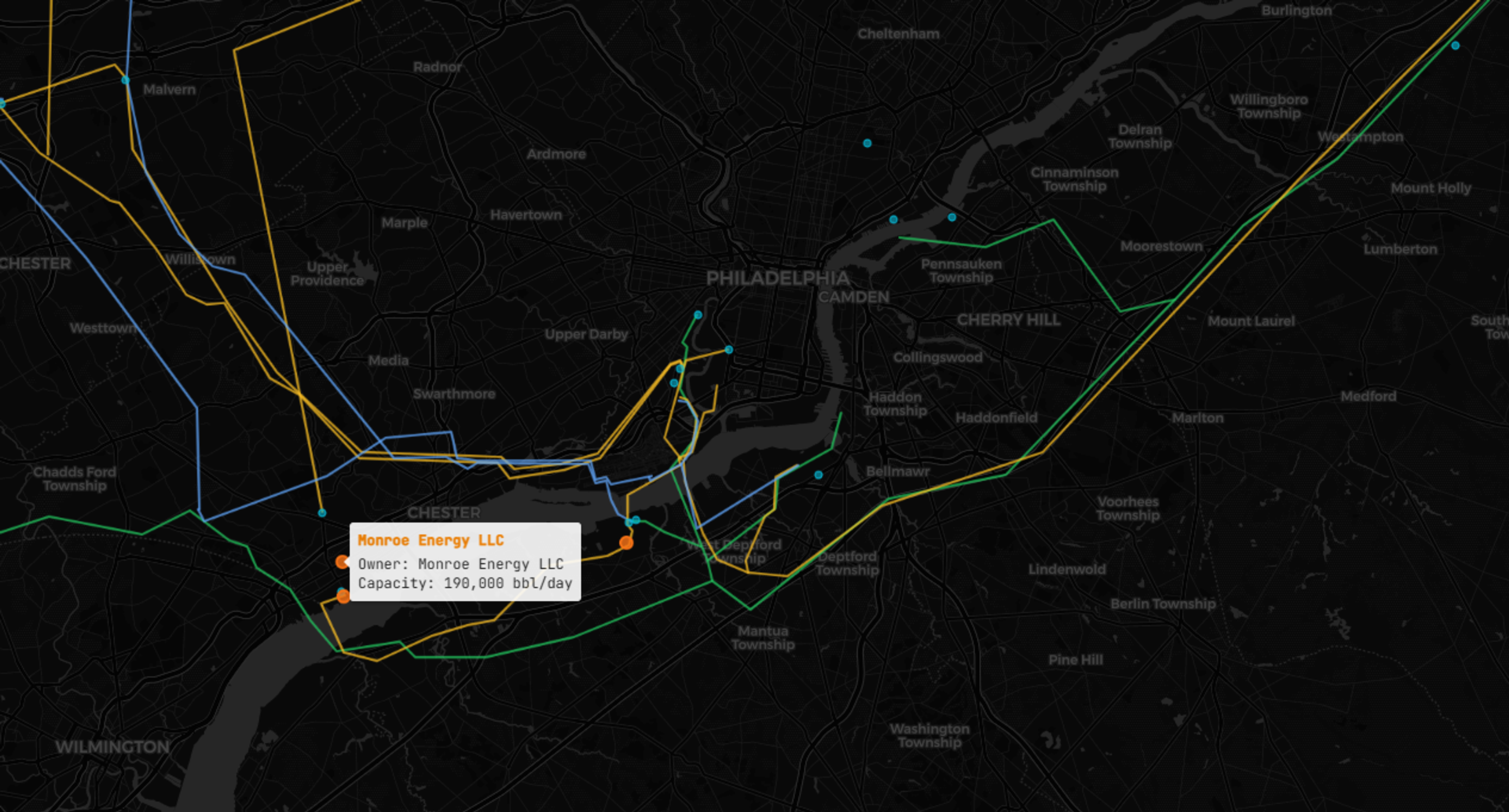
Energy News Today reported Tuesday afternoon that the 190mb/day Monroe (Delta Airlines Subsidiary) refinery in the Philadelphia area was forced to shut down following a hydrogen leak. So far other news outlets aren’t picking up this story, there’s not an apparent filing with the state, and the muted reaction in futures suggests traders may be shrugging off the news for now.
The IEA’s Monthly Oil Market report for June made another large cut in global oil demand, forecasting a year on year drop of 1.1 million barrels/day as the fallout from the war hits consumers around the world. While the agency does predict a rebound in global demand next year, the report still suggests there will be a significant overhang of supply assuming shipping traffic resumes at a more normal pace.
The API estimated another large draw down in oil inventories last week of 8.3 million barrels in commercial stocks, on top of an 8.9 million barrel draw down in the SPR. Gasoline inventories were estimated to increase by 2.5 million barrels/day while distillates were estimated to have a small draw of 461,000 barrels. The EIA’s weekly update is due out at its normal time today, and despite the Juneteenth holiday this Friday, the agency is set to report on a normal schedule next week as well.
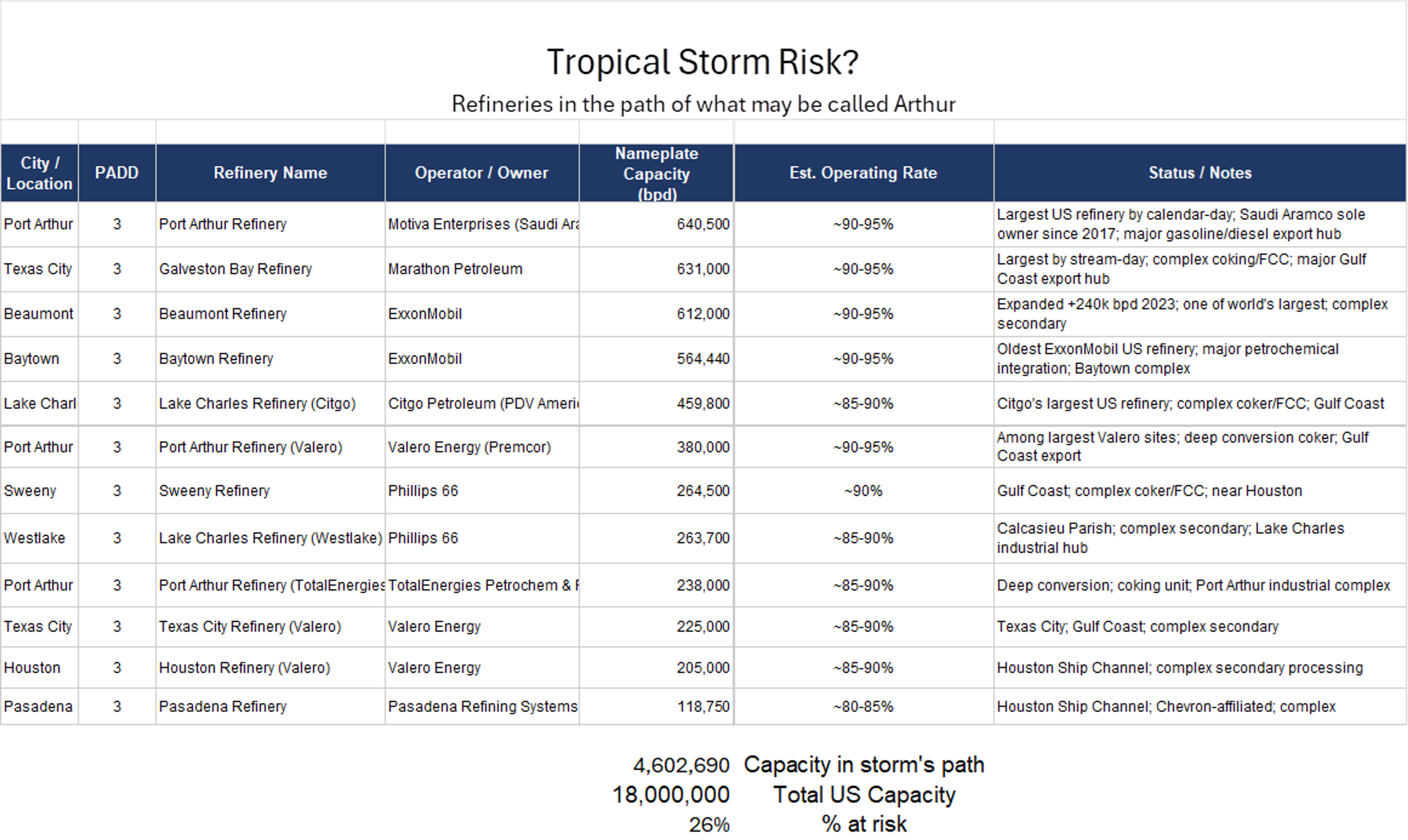
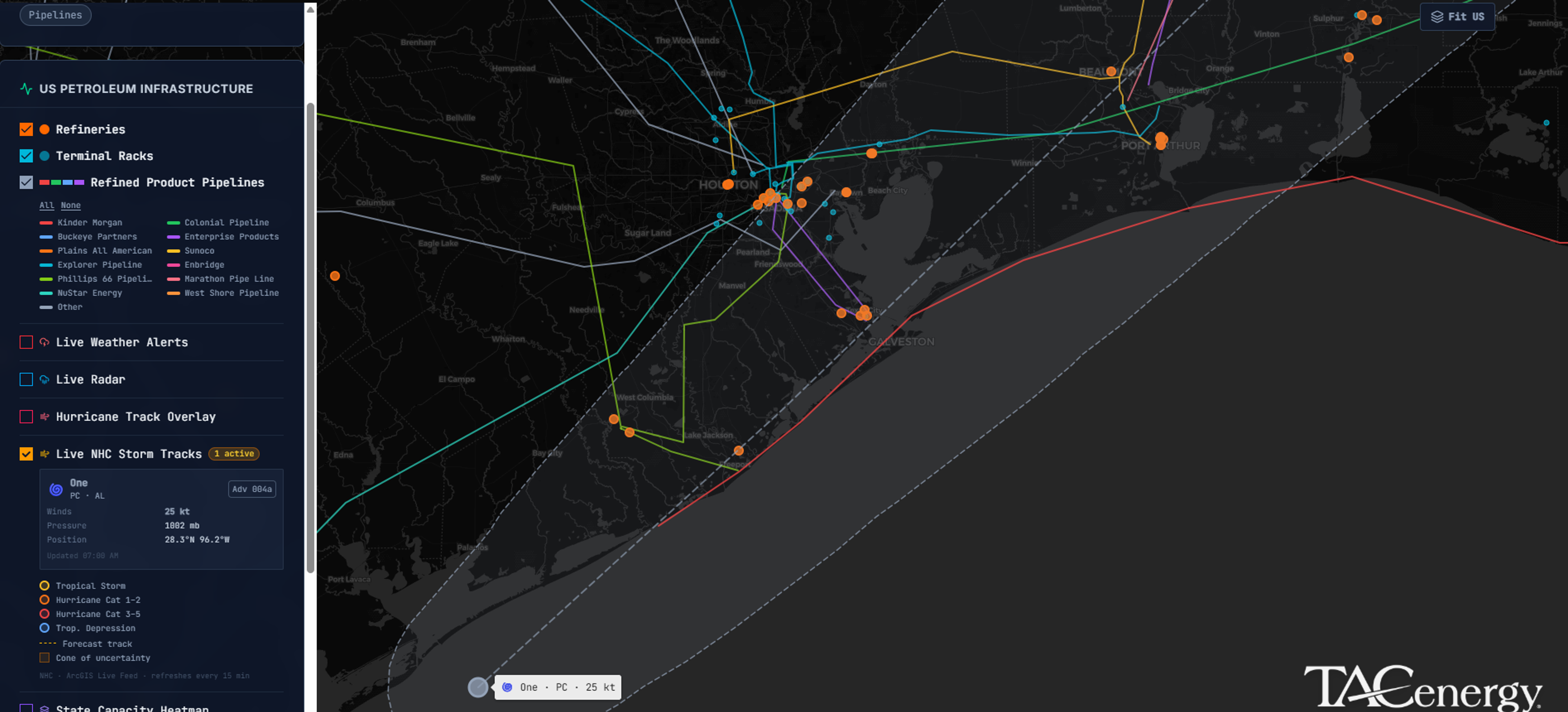
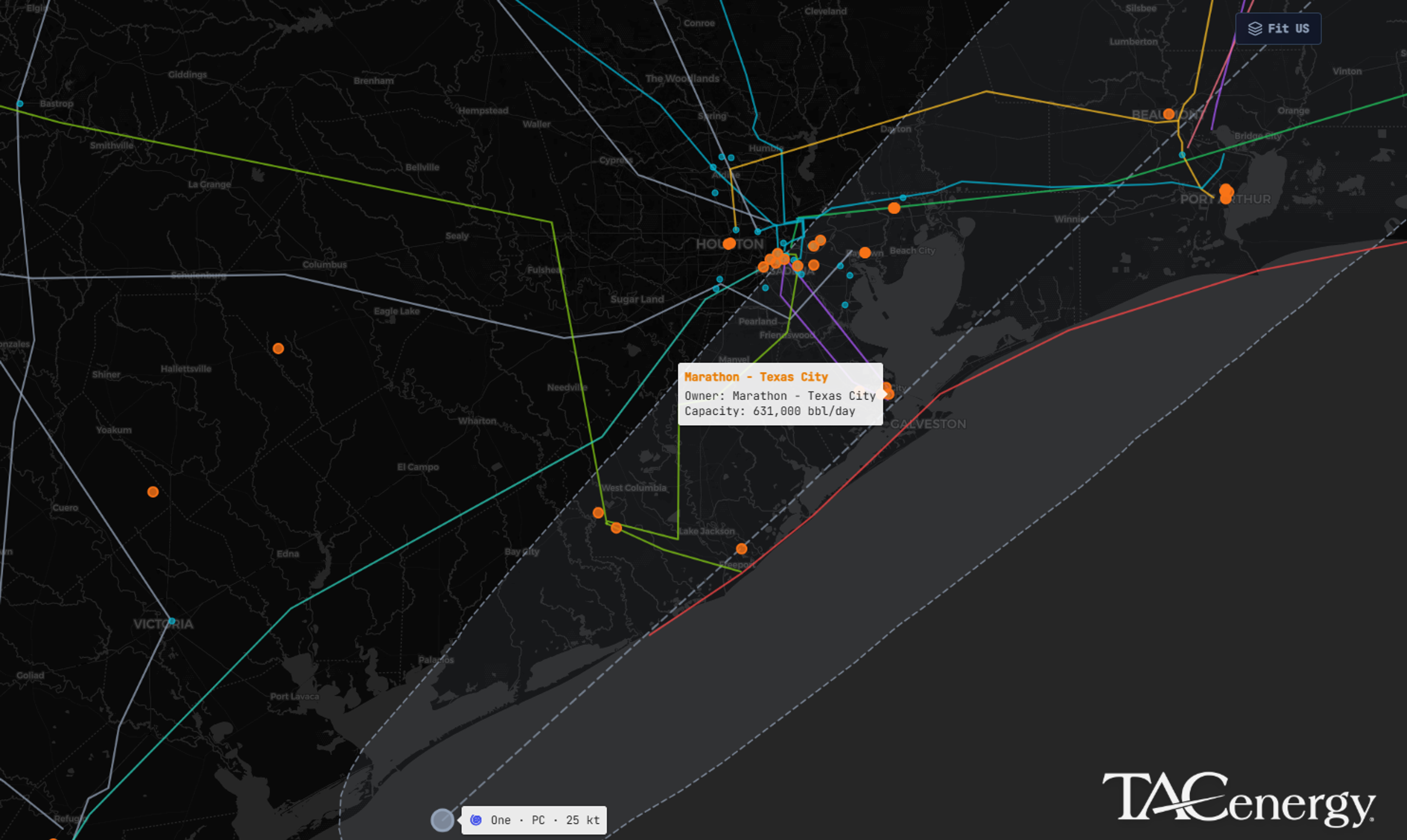
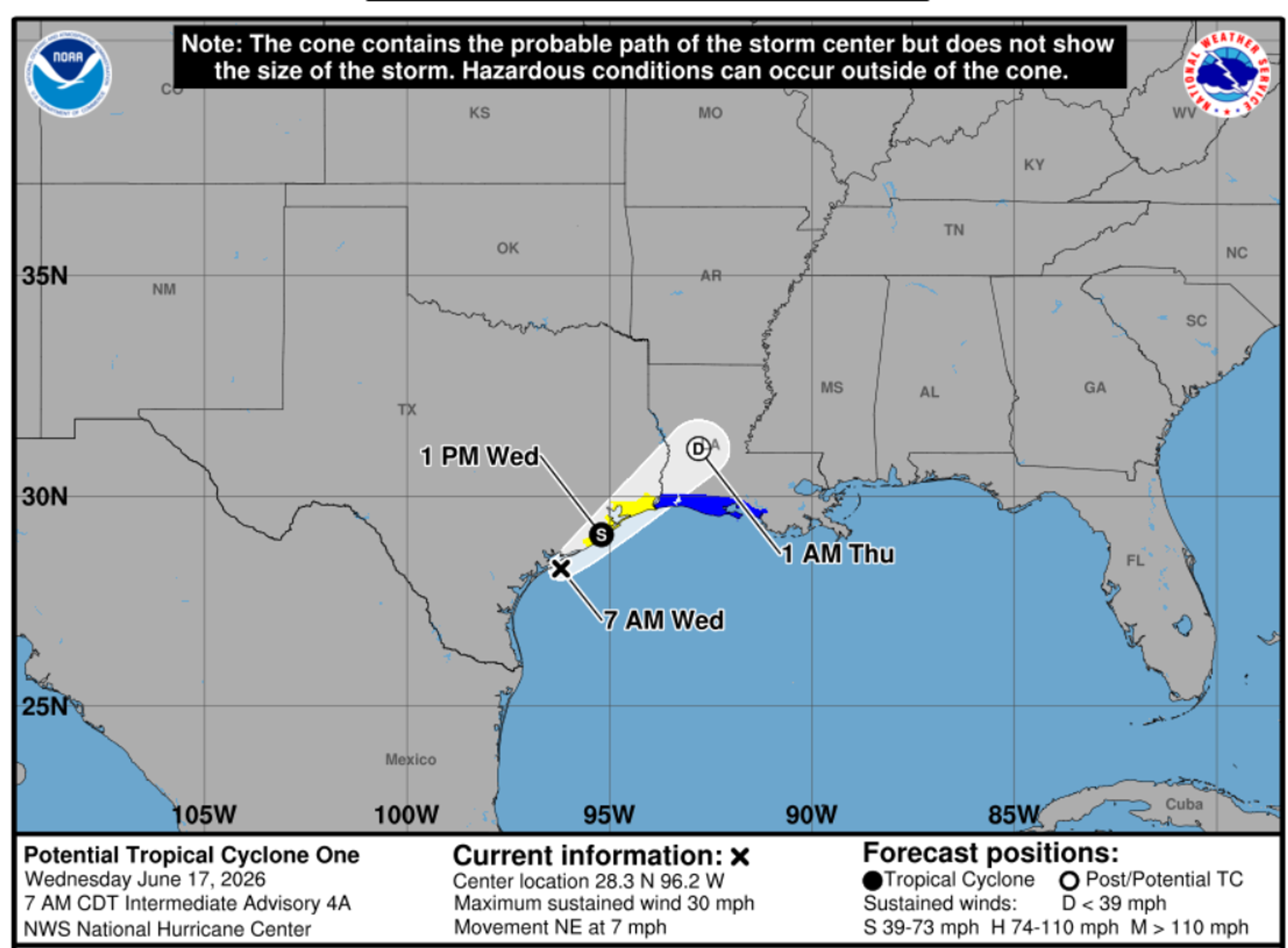
Tropical Storm Arthur could be named this afternoon as the remnants of a Pacific Storm named Cristina last week moved over the Gulf and is reforming as it approaches the Texas coast. Whether or not this storm gets a name, the biggest threat is expected to be from heavy rains ranging from 5-20” in parts of the region, which are already causing flooding and power loss as it sweeps across the heart of the U.S. refining and petrochemical industry today. The table below shows that more than a quarter of U.S. refining capacity is at risk of upset from this storm, although the lack of strength in the system, and the fact that it will move through by tomorrow, means this shouldn’t cause major damage like a major hurricane could. It’s also worth highlighting that the heavy rains will delay shipping all along the Gulf Coast, and since the U.S. is exporting record amounts of crude and refined products, this could actually cause domestic supplies to increase next week as long as the refineries are able to keep running.
Marathon’s 630mb/day Galveston Bay (Texas City) refinery reported a sudden unexpected trip which caused an FCC unit to shut down, although the storm wasn’t explicitly blamed for the event with a cause not listed in the filing. It’s worth noting that the current forecast model has the tropical storm moving directly over that refinery later today, before moving directly over the Beaumont/Pt Arthur hub, meaning 3 of the 5 largest refineries in the country are all going to see some sort of direct impact of this storm.
Meanwhile, the Enterprise Products chemical plant in Pasadena also reported an upset caused by power loss due to the weather event.
See the map below with the storm path overlaying the refineries and terminals in the region, which is our replacement for the EIA’s disruption map that was taken offline during the government shutdown last fall.
The Midwest is also dealing with thunderstorm and tornado threats today, with the Chicago area refineries in particular needing to be watched for impacts.
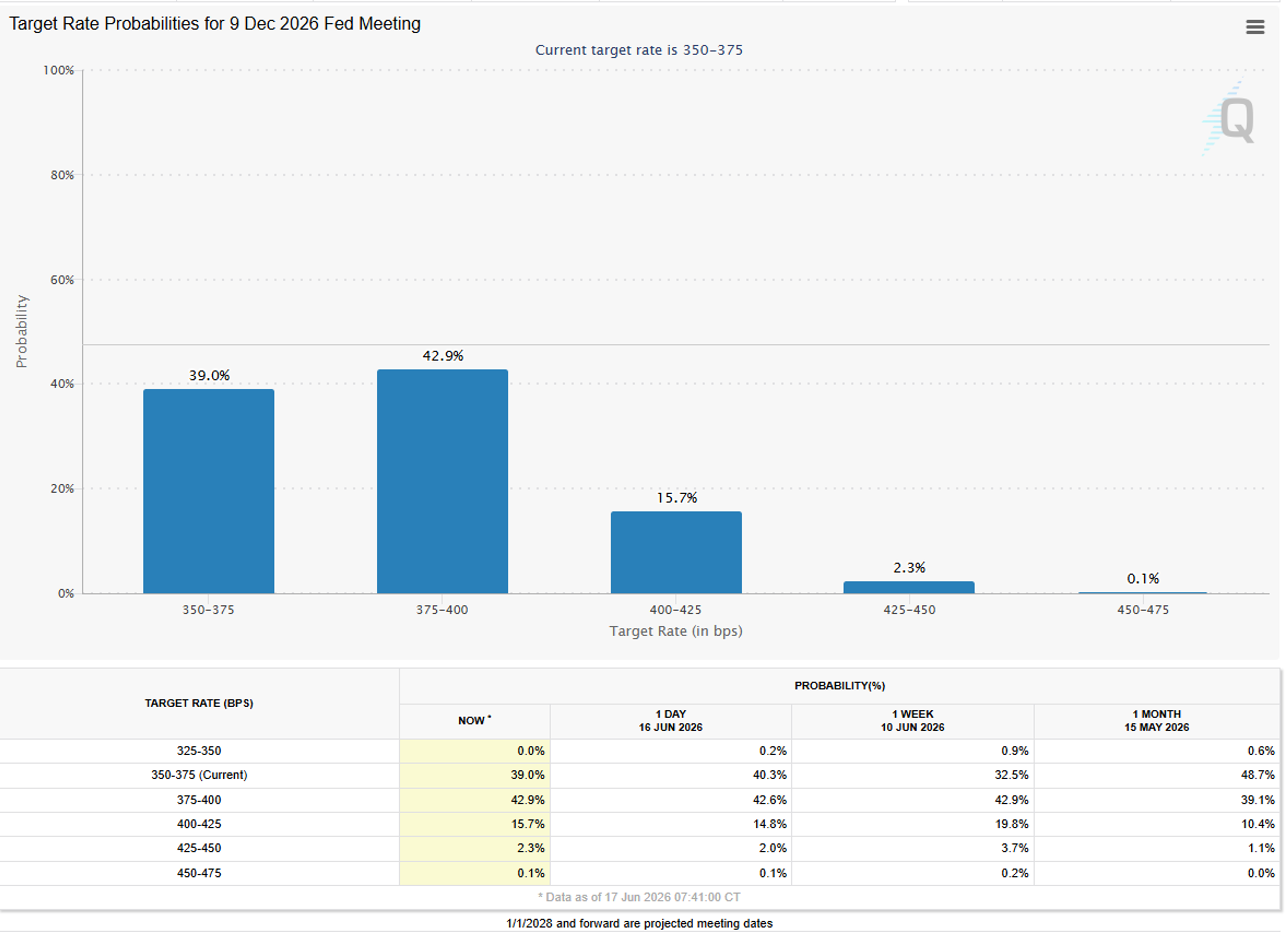
In addition to watching the inventory reports and the weather channel (and the World Cup) many eyes will be on the new Fed Chair’s first rate decision due out at 1pm. The CME’s Fed Watch tool shows a big reduction in bets on a 2026 rate hike this week following the peace announcement, as the argument for “transitory” inflation as energy prices cool will be made.
Latest Posts
Refinery Disruptions And Strait Closures Fuel Diesel Rally
Oil And Diesel Rally On Escalating Infrastructure Attacks
Energy Markets Pause After Historic Rally As Supply Risks Persist
$5 Diesel Now Feels Inevitable: ULSD Blasts Past March Highs, No Resistance in Sight
Week 36 - US DOE Inventory Recap
Brent Tops $100 As US Iran Tanker Strikes Escalate, While Gasoline Backwardation Is Deflating
Social Media
News & Views
View All
Refinery Disruptions And Strait Closures Fuel Diesel Rally
Oil And Diesel Rally On Escalating Infrastructure Attacks