Middle East Tensions Drive Volatility As Refiners Ride Record Margins

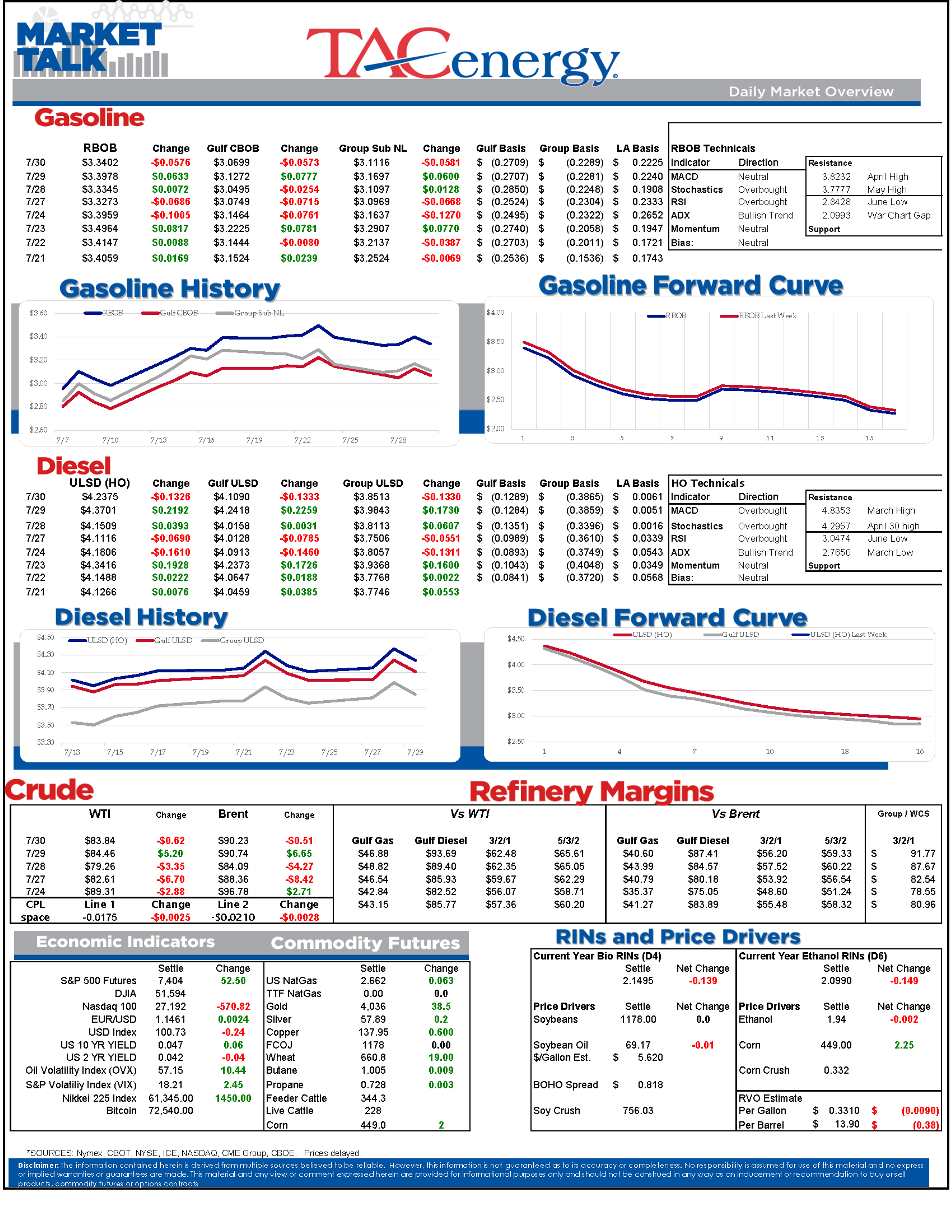
Refined products are giving back a large portion of their big Wednesday gains in early trading, despite the spread of violence in the Middle East and the promise of more attacks to come. Oil prices are also trading lower, but have only taken back roughly 20% of the gains they made yesterday.
As expected, the U.S. completed another wave of strikes directly against Iran Wednesday night, in retaliation for the “Surprise” missile launch from Iran a day earlier. Iran is now promising a response today.
Meanwhile two ships were struck by a drone in an Egyptian port on the Mediterranean. While the ships were able to sail away, and no injuries were reported, the attack adds yet another country into the spreading war. While Egypt isn’t a major energy exporter, given the Suez canal and SUMED ’s newfound importance as a supplement to vessels trying to avoid the Houthi’s, these attacks add yet another wrinkle to the complicated logistical puzzle many shippers are facing.
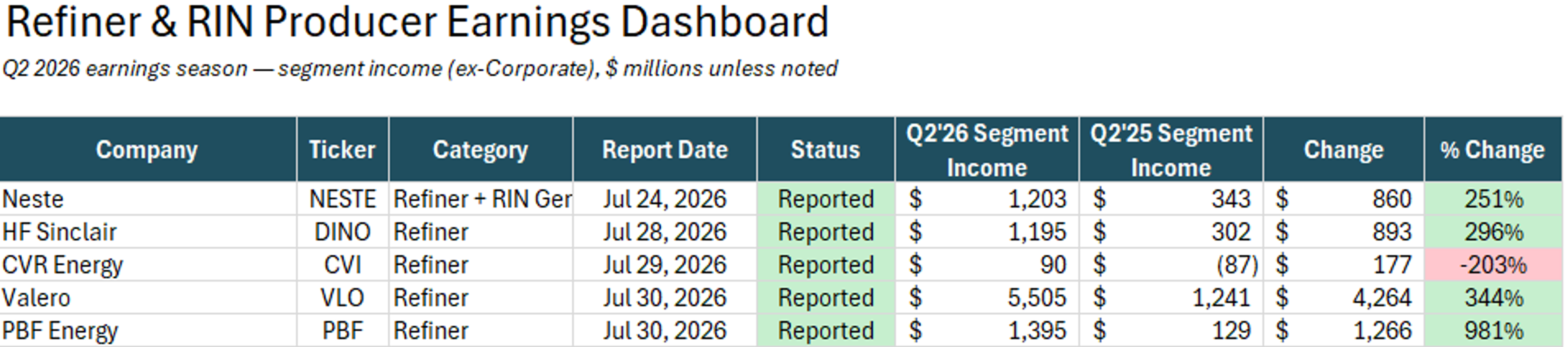
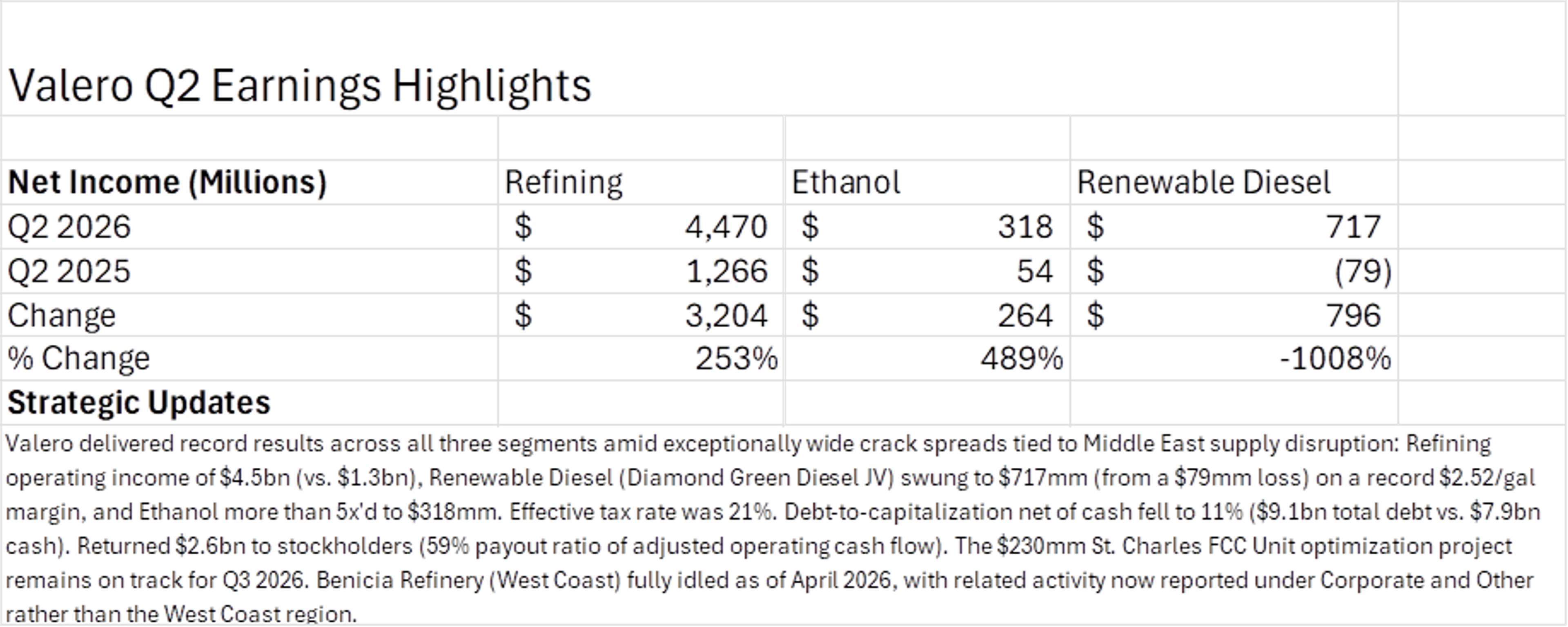
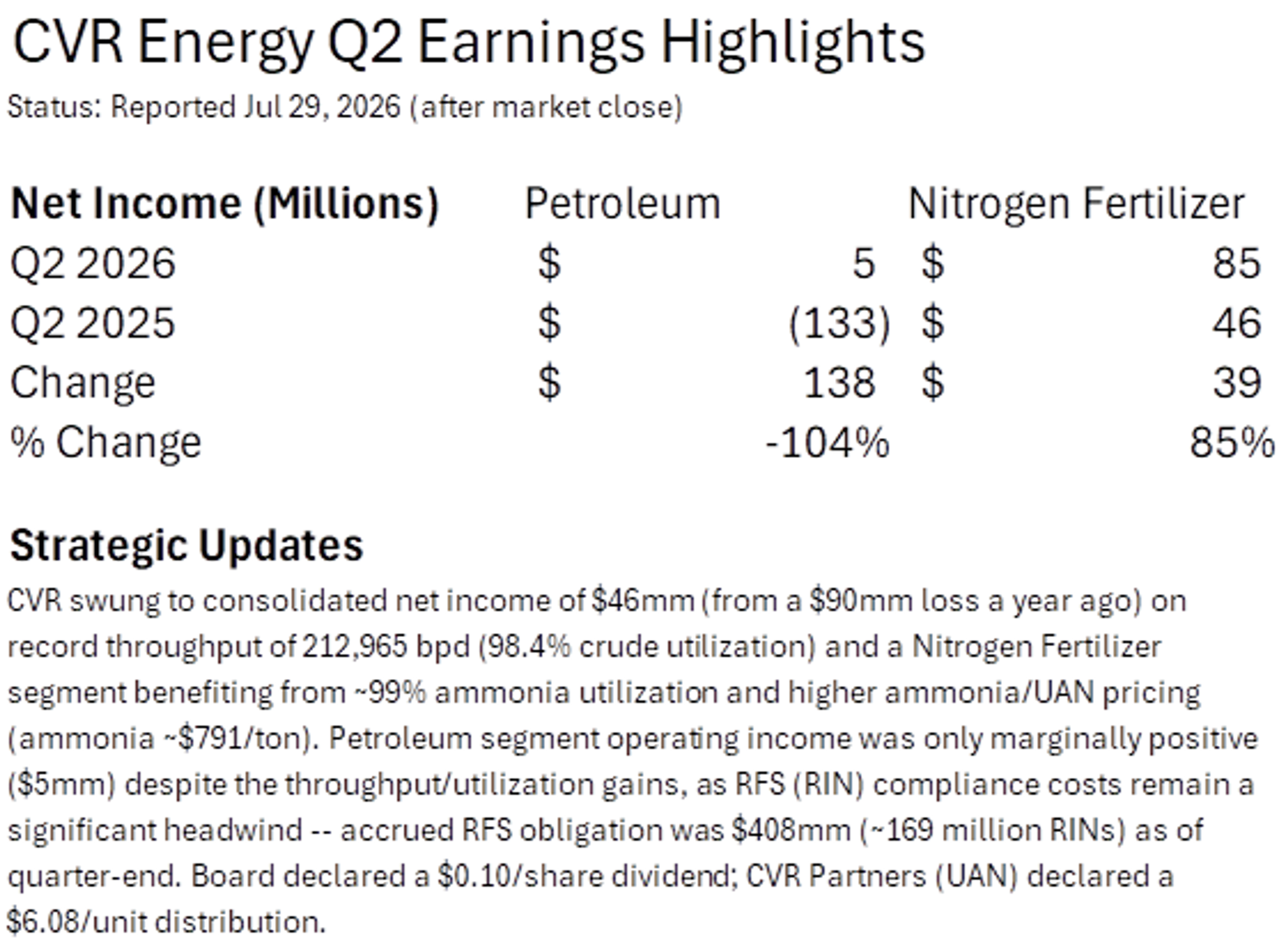
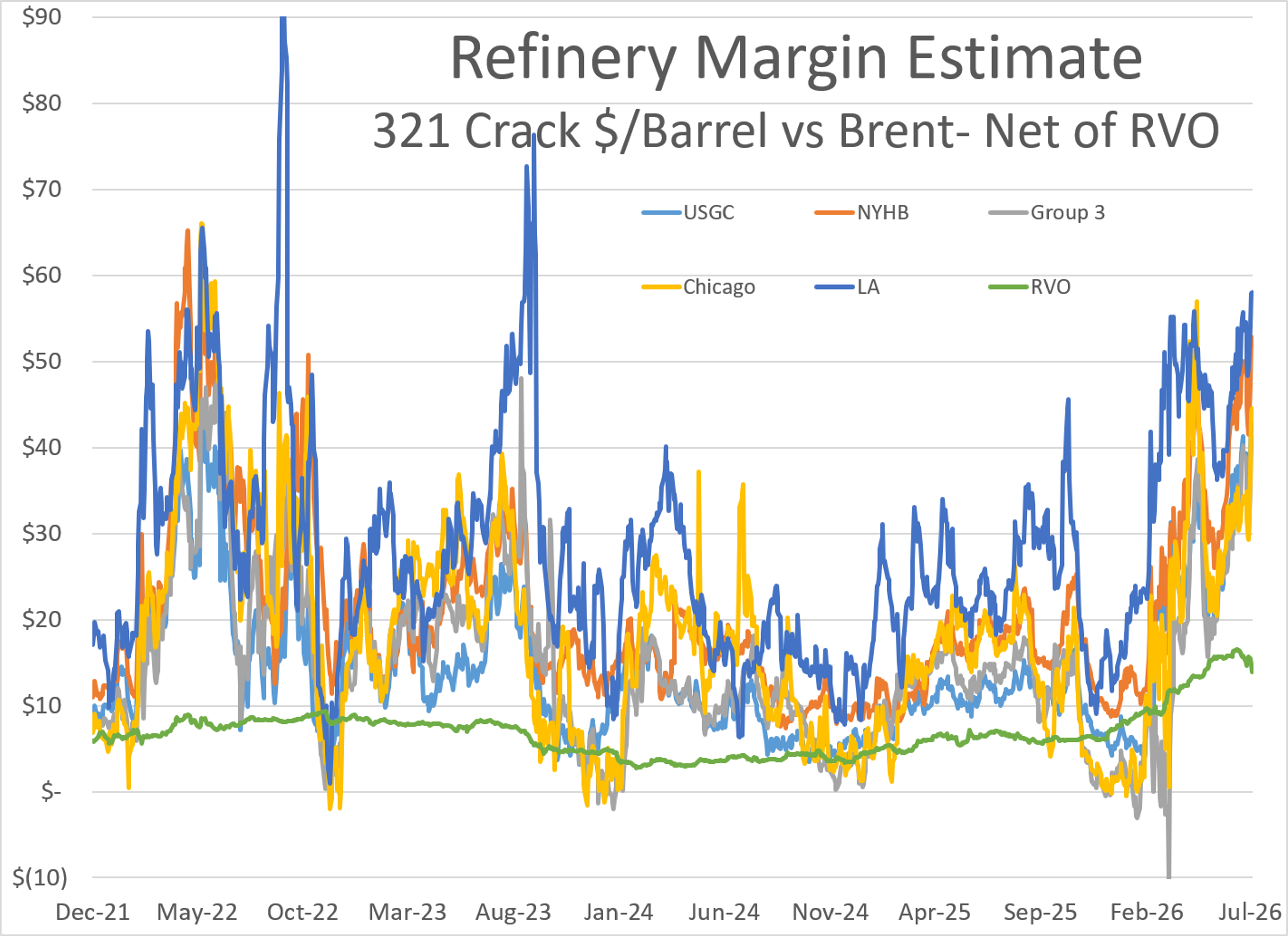
Refiner earning reports keep rolling in for the 2nd quarter with Valero, PBF and CVR all reporting huge year on year increases thanks to lofty crack spreads. Valero also reported strong improvements in both its Ethanol and Renewable Diesel segments as record-high RIN values and elevated fuel prices have helped most producers that struggled to survive just a year ago.
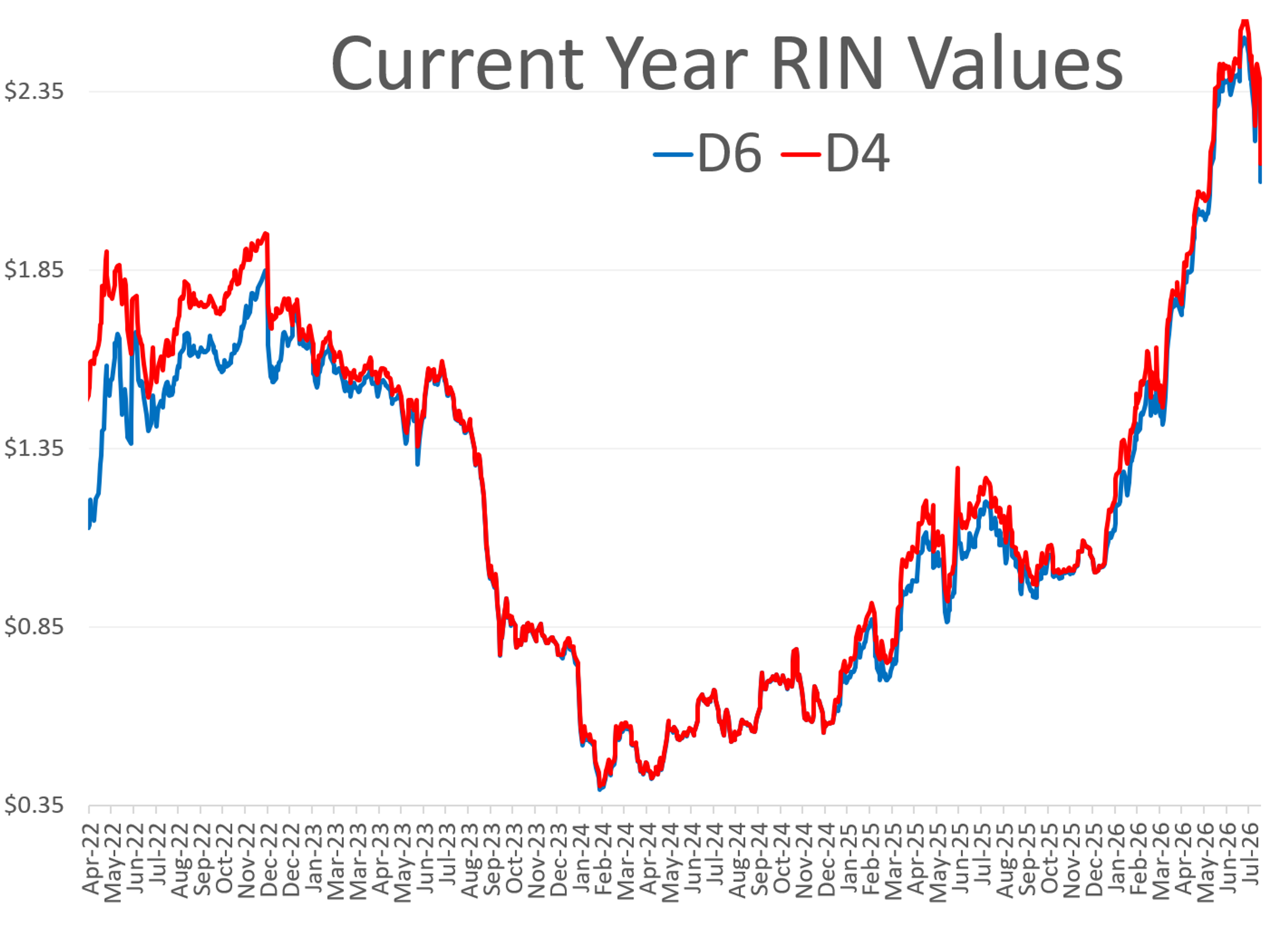
RIN values dropped to a 2 month low Wednesday, with downward momentum building after the EPA reported domestic RD production reached a record high 2 weeks ago. There are also reports that a new Senate proposal would strike the change in classification of small refiners, and another Reuters rumor that the White House is considering delaying the compliance deadline for the RFS.
The new Fed chair announced they were holding interest rates steady Wednesday, although 3 voters dissented and wanted to raise rates to try and curb stubbornly high inflation that’s only getting worse with the latest runup in fuel prices. The odds the FOMC will raise rates at their next meeting in September increased by 6% according to the CME’s FedWatch tool, bringing the bets of an increase to 63%.
Human analysis of the DOE’s weekly status report below. See charts and AI analysis of the report attached.
Commercial crude stocks drew on lower imports and higher exports, but the big movers were increased refinery runs and a large downswing in the adjustment factor. Crude inventories slipped to a new low for the year while 3.7 million barrels were released from the SPR, dropping its balance to another 43-year low and leaving total U.S. crude stockpiles at 1983 levels. See this note from CNBC on the logistical challenges faced by the SPR due to the drawdowns.
Refinery runs picked up in PADDs 2, 3, and 5 with small declines in PADDs 1 & 4. PADD 1is still at the high end of the chart and PADD 4 is still above its 5-year range. PADD 5’s increase still leaves it below the 5-year range, but the 5 prior years include two additional refineries that are no longer contributing throughput. PADD 3 saw TotalEnergies Port Arthur plant partially return from a catcracker breakdown. PADD 2 has steadily increased since Marathon Detroit recovered from a brief power outage a couple weeks back and Cenovus Toledo wrapped up scheduled maintenance earlier than expected. Gulf Coast throughput has only dipped into the 5-year range once all year and set another seasonal high last week, while the Midwest increase tops their all-time high from 6 weeks ago. Total U.S. run rates are at a 7-year high with utilization hitting a seasonal level not seen since 2005.
Diesel stocks added a million barrels despite imports falling off as exports surged. However, production increased slightly and demand dropped below the 5-year range to cut into the would-be draw. PADDs 1 & 2 declined, with PADD 1 dropping to a fresh seasonal low, while the other three increased. PADD 3 stocks moved above their 5-year average for the first time since early April. PADD 4 built but is still holding a 10-year seasonal low, while PADD 5 (not considering renewables) moved in line with year-ago levels at the low end of the chart. Total U.S. diesel inventories are about 10.5 million barrels below the 5-year average.
Gasoline stocks were flat on the week despite an uptick in production and increased imports hitting the coasts. PADD level stocks remain at the lower end or under their chart ranges, with some sitting at record seasonal lows. In total, U.S. gas inventories are stuck at 14-year seasonal lows week over week, about 16 million barrels below the 5-year average.
Total jet fuel stocks slipped into the 5-year range for the first time since March with a big drop in demand and slowed production. Imports also nosedived while exports bumped back up to a fresh seasonal high. PADD 1’s increase to an 11-year seasonal high washed with PADD 3’s decline closer to average levels. PADDs 4 & 5 offset as well, leaving the drop in PADD 2, which fell from a 16-year seasonal high to just above average week to week, as the main driver of change in the national total. Total jet inventories are back in their 5-year range but still about 3.5 million barrels above average.
Latest Posts
Energy Markets Pause After Historic Rally As Supply Risks Persist
$5 Diesel Now Feels Inevitable: ULSD Blasts Past March Highs, No Resistance in Sight
Week 36 - US DOE Inventory Recap
Brent Tops $100 As US Iran Tanker Strikes Escalate, While Gasoline Backwardation Is Deflating
Attacks On Refineries Are Now 'Shockingly Ordinary', And The Market Is Underpricing The Risk
Don't Get Too Comfortable Before This Holiday Weekend; Diesel Futures Look Temporary
Social Media
News & Views
View All
Energy Markets Pause After Historic Rally As Supply Risks Persist
$5 Diesel Now Feels Inevitable: ULSD Blasts Past March Highs, No Resistance in Sight