War, Refinery Outages, And The New Energy Premium

After 4 days of relative calm, major attacks broke out across the Middle East again Tuesday, sending energy prices sharply higher once again.
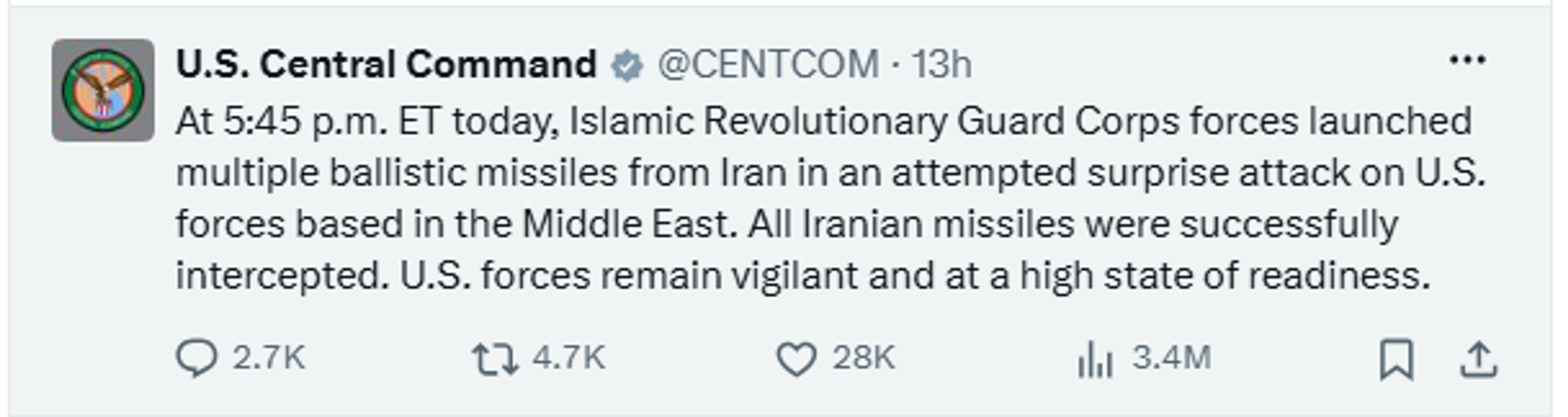
At 5:45pm eastern Tuesday, U.S. CENTOM reported that Iran had attempted a “Surprise Attack” launching ballistic missiles at U.S. Forces, but all missiles were shot down without any damage or injury. Subsequent reports suggest the missiles were targeting U.S. bases in Jordan.
2 hours later, CENTCOM announced joint strikes with Saudi Arabia targeting IRGC-aligned groups in Eastern Iraq Tuesday, in retaliation for numerous drone attacks over the previous few days. IIR reported earlier in the day that Houthi attacks had forced Saudi Arabia to shut down its 400mb/day refinery in Yanbu.
Given the timing, the U.S./Saudi joint attacks were probably already planned prior to Iran’s missile launch, so another retaliatory wave of attacks from the U.S. targeting Iran directly seems highly likely later today and we’ll just get to wait and see if this sets off another string of tit for tat escalation.
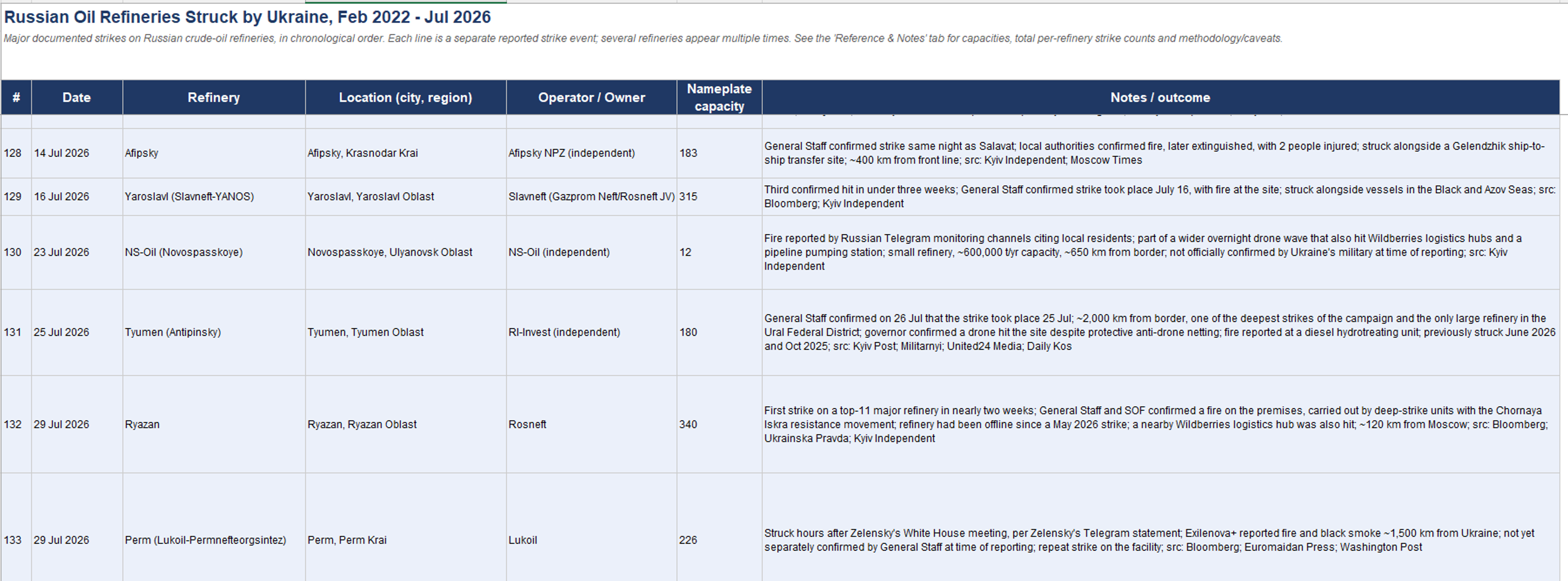
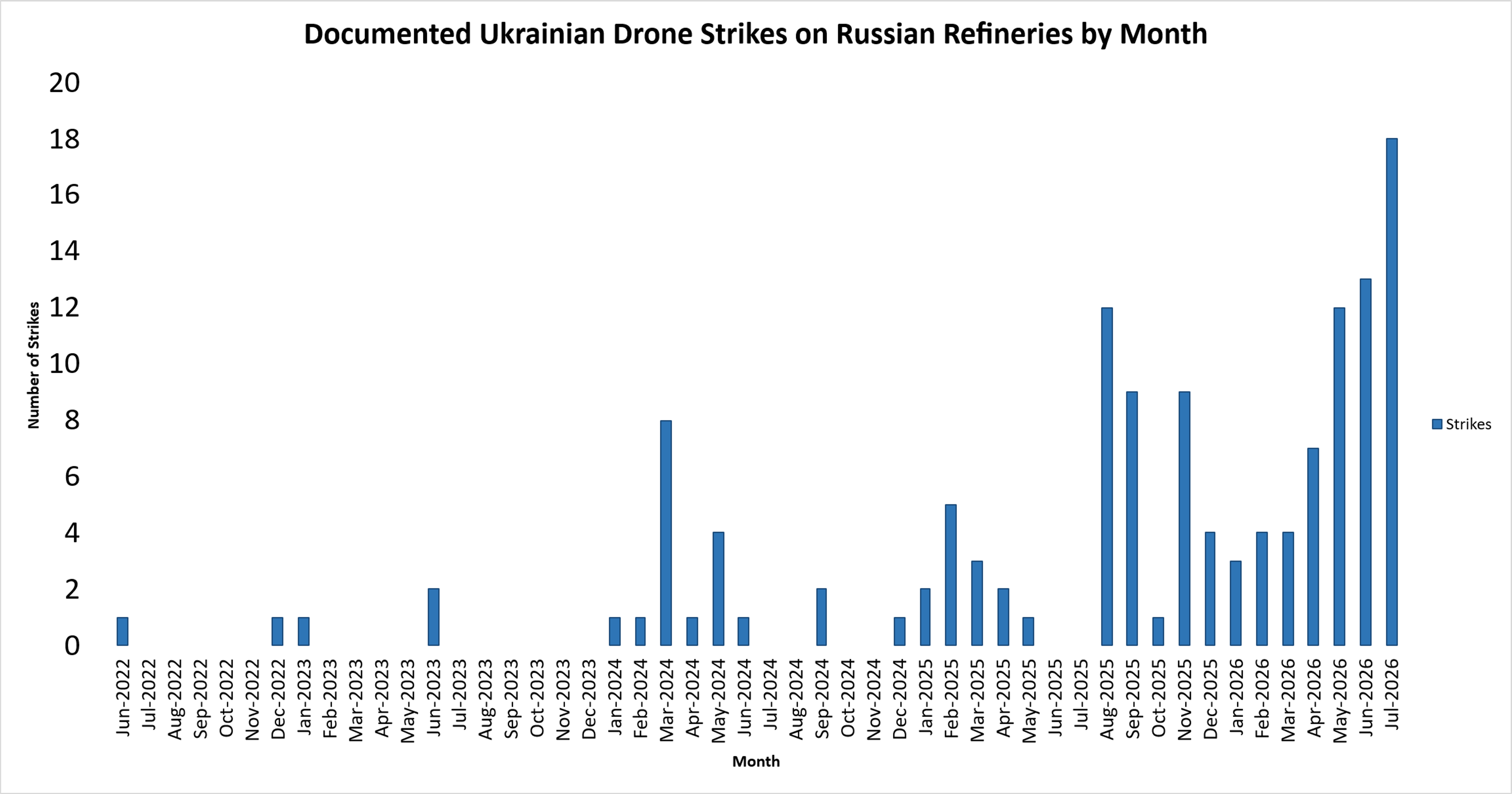
There were no major announcements following the meetings of the Presidents of the U.S., Ukraine and Israel Tuesday. Meanwhile, Ukraine reportedly struck two more Russian refineries with drones overnight, expanding the record-setting month for attacks that have forced the country that was the world’s largest diesel exporter just a few years ago, to ban exports all together.
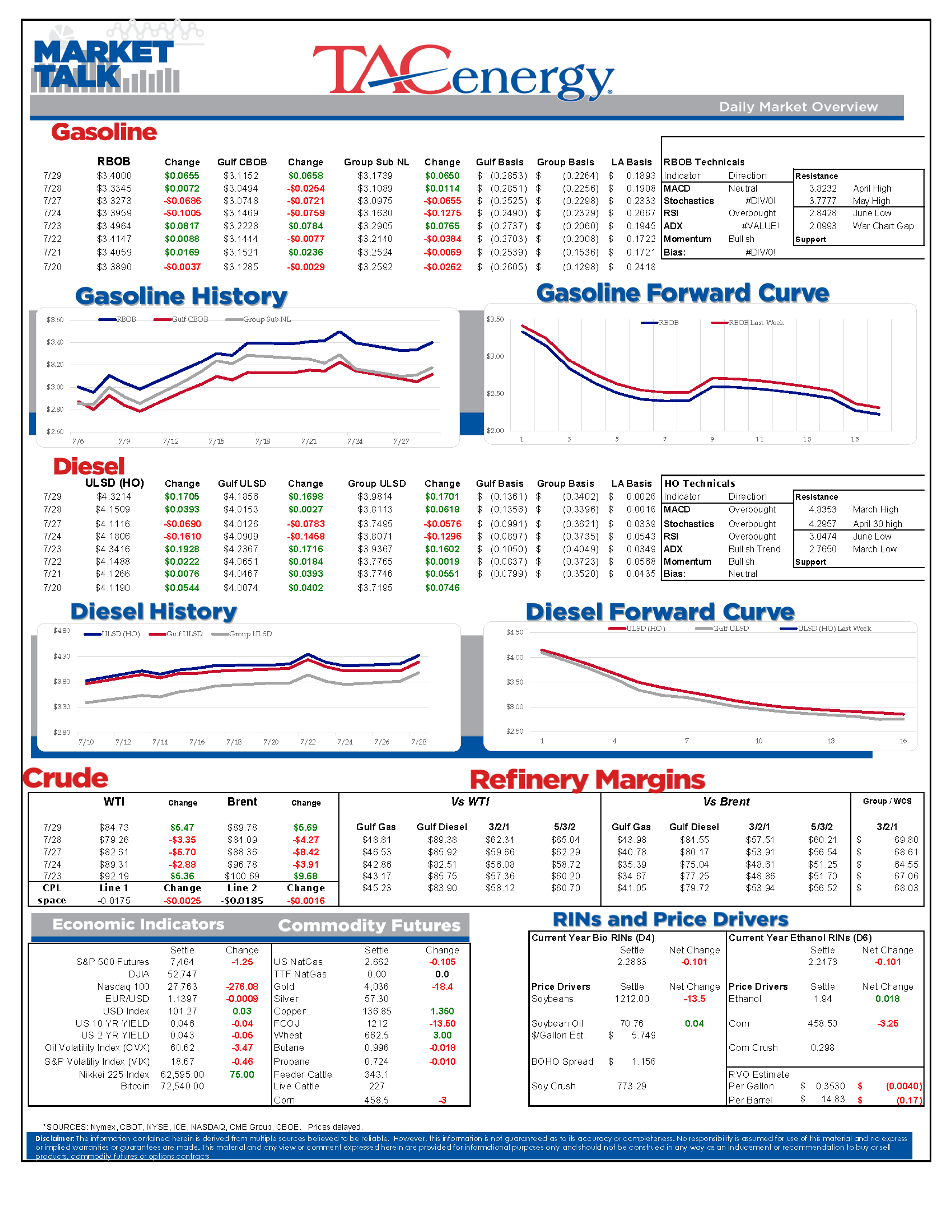
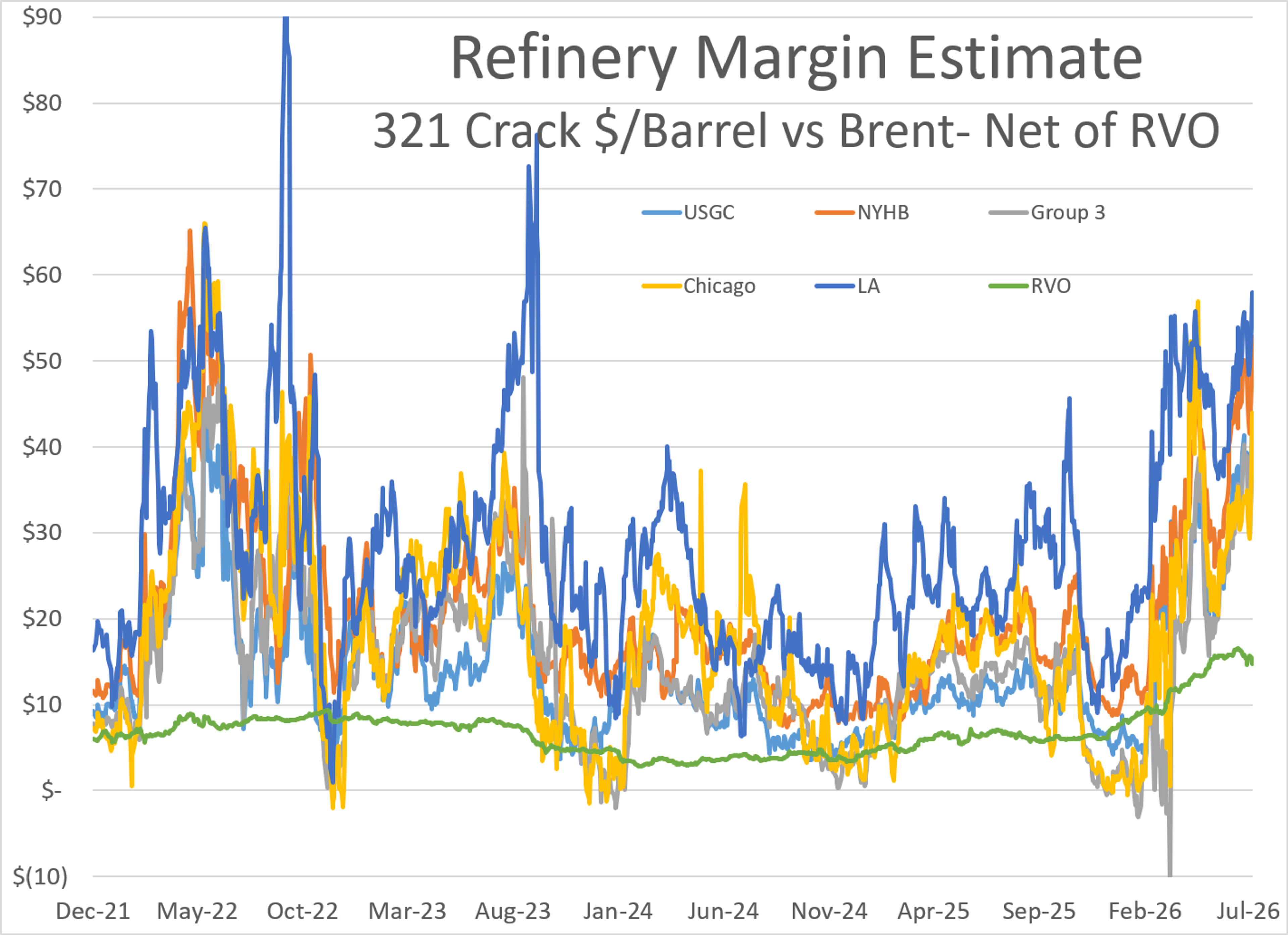
The chaos of the converging wars has been bad news for numerous refineries that have been damaged by attacks, or have their exports trapped by the effective shutdown of the Strait of Hormuz, or various export bans. Refiners in the U.S. and Europe (those that didn’t shut their doors in the past 2 years anyway) are benefitting greatly from tighter markets that’s pushed crack spreads near record highs.
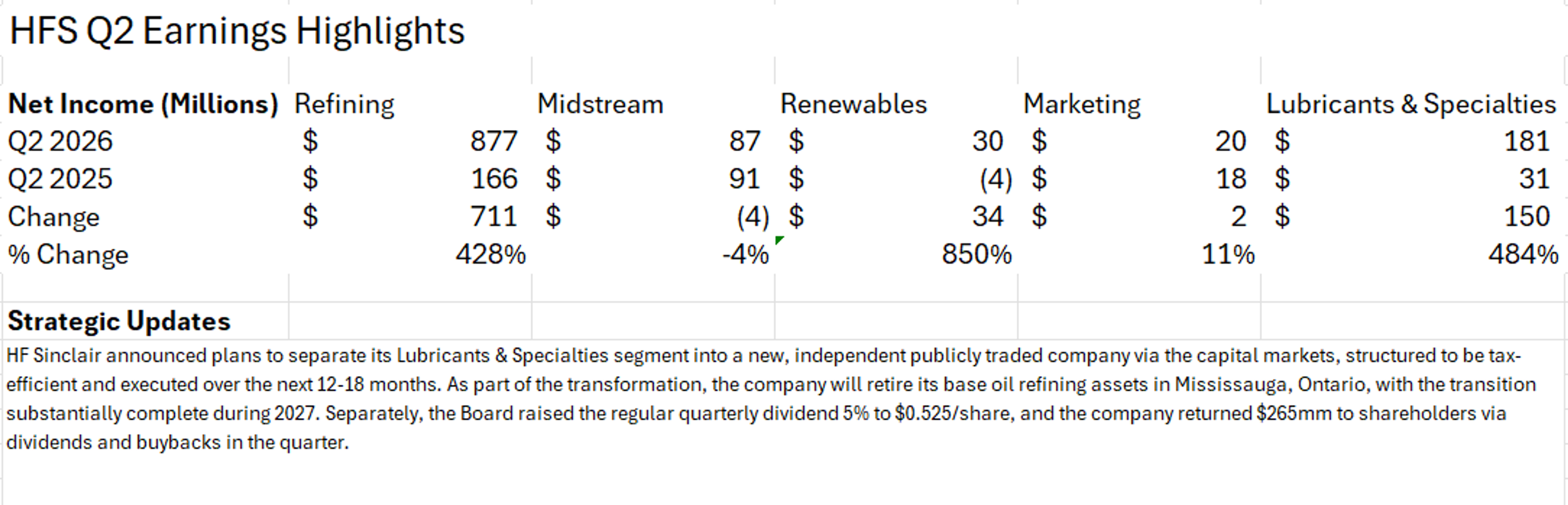
HF Sinclair reported their earnings increased nearly 300% from a year ago, with their refining segment leading the way, earning $877 million for the quarter, vs $166 million in Q2 2025. The regional breakdown of earnings tells a critical story, as the company’s Mid-Con refining assets saw “only” a 27% increase in margins, while their West Coast operations increased by 146%. The refinery yields showed a 1% decrease in gasoline output, which contributed to a 1% increase in Jet Fuel production, which shows both how limited most facilities are to switch output, but also how even just a percentage point or two can have meaningful impacts on supply. The company announced plans to spin off its lubes business, and shutter its base-oil refining assets in Ontario.
HFS Renewables saw a record setting quarter with gross margin for its RD production averaging more than $100/barrel thanks to record setting RIN values and high diesel prices.
The API reported small moves in product inventories last week with the industry group’s weekly estimate showing a 918,000 barrel build in gasoline stocks, while distillates fell 125,000 barrels. Commercial crude oil stocks dropped another 3.3 million barrels last week, despite another 3.7 million barrels being released from the SPR, which is hitting fresh 43 year lows on a weekly basis every time more oil is released. The EIA’s weekly report is due out at its normal 9:30am Eastern time this morning.
Heavy flaring was reported at Suncor’s Denver-area refinery Tuesday, but company officials said it was due to startup activities and wasn’t a concern.
While rapidly increasing Venezuelan crude oil output (and U.S. imports) have been a big help for domestic refiners in the midst of the global shortage this year, a Reuters note this morning highlights why its unlikely that the Ven’s refineries will ever return to their former glory.
Don’t get complacent: An AccuWeather report this morning is suggesting that the northern and eastern Gulf Coast of the U.S. are facing elevated storm threats this season, despite the fact that the El Nino pattern is limiting development overall. The report highlights how “…exceptionally warm water near the U.S. can allow storms to form or strengthen closer to land…”. While the season has been below-average so far as expected, the first hurricane of the year typically doesn’t form until August 11, so we really haven’t yet got started yet.
Latest Posts
Energy Markets Retreat On Diplomatic Optimism As Supply Risks Evolve
Mixed Start To October's Final Trading Week As Crude Retreats
Crude Strength, Refinery Disruptions, And Export Bottlenecks Support Fuel Prices
Global Supply Risks And Strong Refining Margins Drive Energy Market Rally
Week 42 - US DOE Inventory Recap
Diesel Prices Swing Wildly Amid Tanker Attacks And Supply Concerns
Social Media
News & Views
View All
Energy Markets Retreat On Diplomatic Optimism As Supply Risks Evolve
Mixed Start To October's Final Trading Week As Crude Retreats