Energy Markets Face Mixed Signals: Gasoline Near 4-Year Low, Diesel Holds Support

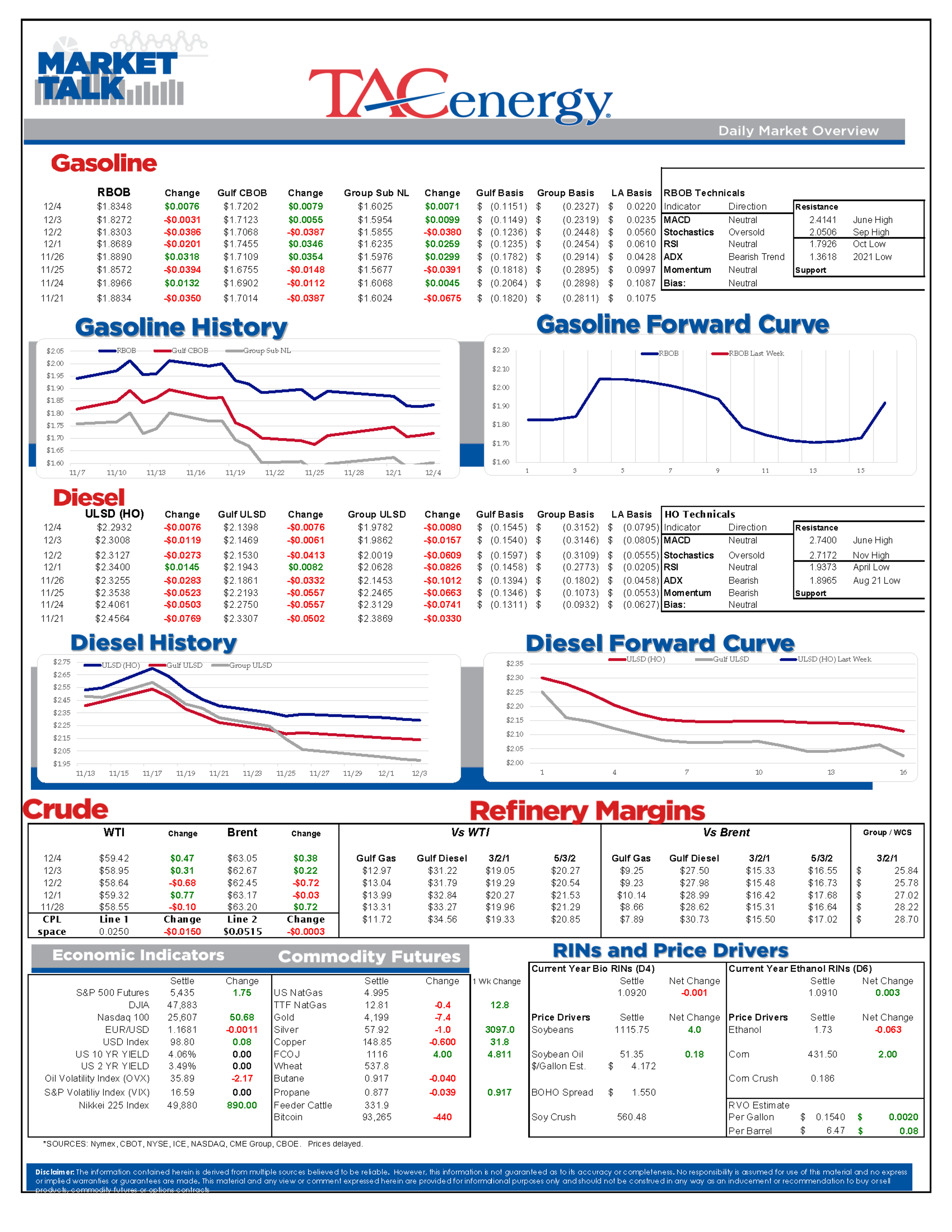
It’s another mixed start for energy markets Thursday with diesel prices continuing their return to reality down around a penny so far, while gasoline prices are attempting a dead cat bounce to avoid what could be a technical meltdown in the near future with early gains just under a penny/gallon.
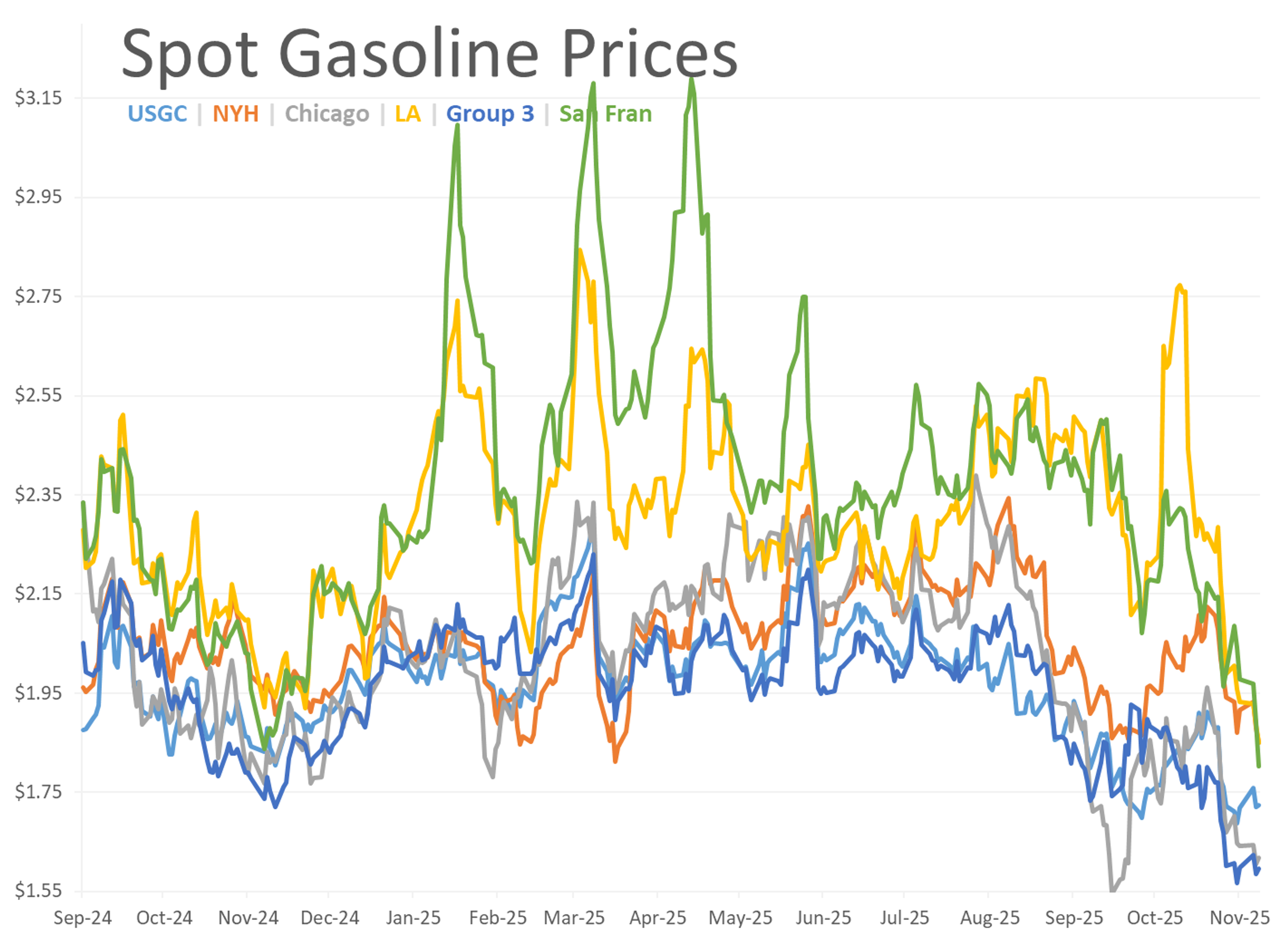
RBOB gasoline futures are hovering just a few cents above a 4 year low, with $1.79 the area to watch to determine if prices can rebound from here, or if we’re in for a test of numbers we’ve not seen since COVID was still the dominant market story. With winter weather hampering demand, most cash markets across the country are trading at a discount to futures, with several touching multi-year lows for cash values this week.
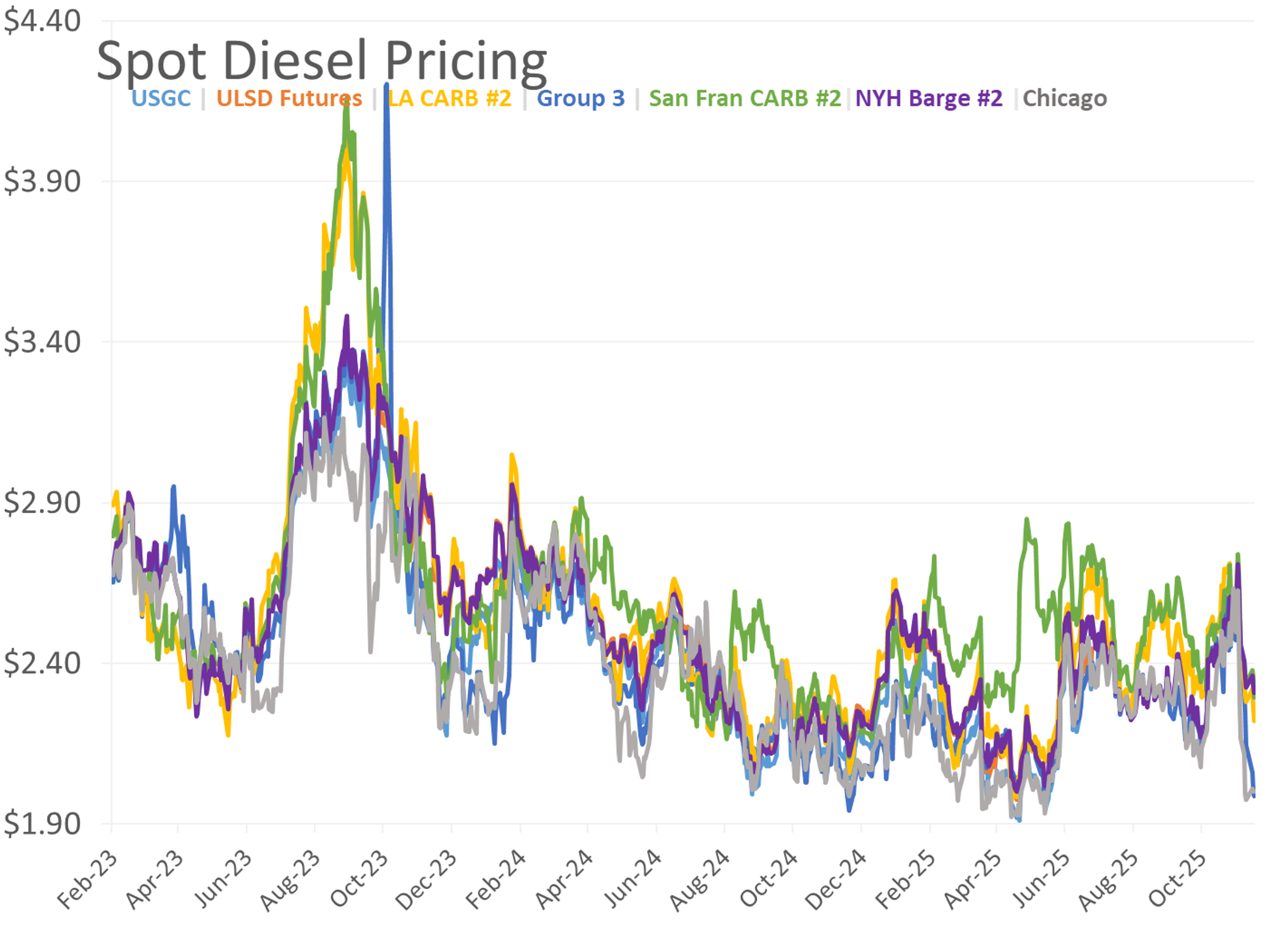
ULSD futures are testing their 200 day moving average this morning, after hitting a 6 week low on Wednesday. With some 17 cents to go before reaching the low end of their fall trading range, the technical outlook for diesel isn’t nearly as perilous as for gasoline, and the ongoing uncertainty of winter weather and Russian sanctions could still lend some strength throughout the winter.
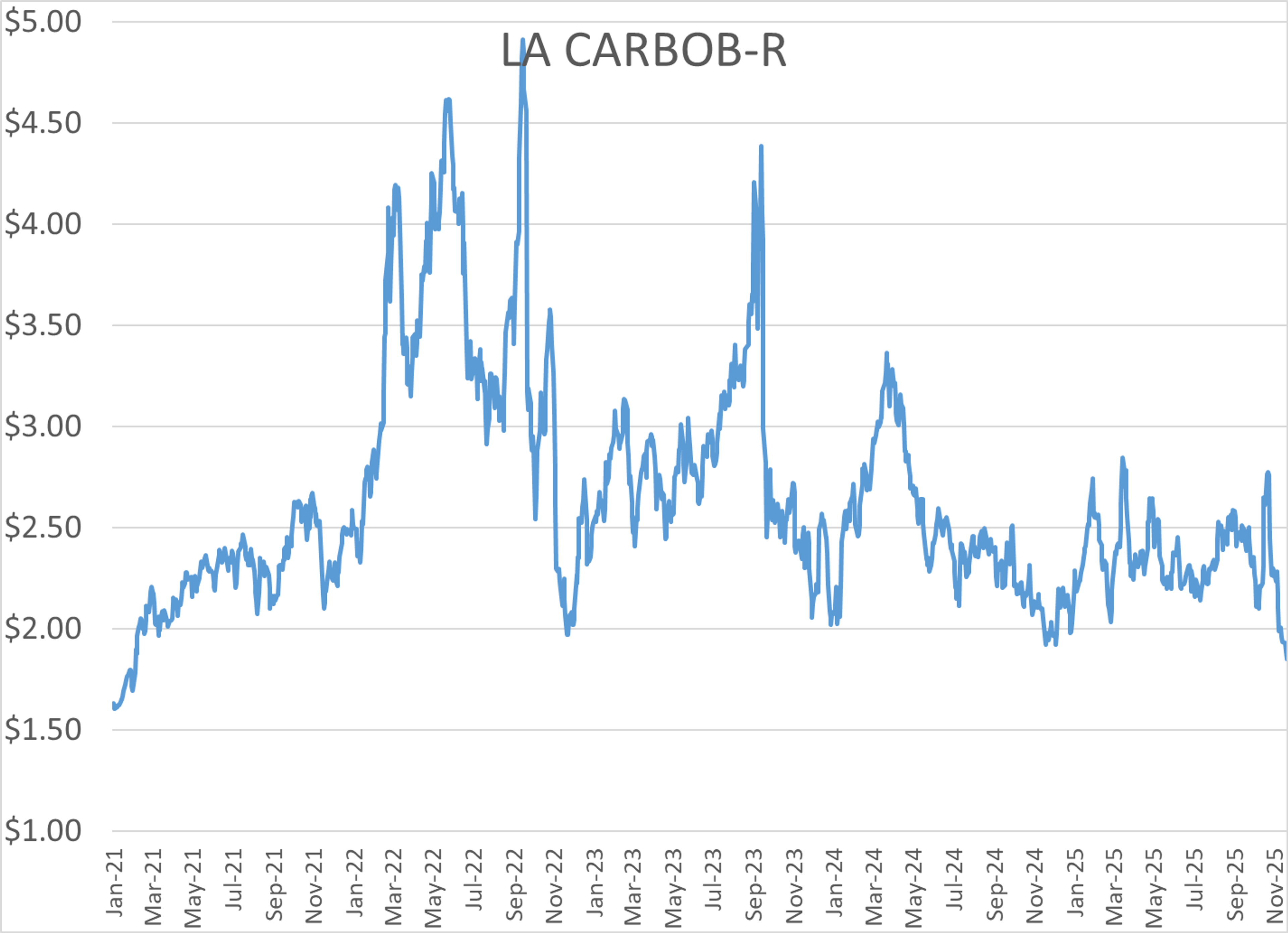
Marathon reported two different unplanned flaring events overnight at the 365mb/day Wilmington section of its LA-area refinery complex. Both events were listed as a “Mechanical/Electrical Malfunction” but otherwise only minimal details on emissions were provided, which is normal for the mandatory alert filings with the AQMD. Basis values in the region had come under heavy selling pressure lately, pushing CARBOB gasoline prices to their lowest levels since February 2021. There has not yet been any cash market activity this morning to know whether or not the upset to the largest remaining refinery on the West Coast will reverse that trend.
That’s not supposed to happen: The EIA’s weekly report was delayed Wednesday due to a technical glitch according to a note released by their administrator. The agency said they’re preparing a backup system for the natural gas report due out later this AM.
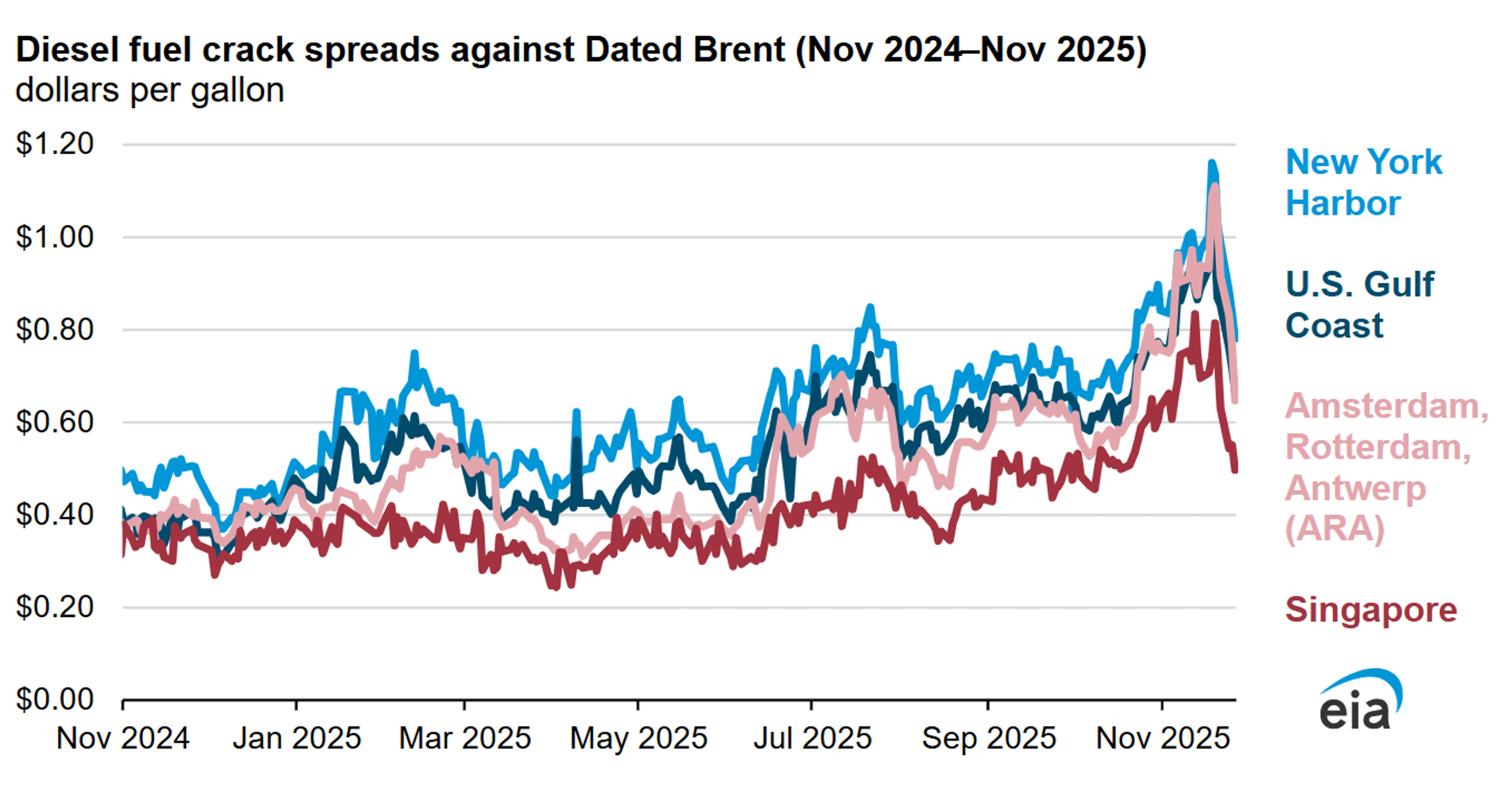
The technical issues at the EIA did not stop the agency from publishing a high level, low detail note highlighting how recent geopolitical developments have contributed to elevated diesel prices in the past 2 months.
European leaders continue to turn the screws on Russian energy supplies, agreeing to ban Russian LNG imports by the end of 2026 and piped Natural Gas imports by September 2027. In addition, the ICE exchange has adopted new rules that will prevent deliveries for its Gasoil (ULSD equivalent) contract from any refinery that has processed Russian crude oil in the previous 60 days.
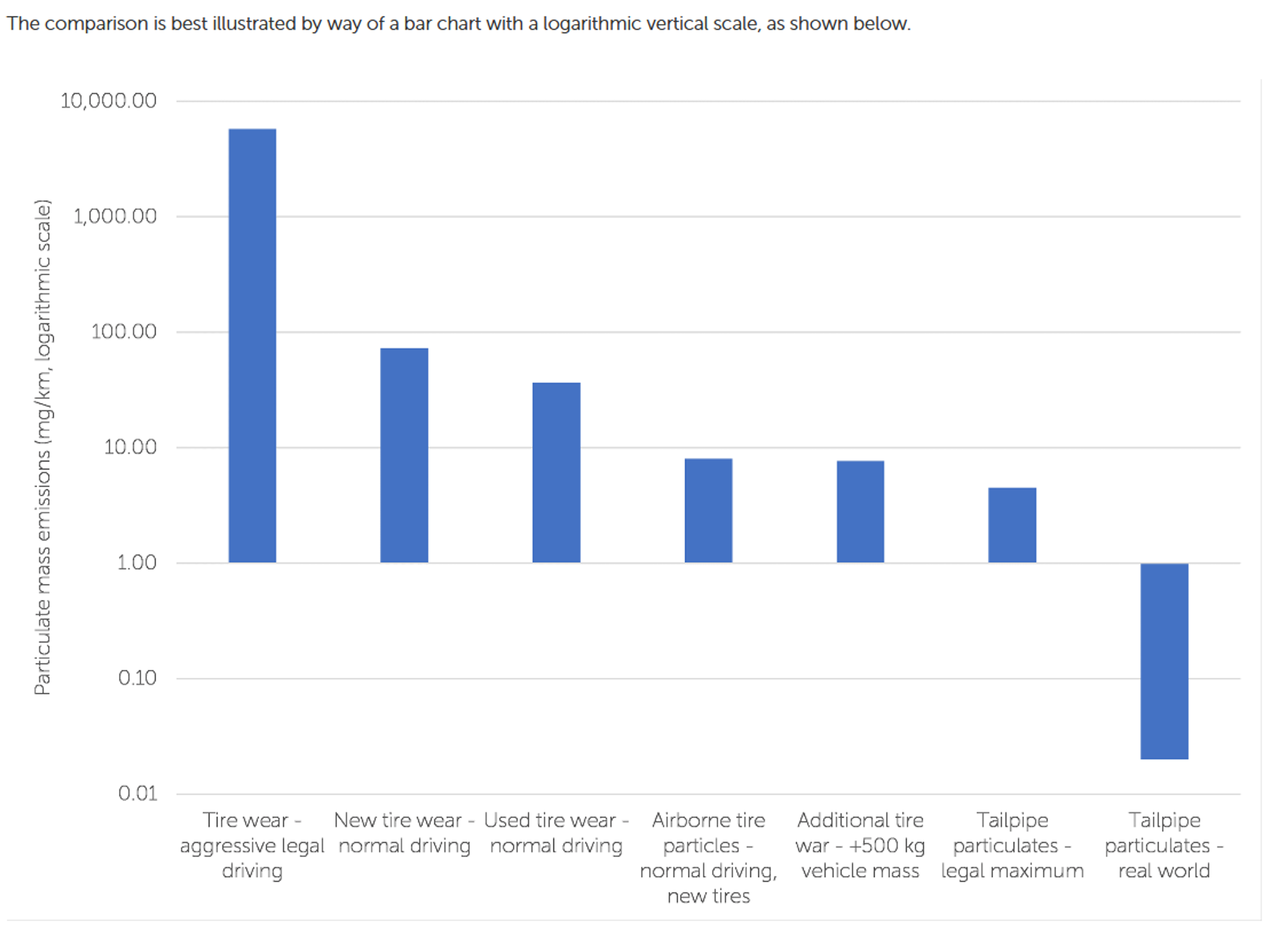
The White House announced it was resetting the Vehicle Emission rules (AKA CAFE standards) put in place by the previous administration in 2024 that many believed to be a de-facto EV mandate since traditional vehicle platforms wouldn’t be able to reach the goals. The press release claims more than $100 billion in savings over the lifetime of the rule and cites a little-known study into tire-wear from heavy/high torque EVs that suggests the tread pollution is far worse than exhaust emissions to argue that this change is not a step backward for environmental concerns.
Notes from the DOE’s weekly status report.
Despite a drop in imports and another healthy increase in refinery runs, crude posted a slight build with a little help from an increased adjustment factor. Refinery runs climbed for the 5th week in a row and are just shy of the seasonal high set last year. PADDs 1-3 are at seasonal highs while 4 is only 4,000 barrels per day short of the mark. PADD 5 is the only region well below seasonal norms and remains sub at 80% utilization, but if you adjust for the loss of the 139mb/day P66 refinery in LA (which the EIA won’t do until next year) the actual figure is close to 85%.
Diesel added 2mm barrels across all PADDs except 3 as exports slid and demand, while increased, remains low. PADD 1 & 2’s low inventory levels continue dragging down the total US count despite PADD 3 sitting near the high end of its chart. PADD 5 traditional diesel is at the bottom end of the 5-year range but at the top when factoring in renewables, despite West Coast RD showing a slight drop with the EIA’s latest monthly release of September stats. RD storage increased in PADDs 2 & 3 to outweigh declines elsewhere for an overall increase of half a million barrels to a new seasonal high.
Gas exports shot up to a 7 year high, but imports and production also hit seasonal highs alongside a significant drop in demand for a 4.5mm barrel inventory build. Despite 3 consecutive weeks of increases, total U.S. gasoline continues to run just under its 5-year range. PADD 3 increased substantially last week along with most others. However, the seasonally very low levels in PADDs 1 & 2 overshadow PADD 3’s healthier position and the smaller impacts of PADDs 4 & 5, which holds the total count so low.

Latest Posts
Bullish Diesel Fundamentals Overshadow Weakness In Gasoline Markets
Week 41 - US DOE Inventory Recap
Energy Markets Juggle Supply Risks, Inflation Pressures, And Geopolitical Conflict
Crude Climbs For A Fifth Day While Global Fuel Supplies Remain Under Pressure
Refining Margins, Tanker Attacks, And OPEC Growth Shape Energy Outlook
Oil Rises As Political Chaos And Supply Risks Shake Markets
Social Media
News & Views
View All
Bullish Diesel Fundamentals Overshadow Weakness In Gasoline Markets
Week 41 - US DOE Inventory Recap