Energy Markets Brace For Impact As Diesel Swings And Crude Surges

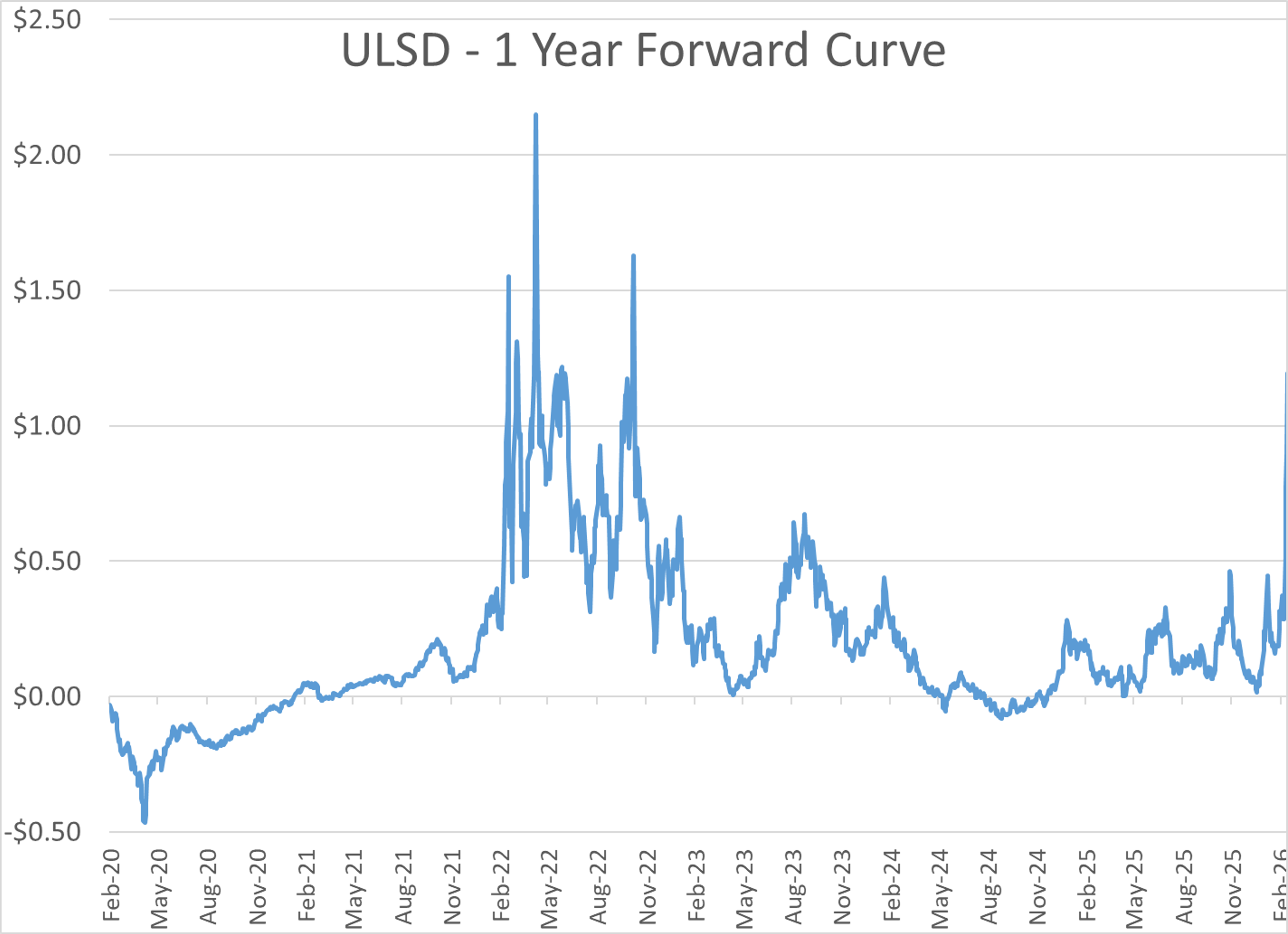
Another day, another 38 cent swing in diesel prices as we near the 1 week point in the war with no real signs that the Strait of Hormuz is reopening for business. That’s the only story that really matters for energy markets near term, even as the U.S. treasury races to try and find other ways to limit the fallout from its shutdown.
Once again we saw a great dip buying opportunity after the close Thursday after the U.S. Treasury announced a 30 day waiver on Russian oil deliveries to India, but only for barrels that were already loaded on a ship prior to Thursday. While the trading algorithms clearly saw that as a reason for profit taking, and April ULSD did drop almost 25 cents at one point, the reality seems to have sunk in that this announcement was more of a favor to a major trading partner who has been cooperative than an actual plan to deal with the supply squeeze.
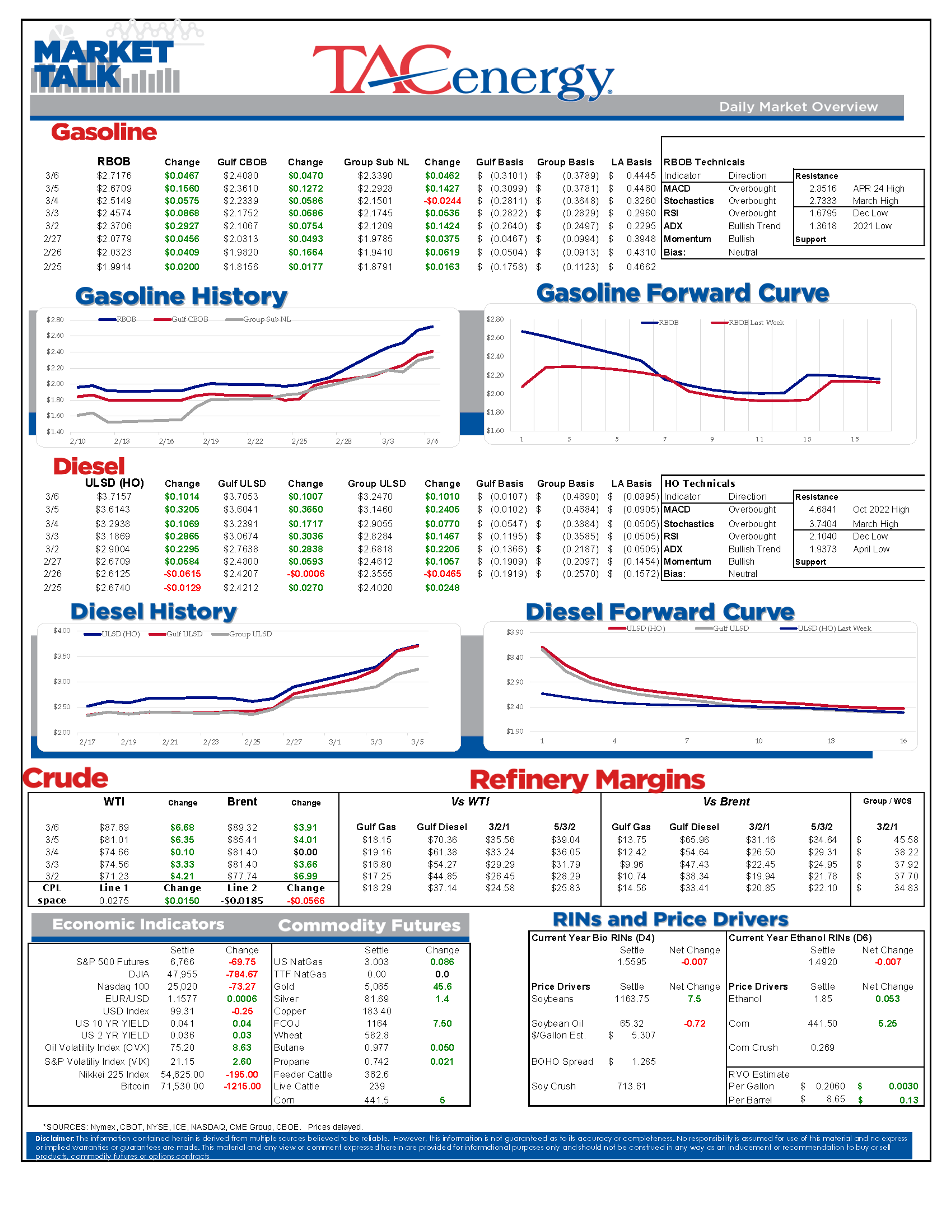
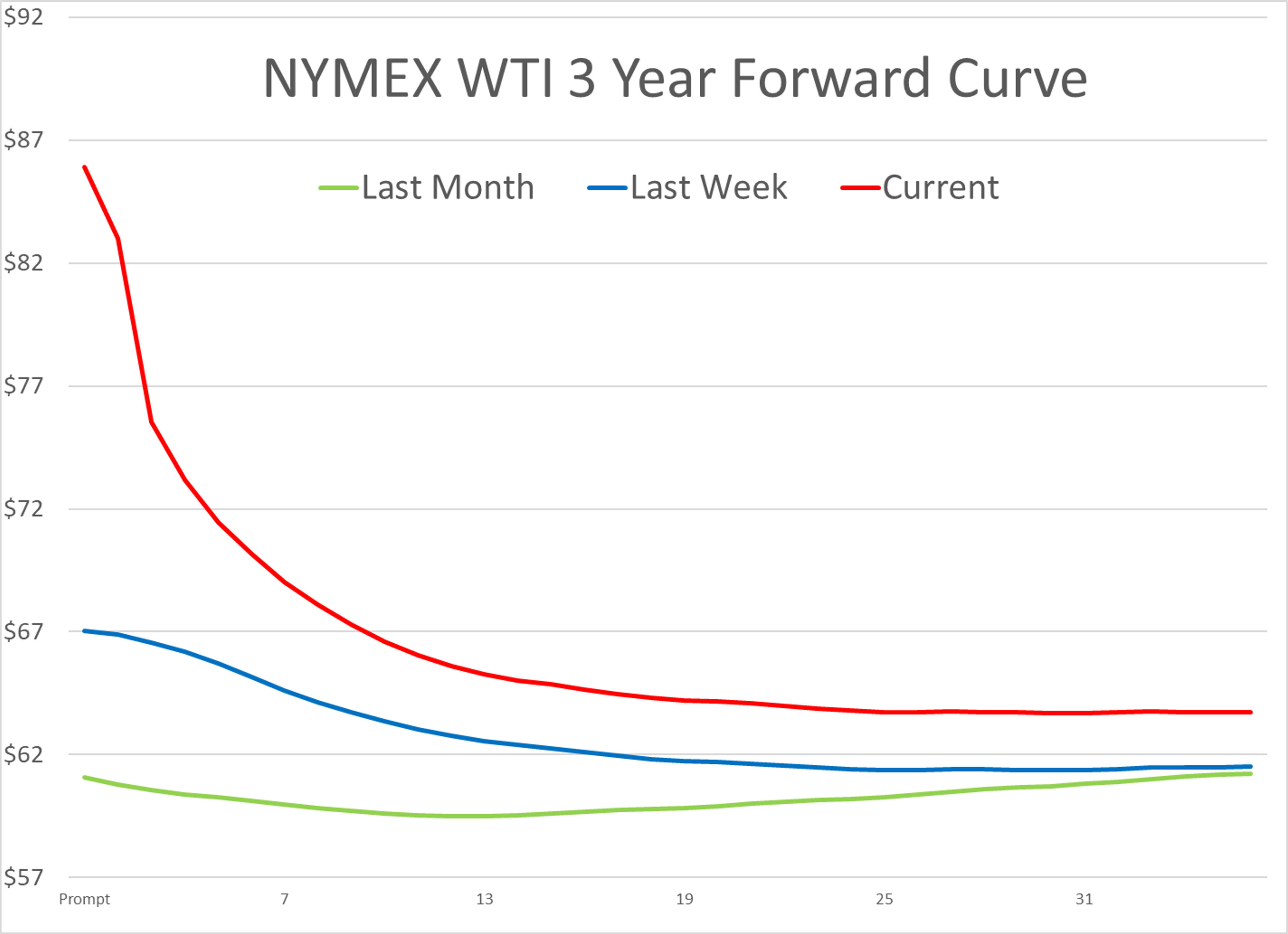
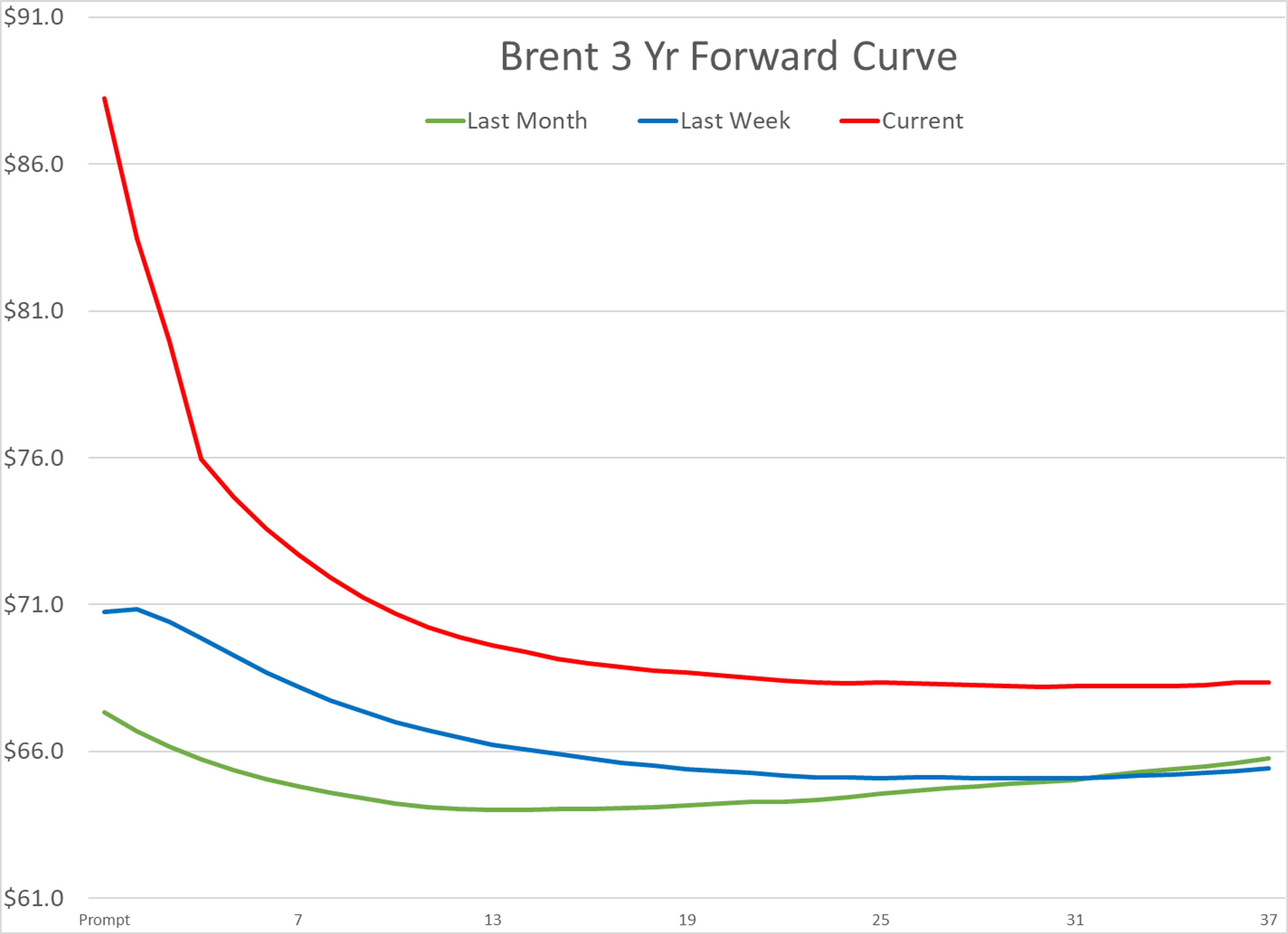
One notable difference in today’s price action is that crude oil prices seem to be leading the charge higher while diesel prices catch their breath a bit after another eventful overnight session. WTI reached another 2 year high at 86.70 overnight while Brent came within 50 cents/barrel of $90.
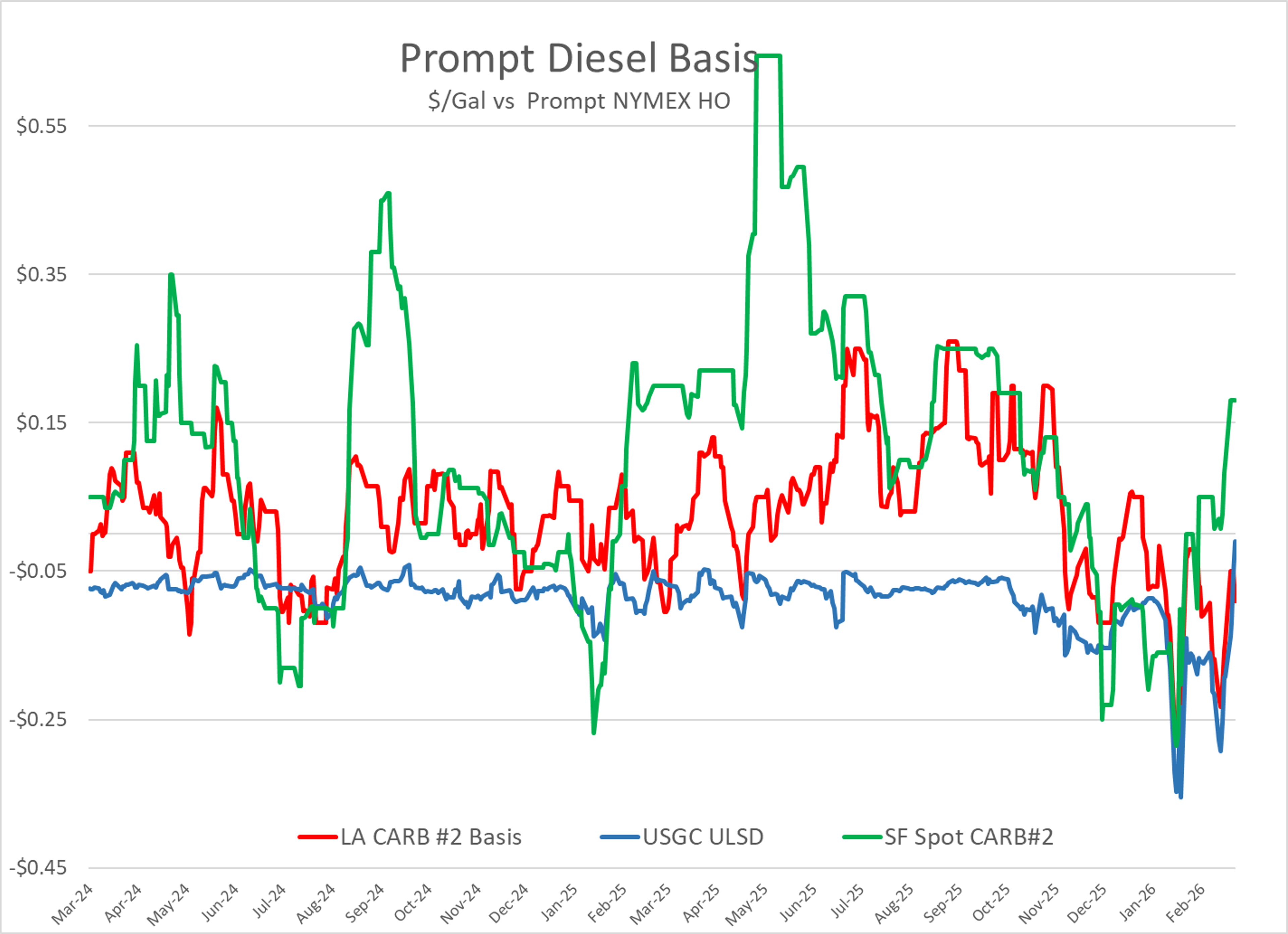
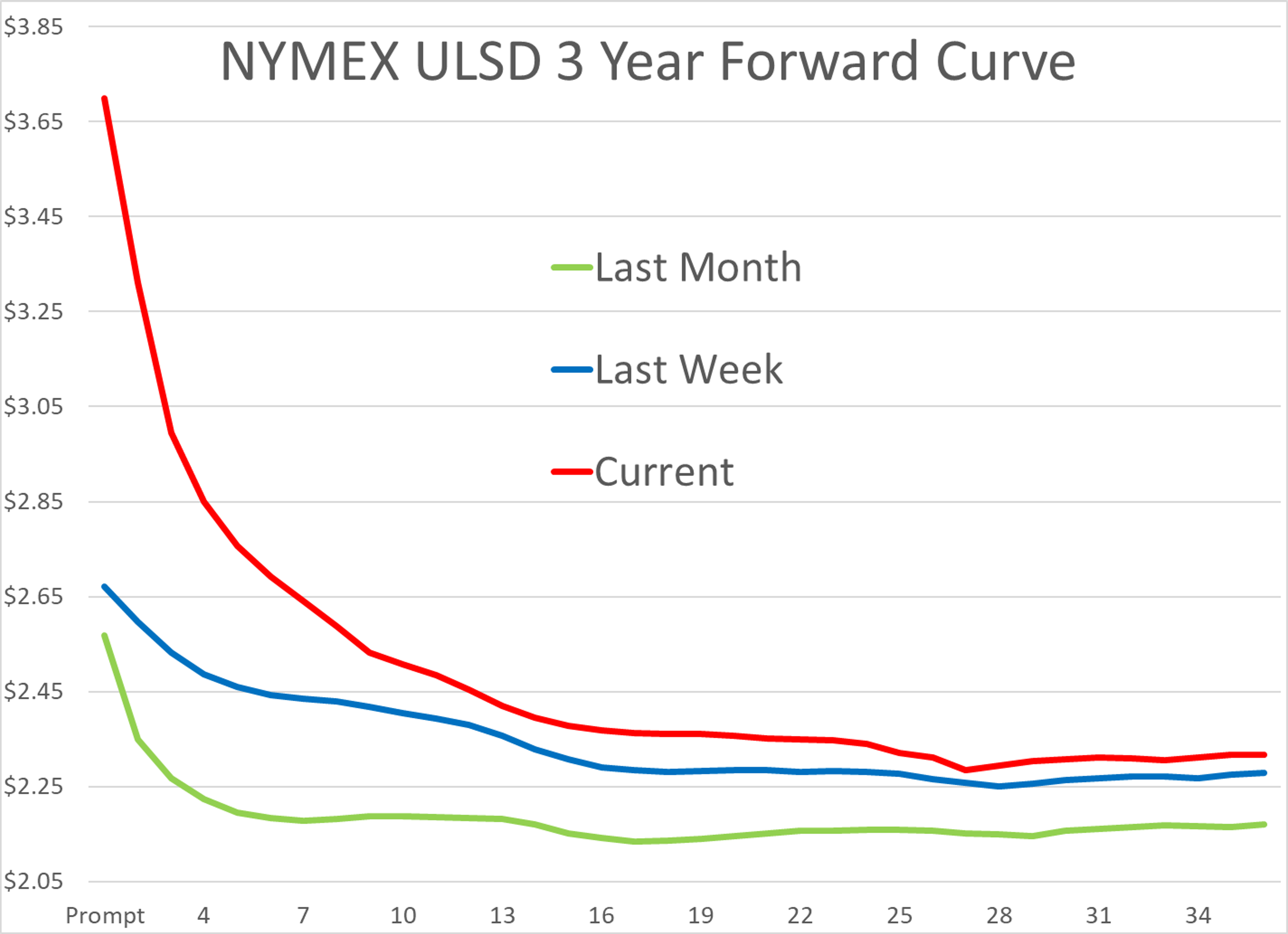
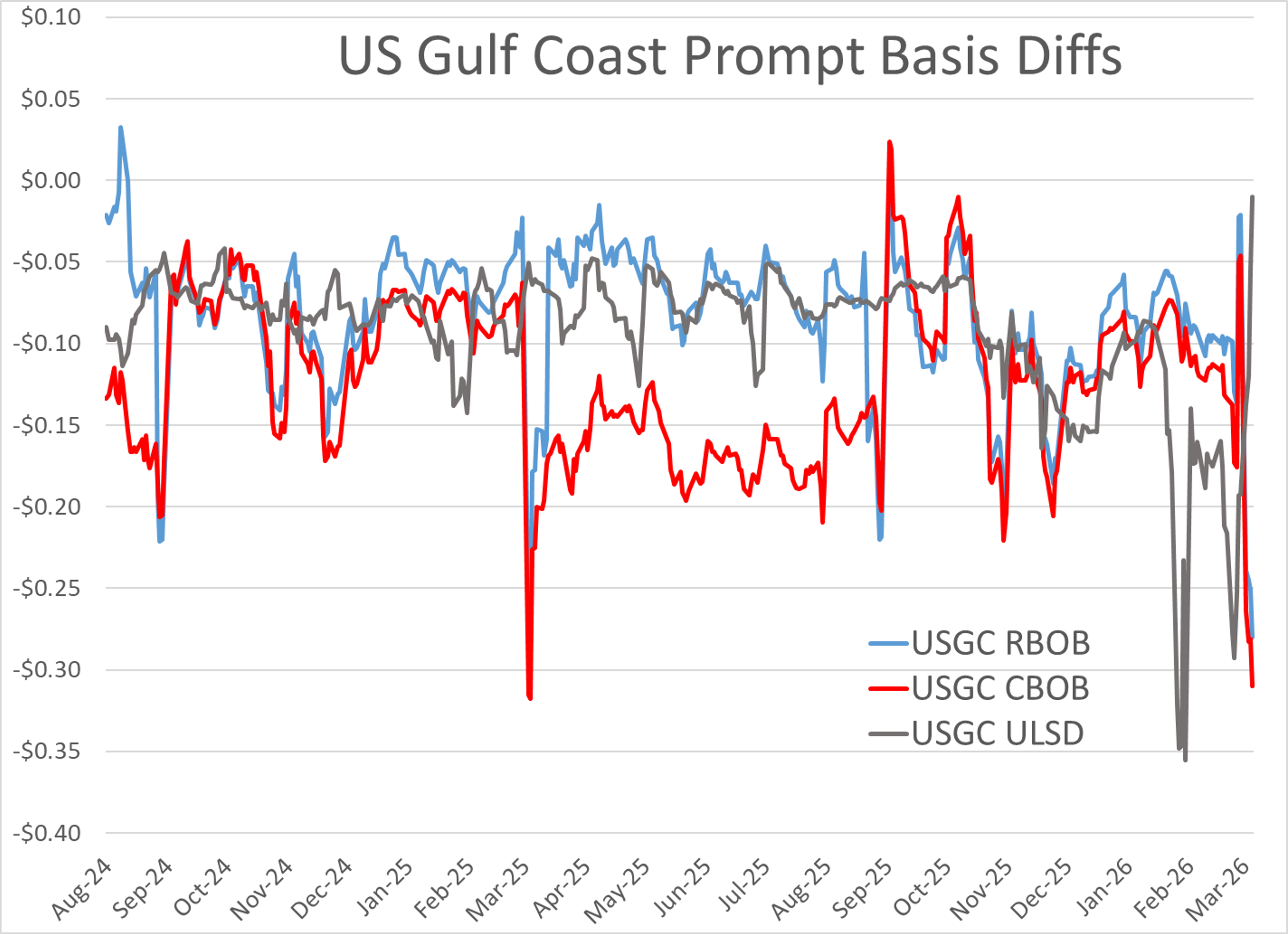
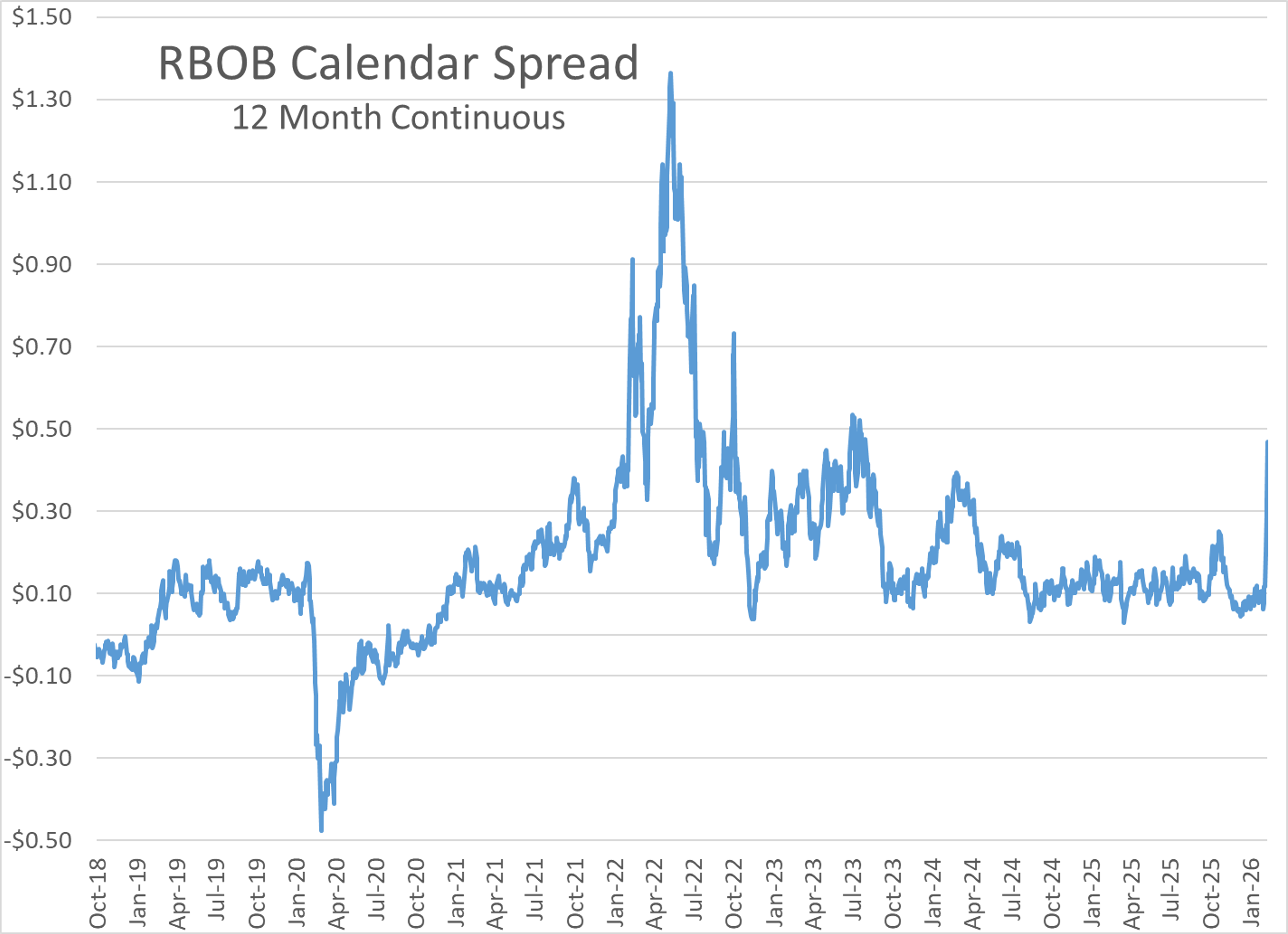
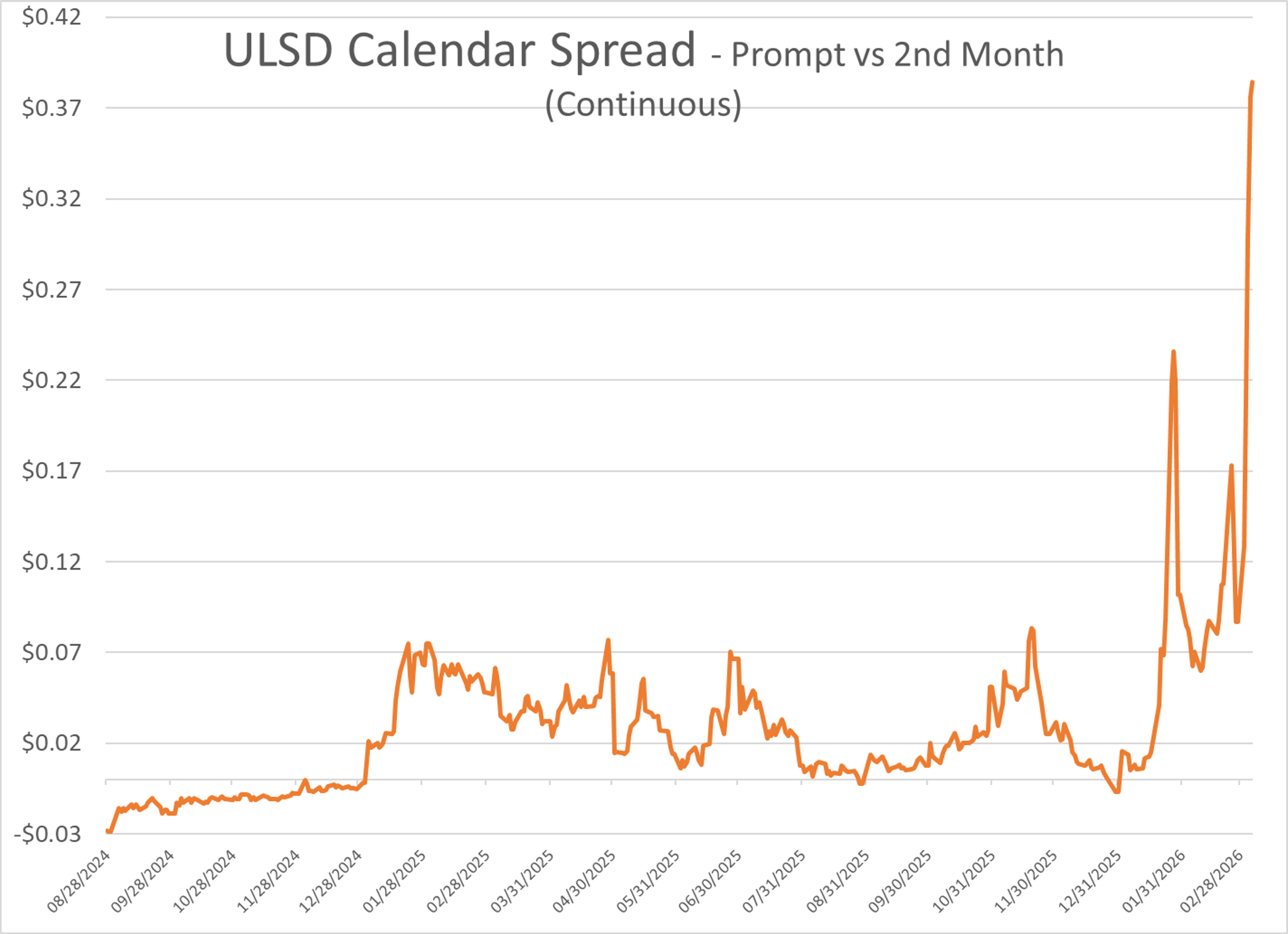
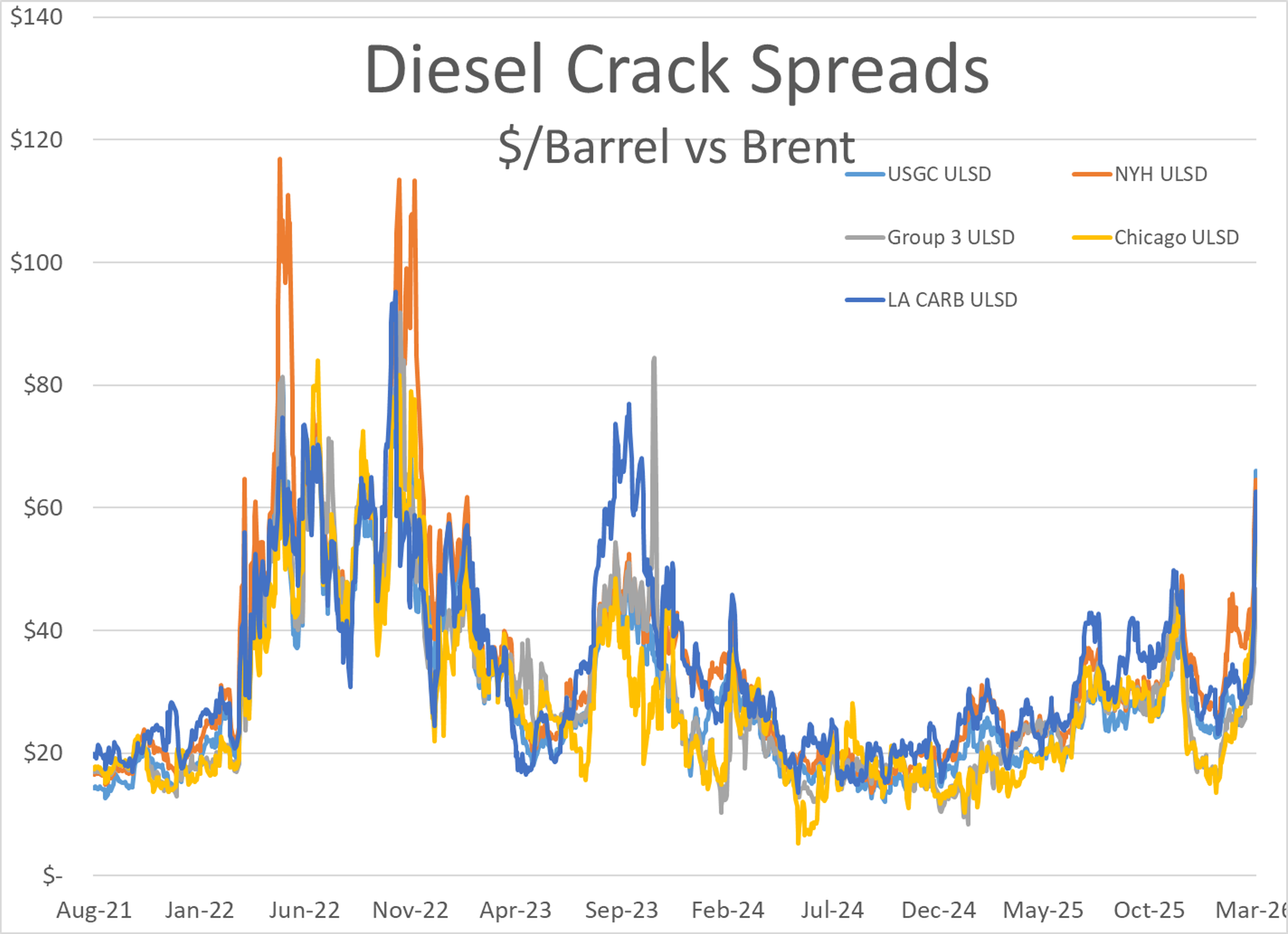
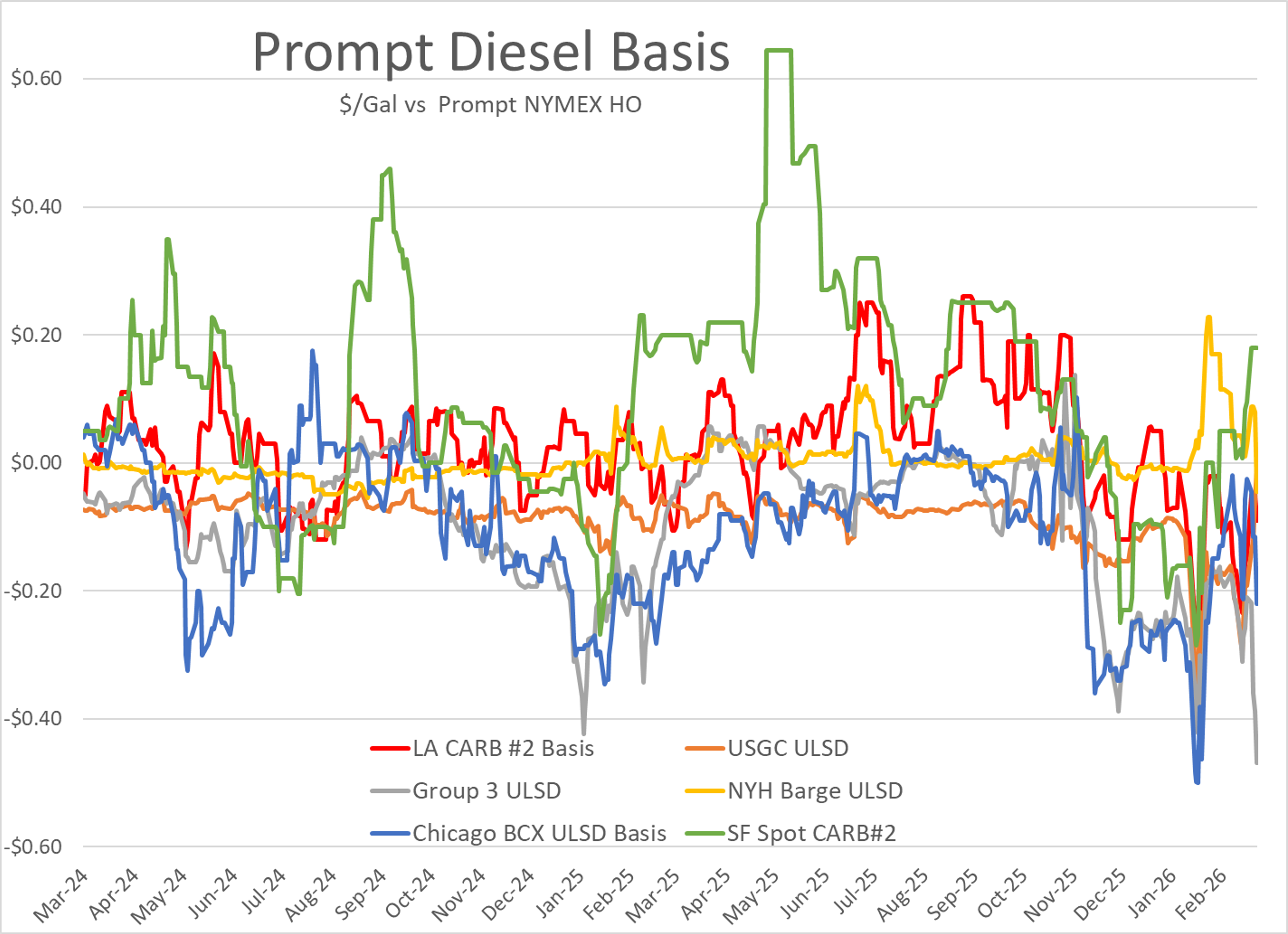
The squeeze on prompt supplies and spiking spreads are both wreaking havoc on U.S. diesel basis markets with Jet Fuel premiums soaring to record highs along the coast, while inland ULSD discounts approach record low discounts. USGC ULSD trading, the most liquid diesel market in the world, is apparently not immune to the chaos either, as the cycle 15 scheduling deadline saw ULSD premiums rally 9 cents to approach parity with the soaring April futures contract, even while forward values are being sold off in reaction to the strength in time and crack spreads.
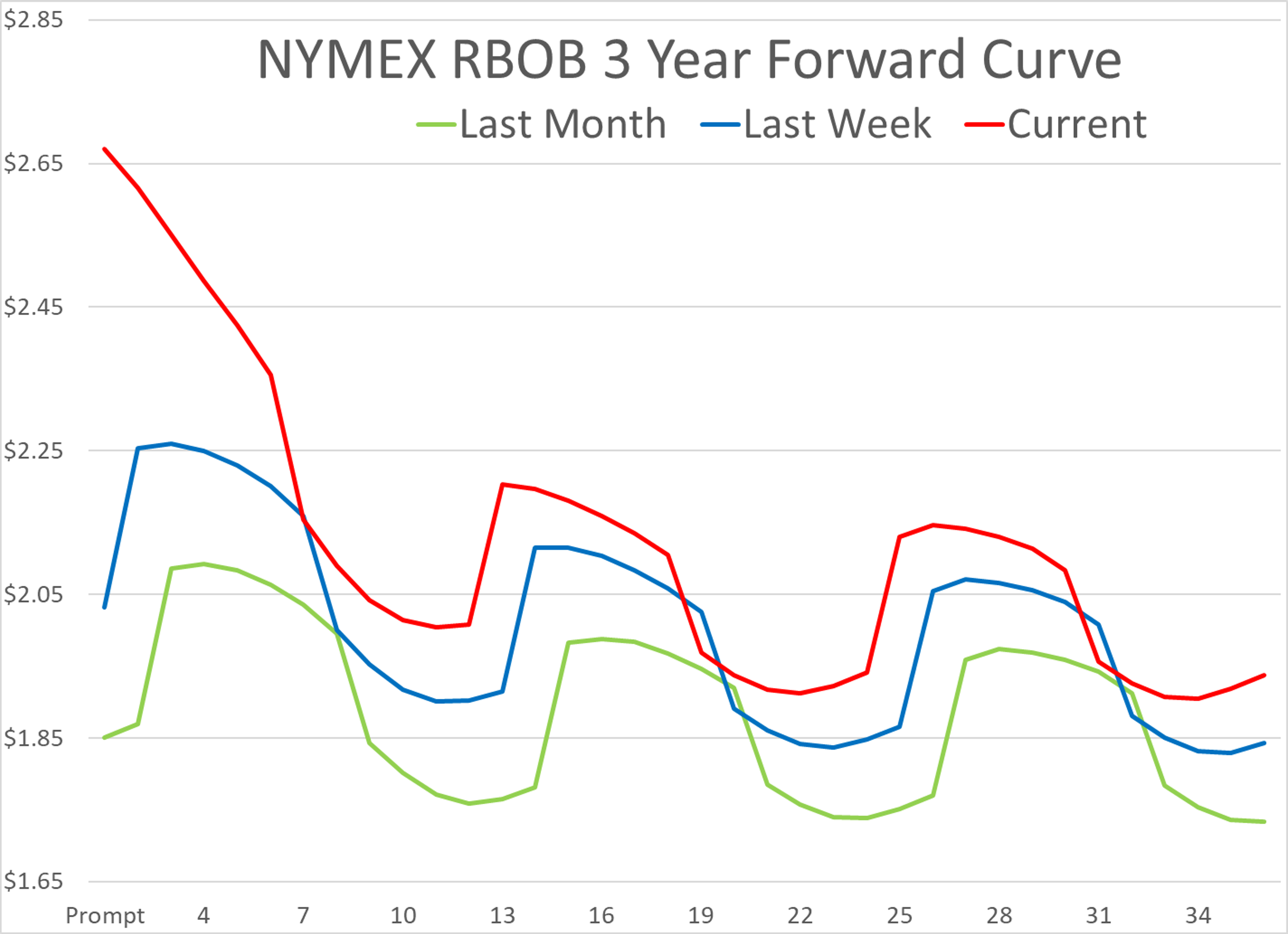
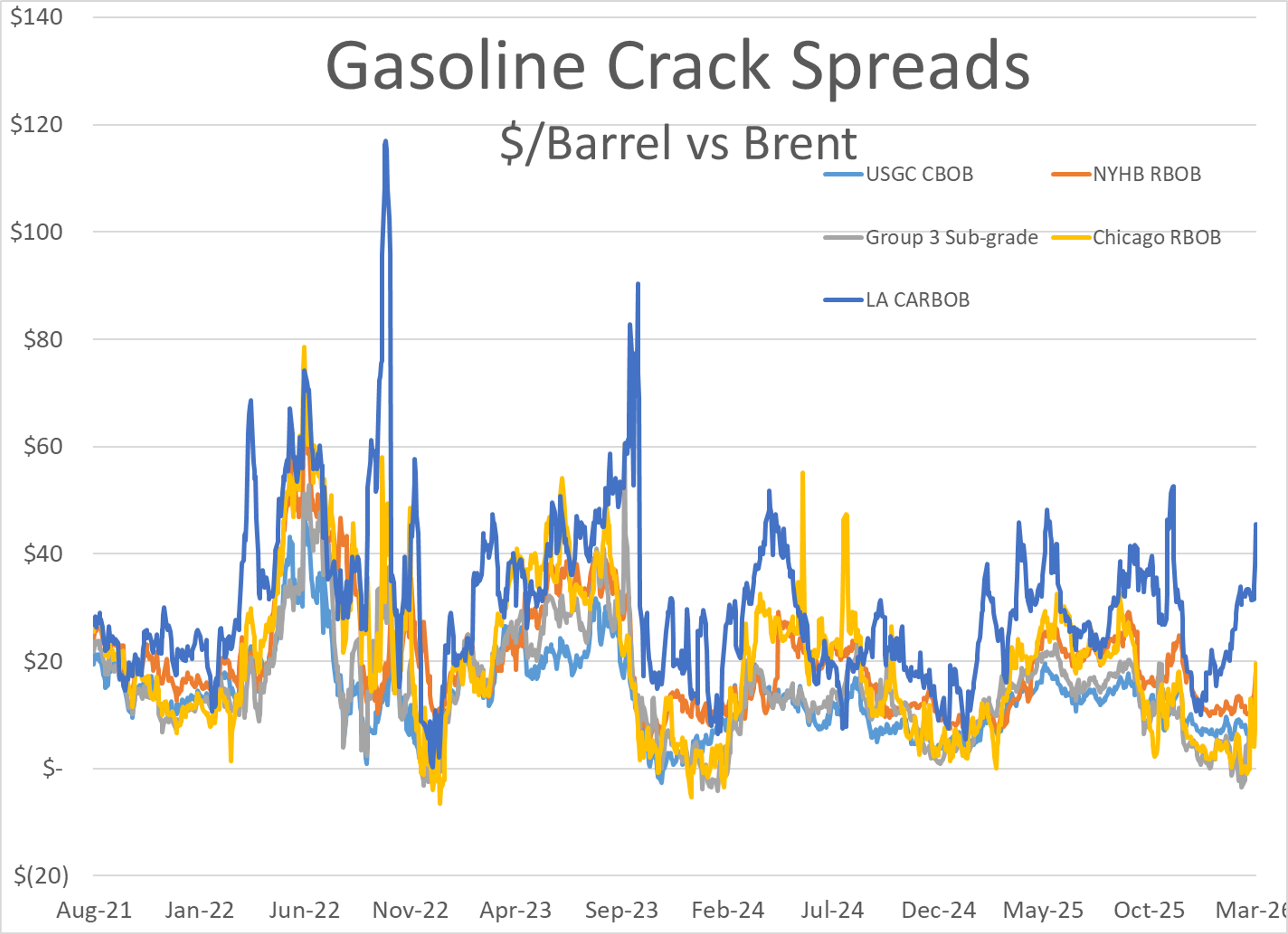
On the flip side of that coin, Gulf Coast gasoline differentials are coming under heavy pressure as ample regional supplies buffer the market and encourage traders to lower diffs to offset the spike in futures. There’s also the reality that the race is on to ship diesel to markets like Europe that are desperate for new supply options, while gasoline exports play second fiddle given the relative lack of financial incentives.
Yesterday’s new bad news for energy infrastructure was that Bahrain’s 400mb/day oil refinery had been struck by an Iranian missile, adding to the list of infrastructure damaged during the war so far. Energy News Today is reporting this morning that the facility continues to operate however, so whenever the strait does reopen they should be ready to move.
The U.S. is also waiving sanctions indefinitely on the Rosneft refineries in Germany that combined process around 250mb/day in another attempt to protect a major partner for the worst of this crisis.
U.S. refineries meanwhile continue to crank out much more gasoline and diesel fuel than we consume domestically, and most facilities are going to be enjoying their best margins in 3 years due to this event. It’s likely that we will see some scheduled maintenance deferred as long as the strait is shutdown as plants race to capture all they can of the windfall.
Latest Posts
Bullish Diesel Fundamentals Overshadow Weakness In Gasoline Markets
Week 41 - US DOE Inventory Recap
Energy Markets Juggle Supply Risks, Inflation Pressures, And Geopolitical Conflict
Crude Climbs For A Fifth Day While Global Fuel Supplies Remain Under Pressure
Refining Margins, Tanker Attacks, And OPEC Growth Shape Energy Outlook
Oil Rises As Political Chaos And Supply Risks Shake Markets
Social Media
News & Views
View All
Bullish Diesel Fundamentals Overshadow Weakness In Gasoline Markets
Week 41 - US DOE Inventory Recap