Crude Surges As Iran Tensions Escalate And Diesel Markets Tighten

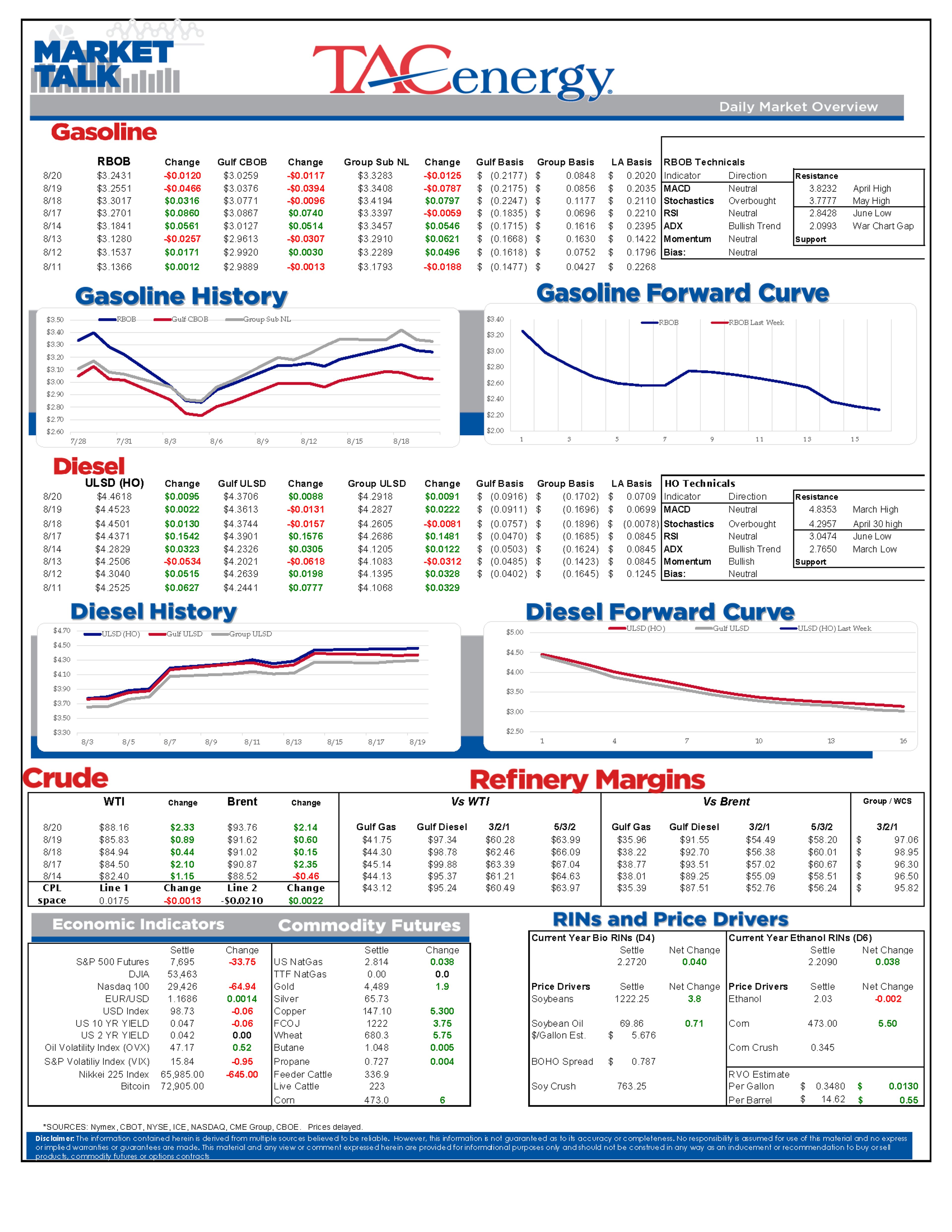
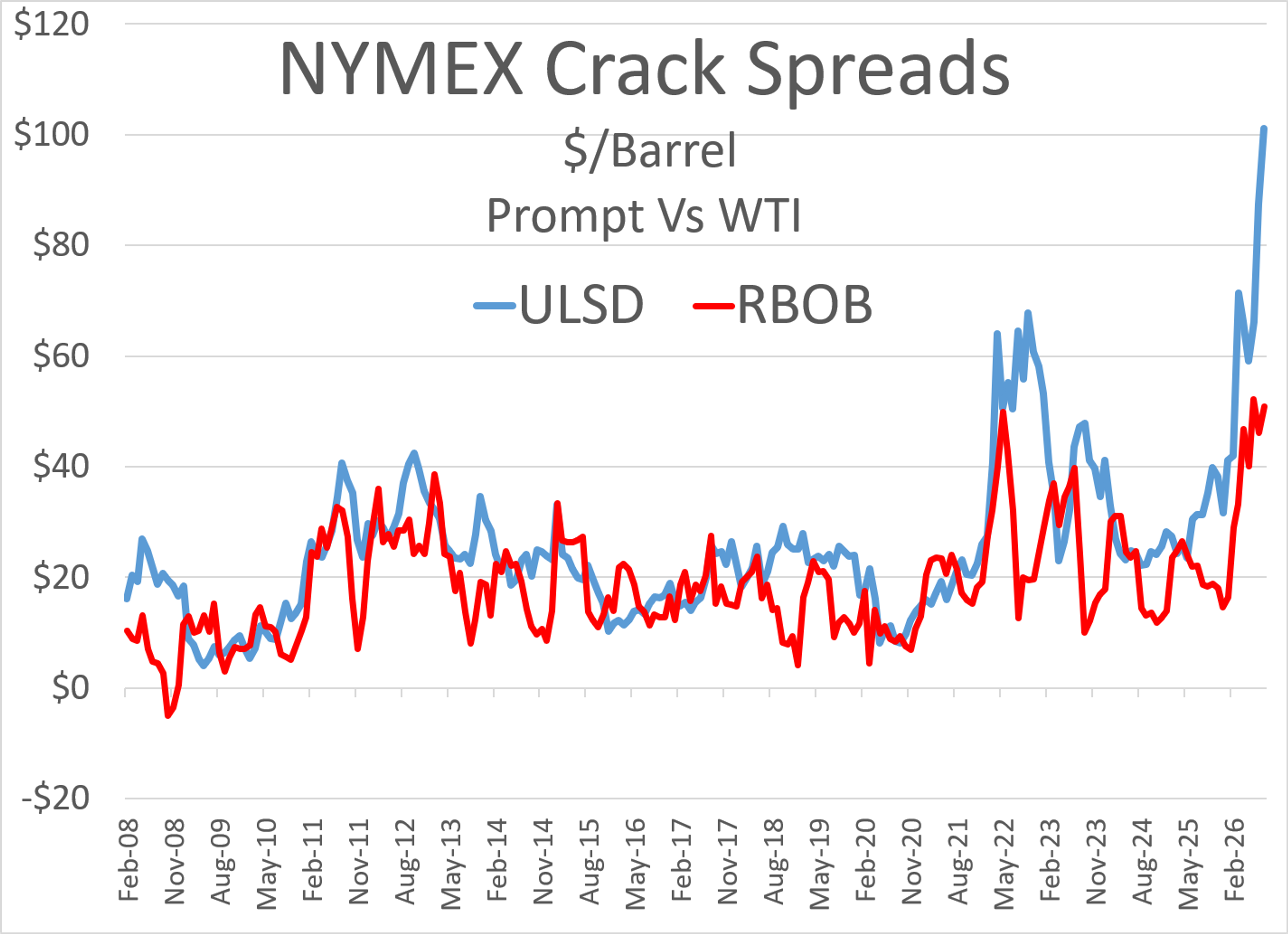
Crude oil prices are taking a turn leading the energy complex higher to start Thursday’s session, after record-high crack spreads got much of the market’s attention in the front half of the week. A new social media proclamation of economic warfare against Iran is getting credit for the overnight rally.
The big mystery of how many ships are actually transiting Hormuz continues to confound, with U.S. military sources telling Axios that their secret overnight ship caravans are bringing 15-20 tankers a night through a southern corridor, with overwatch from the U.S. Airforce and Navy as they move. These claims would validate the Energy Secretary’s claims from a week ago if proven true. Private ship tracking services like KPLER continue to suggest the real number is much lower, but it will take a few weeks until these ships arrive at their destinations (or not) to figure out which story is more accurate.
You could argue that today’s 4% rally in oil prices suggests the market isn’t buying the story, they’re buying the crude. The counter argument is it does seem that oil futures have been more fixated on the long term vs current shipping numbers throughout the conflict, suggesting this rally has more to do with economic warfare pushing peace farther down the road more than whether or not tankers are actually transiting the strait.
Trouble in the RD market? Quantum Commodities is reporting that a shortage of hydrogen as several plants are down for various reasons is creating trouble for RD producers on the USGC. After months of high diesel prices and high RIN values pushing domestic RD production to record levels, this hiccup in hydrogen supply appears like it will drive a meaningful drop in output near-term. So far it’s unclear which hydrogen facilities are offline, and how long this issue might last, but give $100/barrel crack spreads for traditional diesel and refiners running all-out, there certainly will be no shortage of demand for hydrogen anytime soon, which will complicate RD output since it needs somewhere around 5 times as much hydrogen to make. This shortage has already pushed values for RD in the California market up from the heavy discounts we’d seen over the past few months.
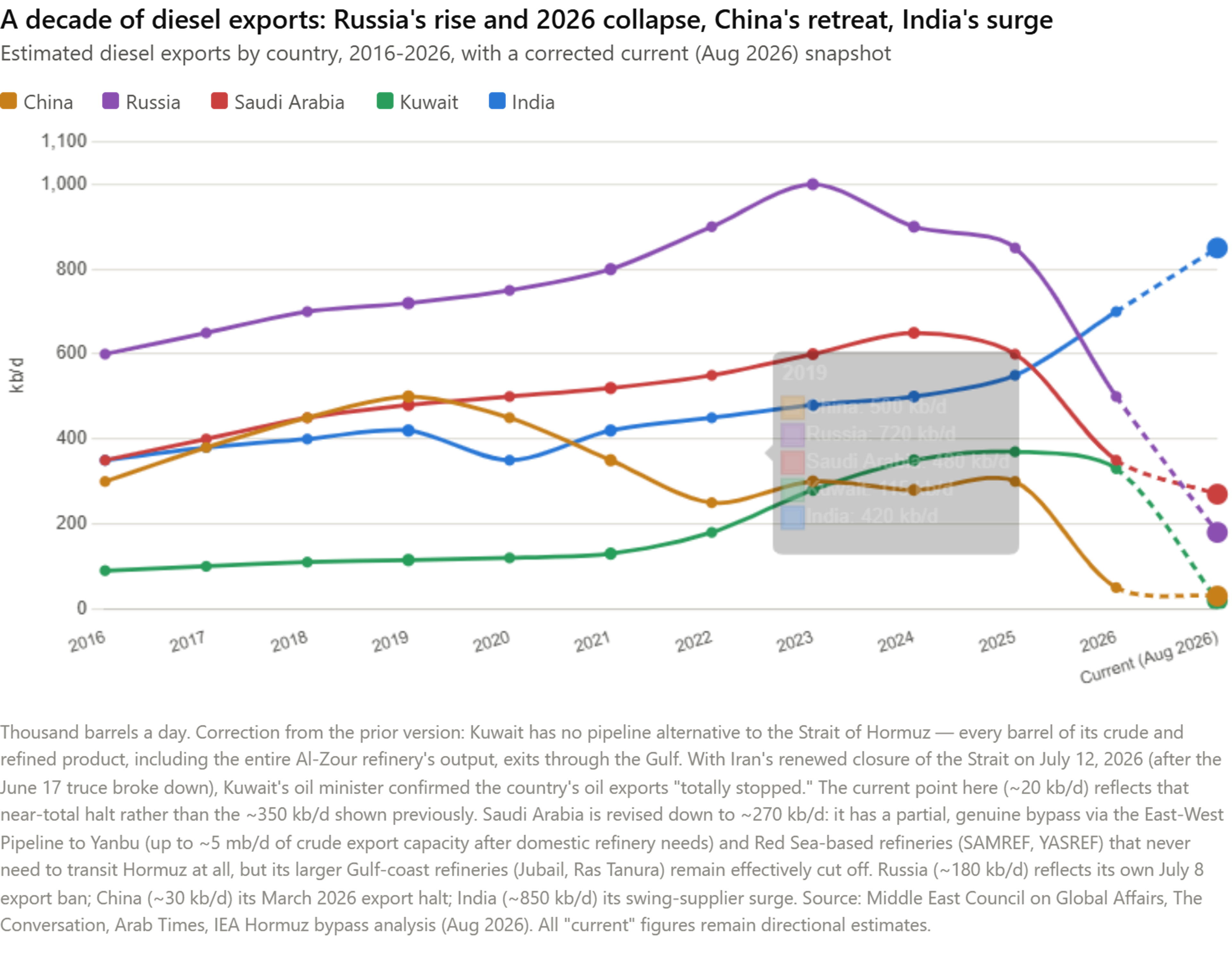
Ukraine hit another Russian oil refinery overnight as it returns to its record setting pace of attacks after a 5 day break. Improving targeting (aided by the U.S.) and heavier payloads are making these strikes more impactful, not just more numerous, which is having dramatic impacts on Russian fuel supplies. Reports that just 28% of the country’s retail stations have supply surfaced this week, even before the last 2 strikes had happened. For the global market, seeing Russia turn into a diesel importer, when it was the world’s largest diesel exporter just 5 years ago, is one of the major reasons we’re seeing diesel margins approach $2.50 per GALLON (AKA $100+ per barrel).
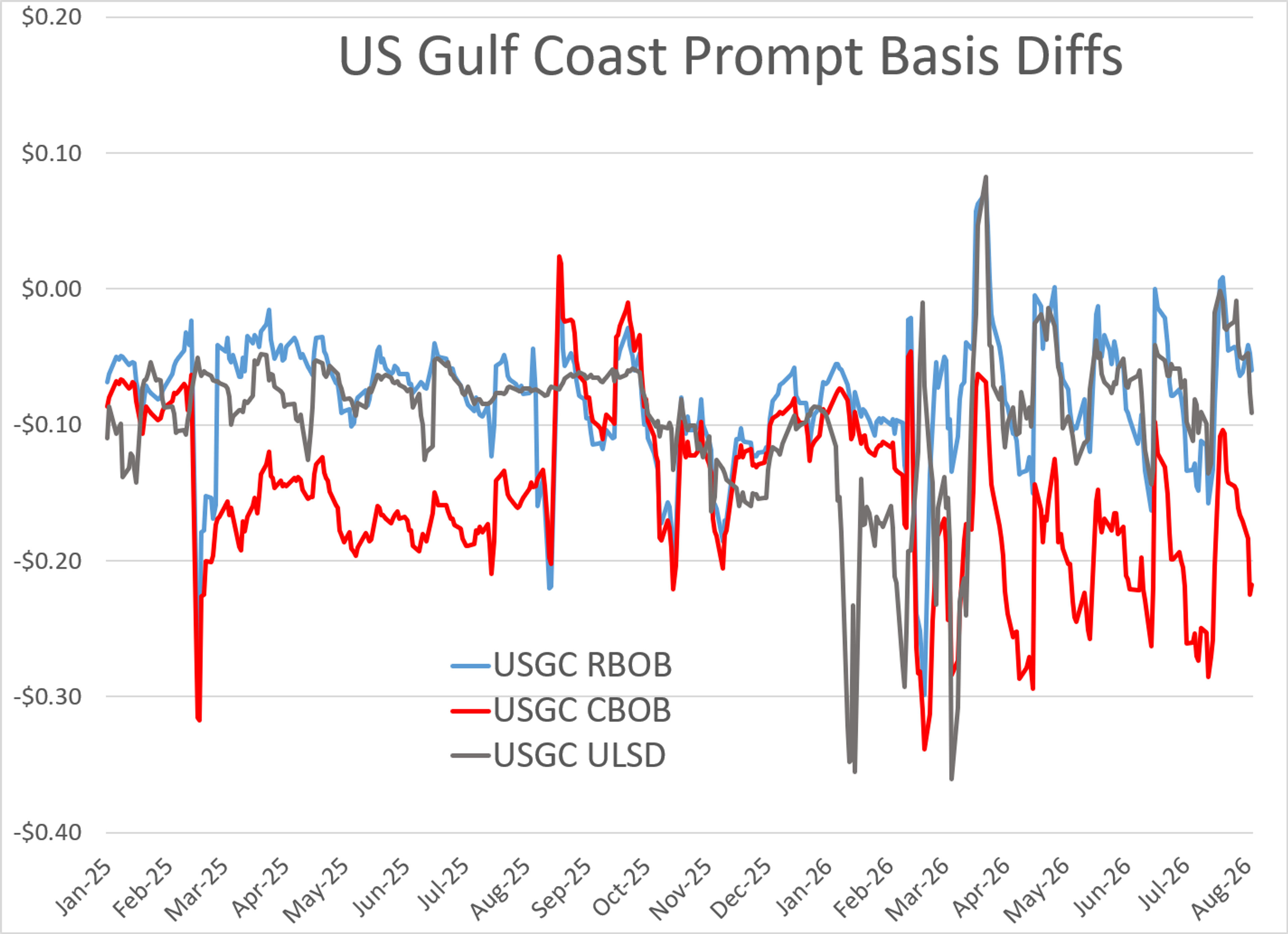
There were 4 refinery hiccups in TX reported to the TCEQ Tuesday and a 5th, but they didn’t stir the USGC cash markets at all Wednesday with differentials for gasoline and diesel all slipping lower on the day. Of course, only 1 of the 4 plants involved (Marathon Texas City/Galveston Bay) feeds the USGC spot market directly, while the Corpus refiners aren’t tied into the Colonial line, and supply the San Antonio/Austin/DFW markets, and the Borger refinery ships to W. Texas, NM and CO.
Marathon reported an upset in an Alkylation unit at its 630mb/day Galveston bay facility.
Citgo had an upset in an FCC unit at its 167mb/day Corpus Christi plant
Flint Hills reported an upset in an FCC unit at its 350mb/day Corpus Christi facility Tuesday, and then reported they’d found a hole in piping in a cumene unit Wednesday, which caused another day’s worth of flaring.
P66 reported another upset at its often troubled 149mb/day Borger TX refinery, although the type of unit impacted wasn’t specified.
Human Analysis of the DOE’s weekly report below. Charts and AI analysis are attached.
Crude stocks posted a build despite a drop in demand for refined products and slightly increased production being the only metrics pointing in that direction. Imports fell while exports rose and refinery runs picked up. PADD 3 had another large build last week, moving from a seasonal low to well above the 5-year range over the past couple reporting periods. The commercial build wasn’t enough to cover the SPR release, which is now at 1982 levels (the first year weekly recordkeeping began), so total U.S. crude stocks saw a net decline on the week.
Refinery runs picked up across all 5 PADDs and PADD 3 accounts for the small bump in capacity. U.S. refineries are still running all out with PADDs 2 & 3 at seasonal highs and only PADDs 4 & 5 running behind their 5-year averages. However, PADD 5 is likely much closer to average than the chart suggests due to two less refineries contributing to the 2026 data. Total throughput moved to a 6-year high with utilization rates at 7-year seasonal highs.
Diesel stocks declined as increased demand was offset by the drop in exports, which remain well ahead of year-ago levels. PADDs 1-4 all drew and held below their averages. PADD 5 posted the lone build, despite a sizeable drop in imports over the week, and is spot on with last year’s seasonal high when considering renewable inventories.
Gasoline imports slowed significantly but that impact was negated by larger drop in demand. Production also increased closer to the seasonal average and helped net the inventory build. Stocks remain low across every PADD regardless of last week’s changes and the total U.S. is still hovering around 14-year seasonal lows.
Jet fuel stocks increased on weaker demand. Production and exports both remain at seasonal highs despite the decline in export activity. Inventories are above average in all PADDs except 4, and the total U.S. sits about 3 million barrels above the 5-year average.
Latest Posts
Supply Disruptions Persist As Markets Focus Elsewhere
Geopolitics, Diesel Shortages, And Refinery Cuts Shape Energy Markets
Geopolitics, Diesel Shortages, And Refinery Cuts Shape Energy Markets
Week 39 - US DOE Inventory Recap
Volatility Returns As Diesel Surges And Global Supply Chains Tighten
Governors Take Action As Energy Markets Navigate Volatility
Social Media
News & Views
View All
Supply Disruptions Persist As Markets Focus Elsewhere
Geopolitics, Diesel Shortages, And Refinery Cuts Shape Energy Markets