Backwardation, Bottlenecks, And Brinkmanship: The Anatomy Of A Market Under Siege

Energy markets are off to the races again Thursday, with crude and refined product futures all reaching multi year highs following news that Iranian attacks on tankers were spreading and the Strait of Hormuz remains essentially closed for business.
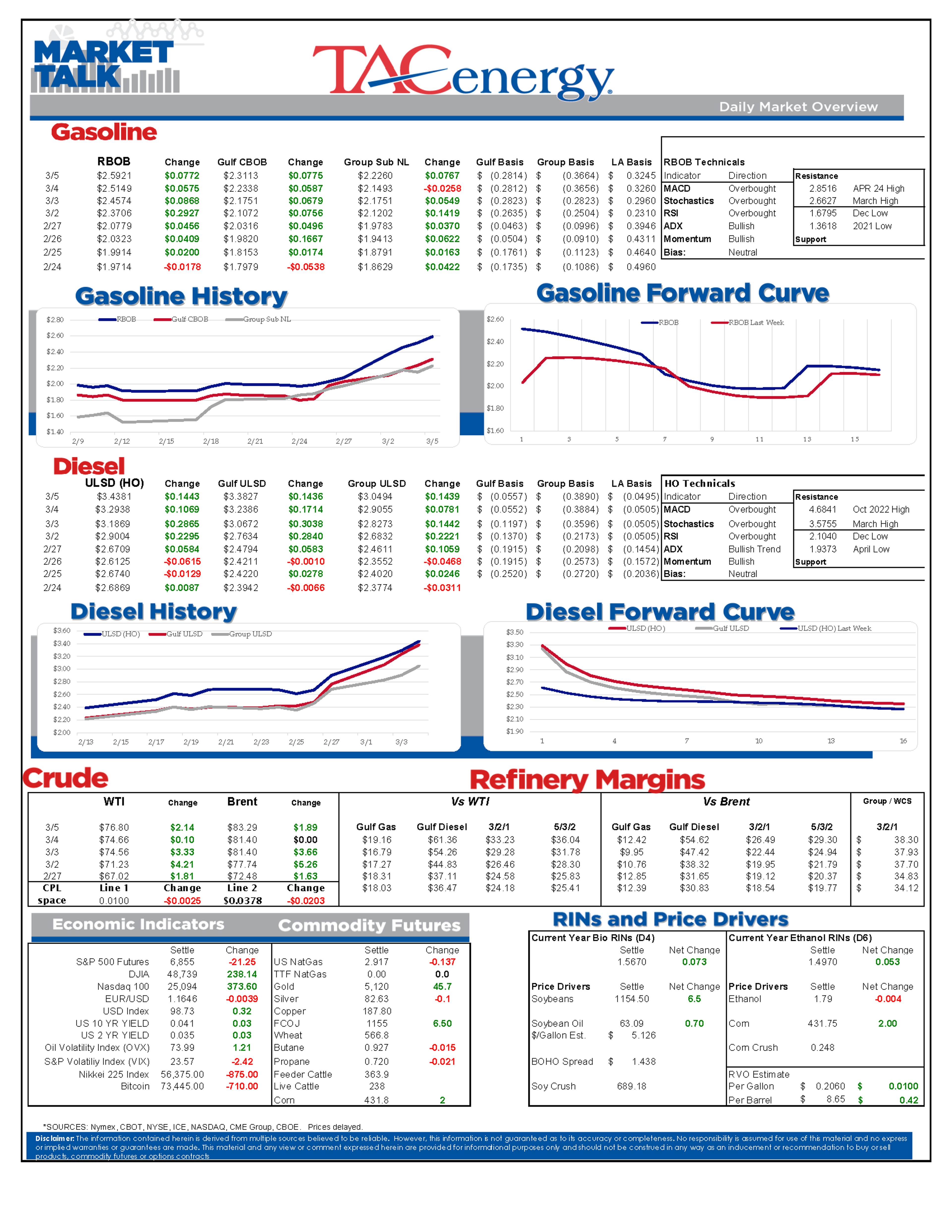
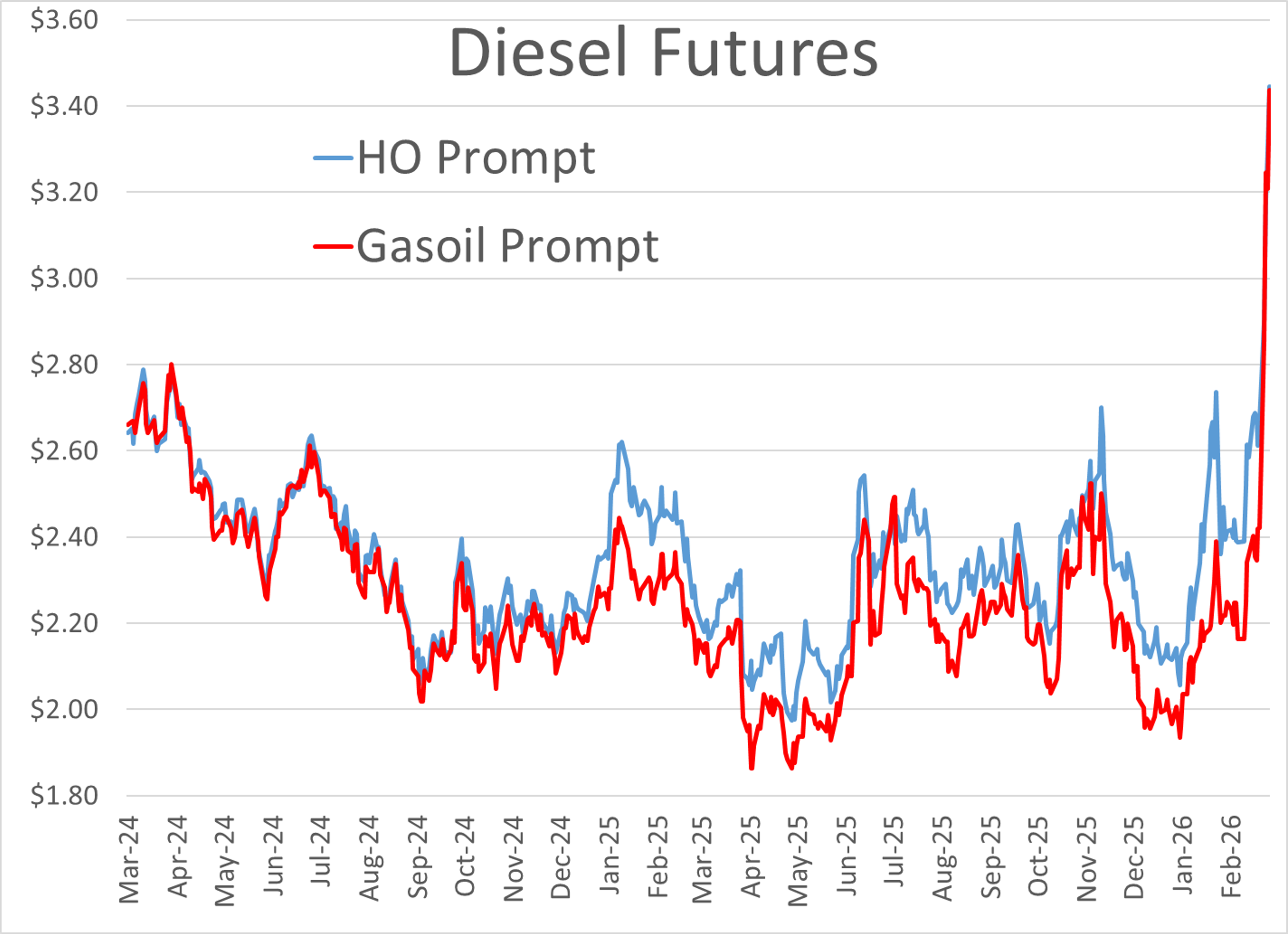
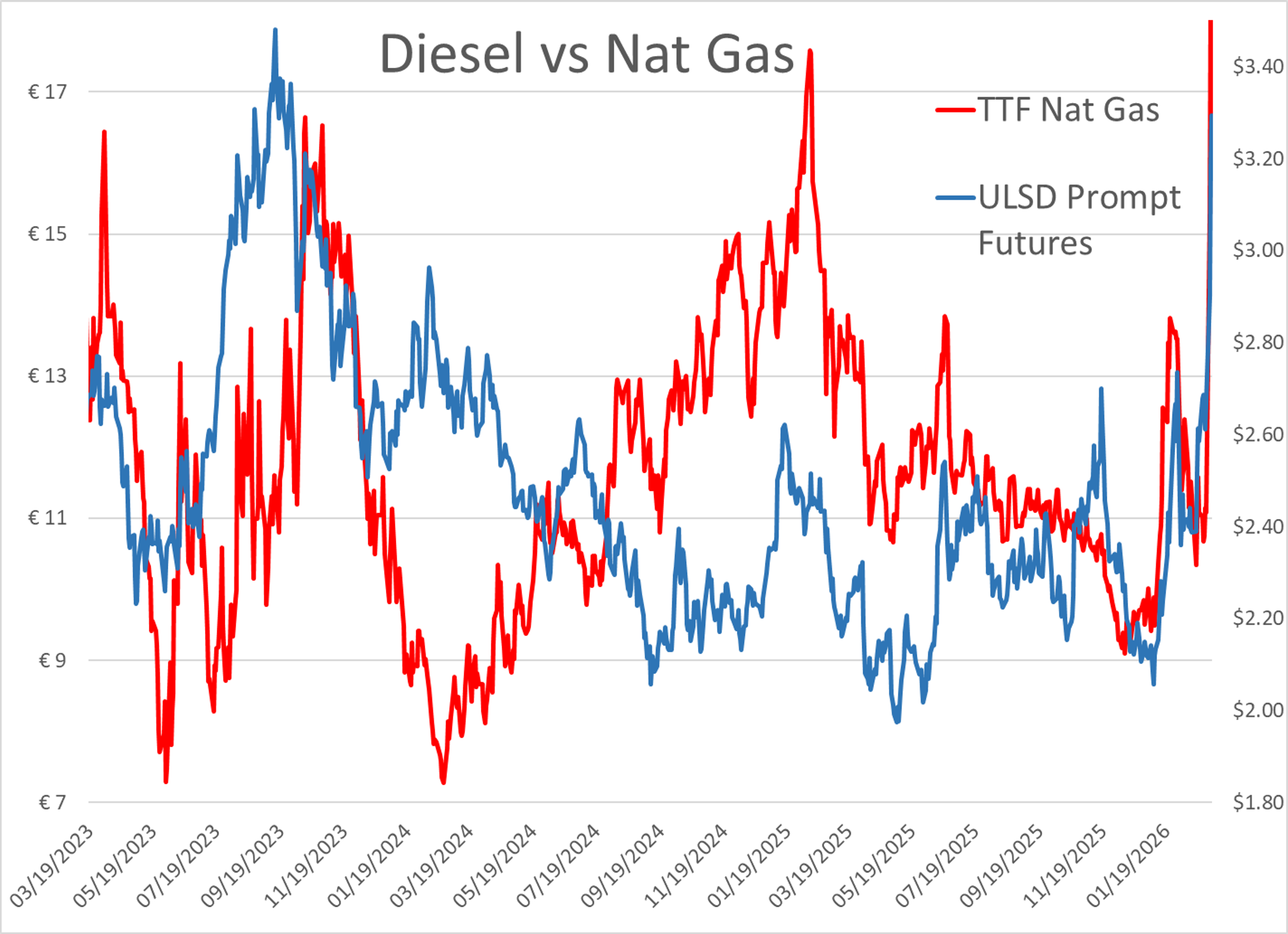
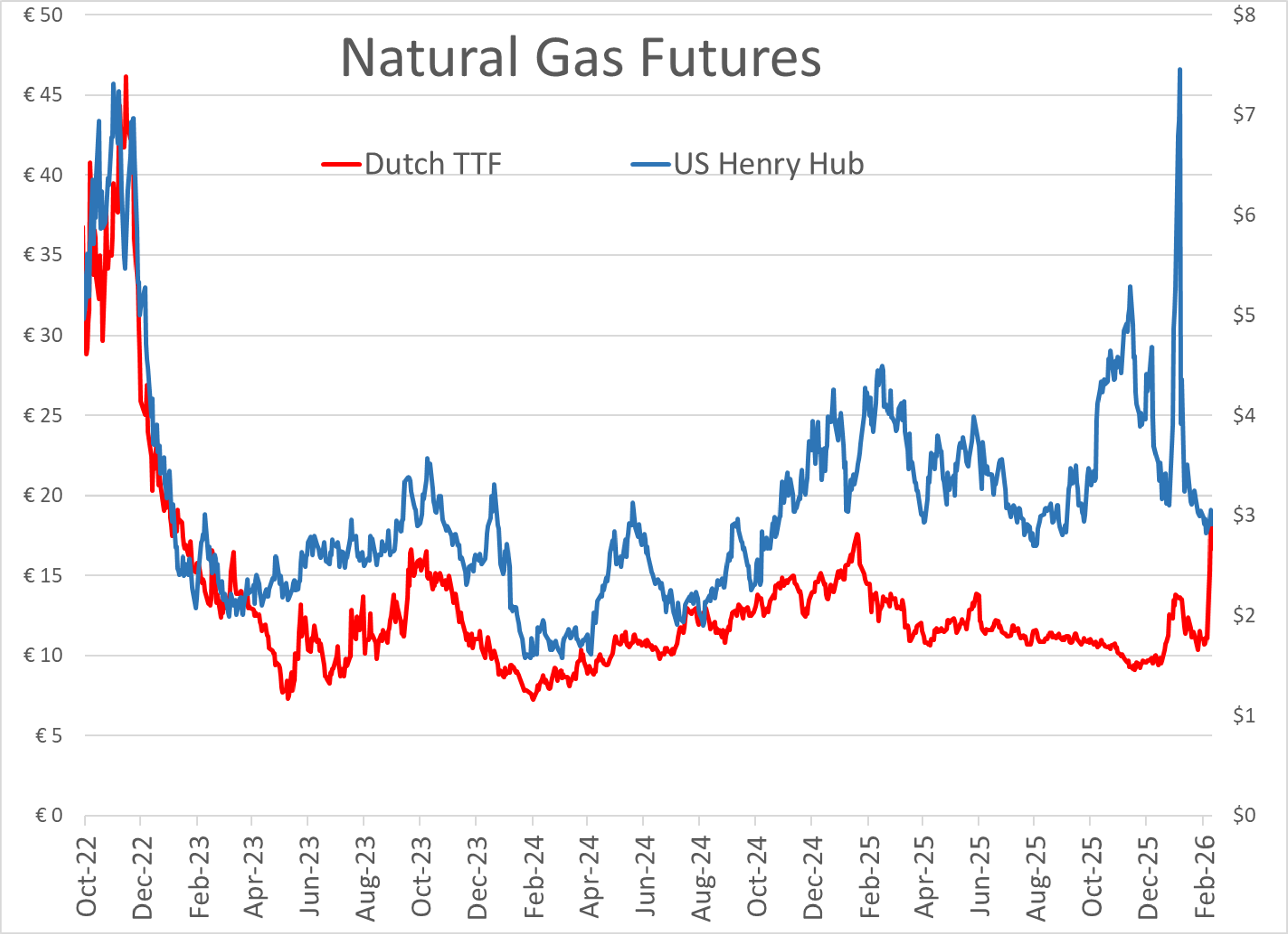
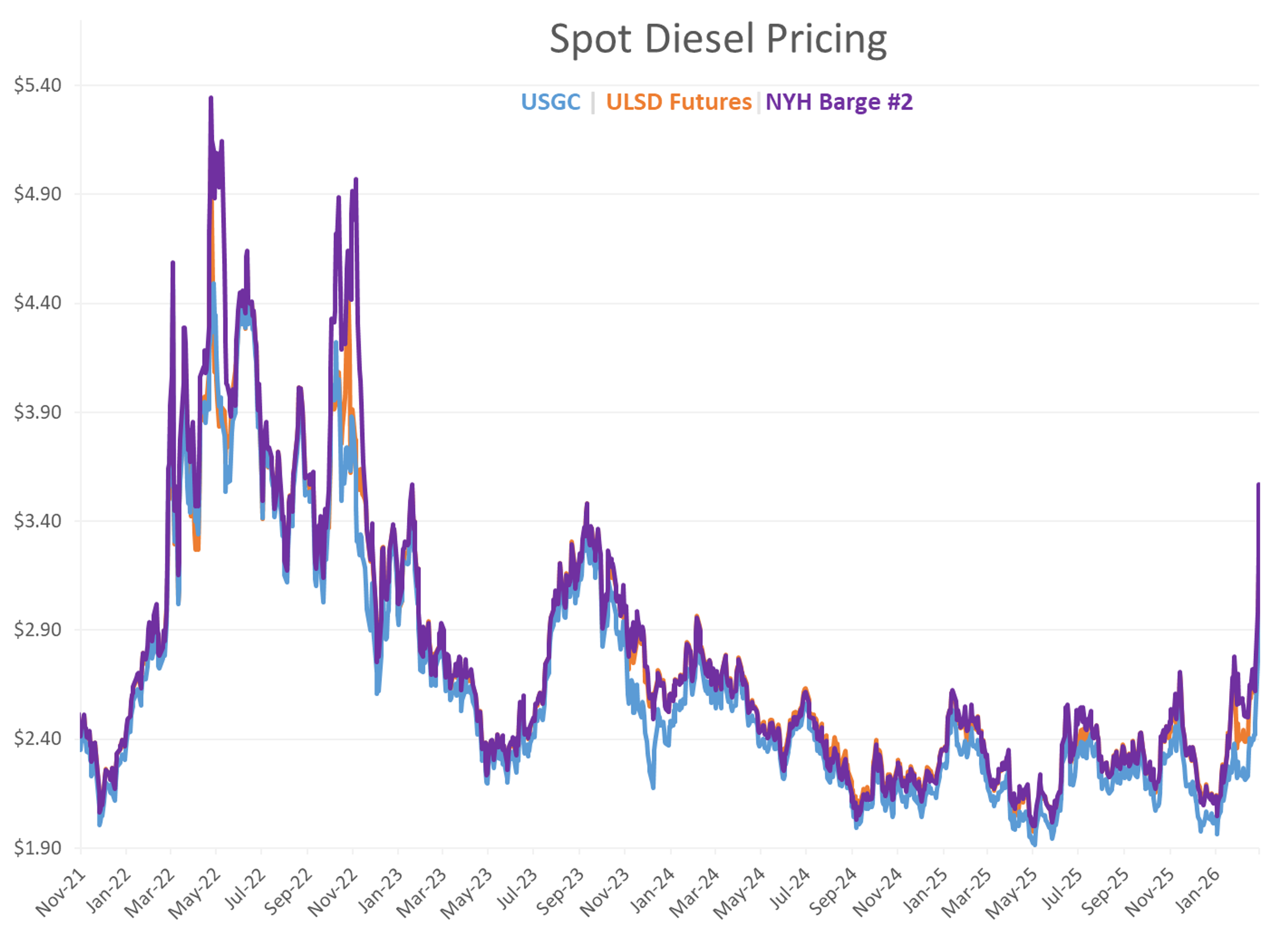
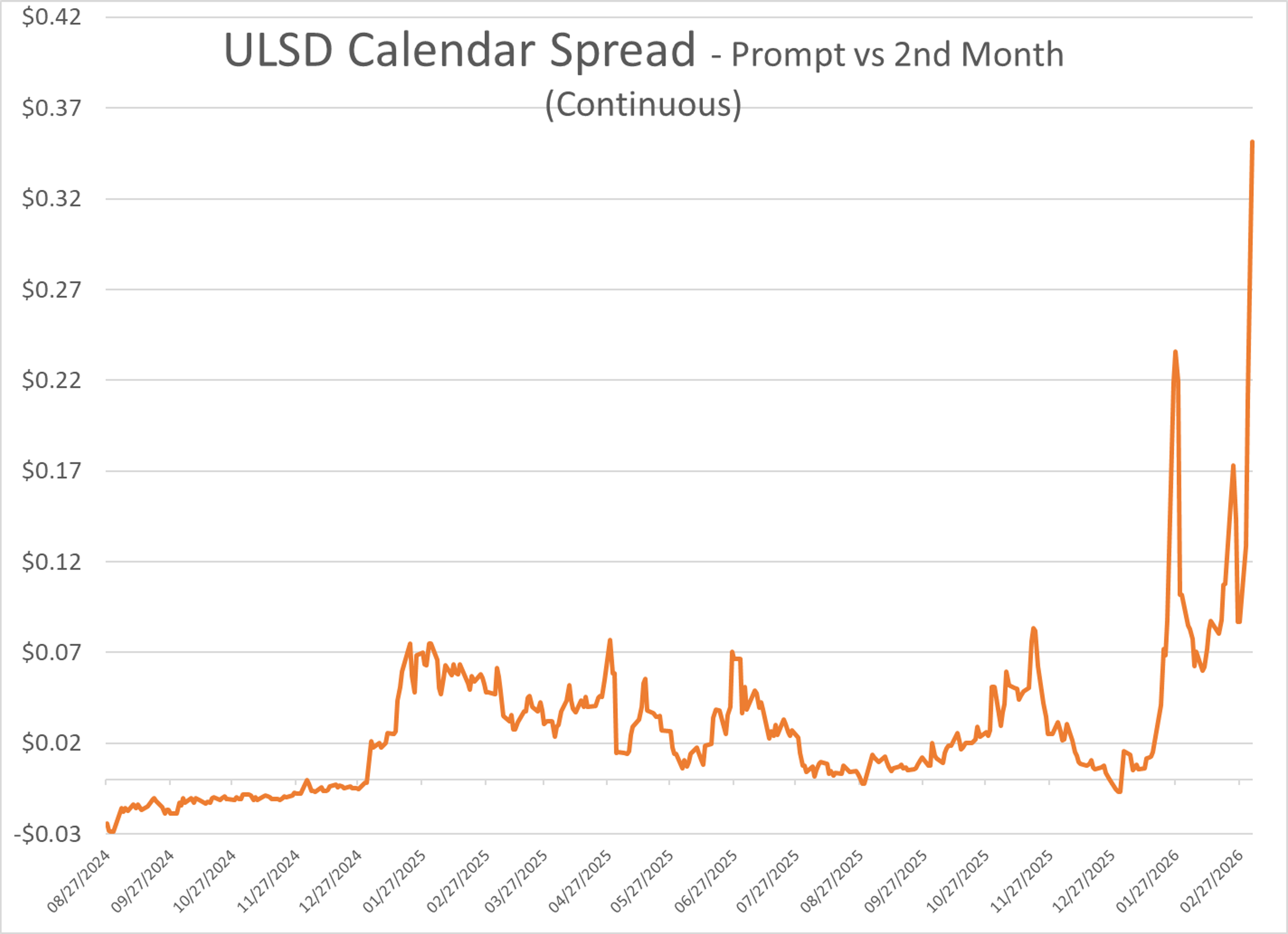
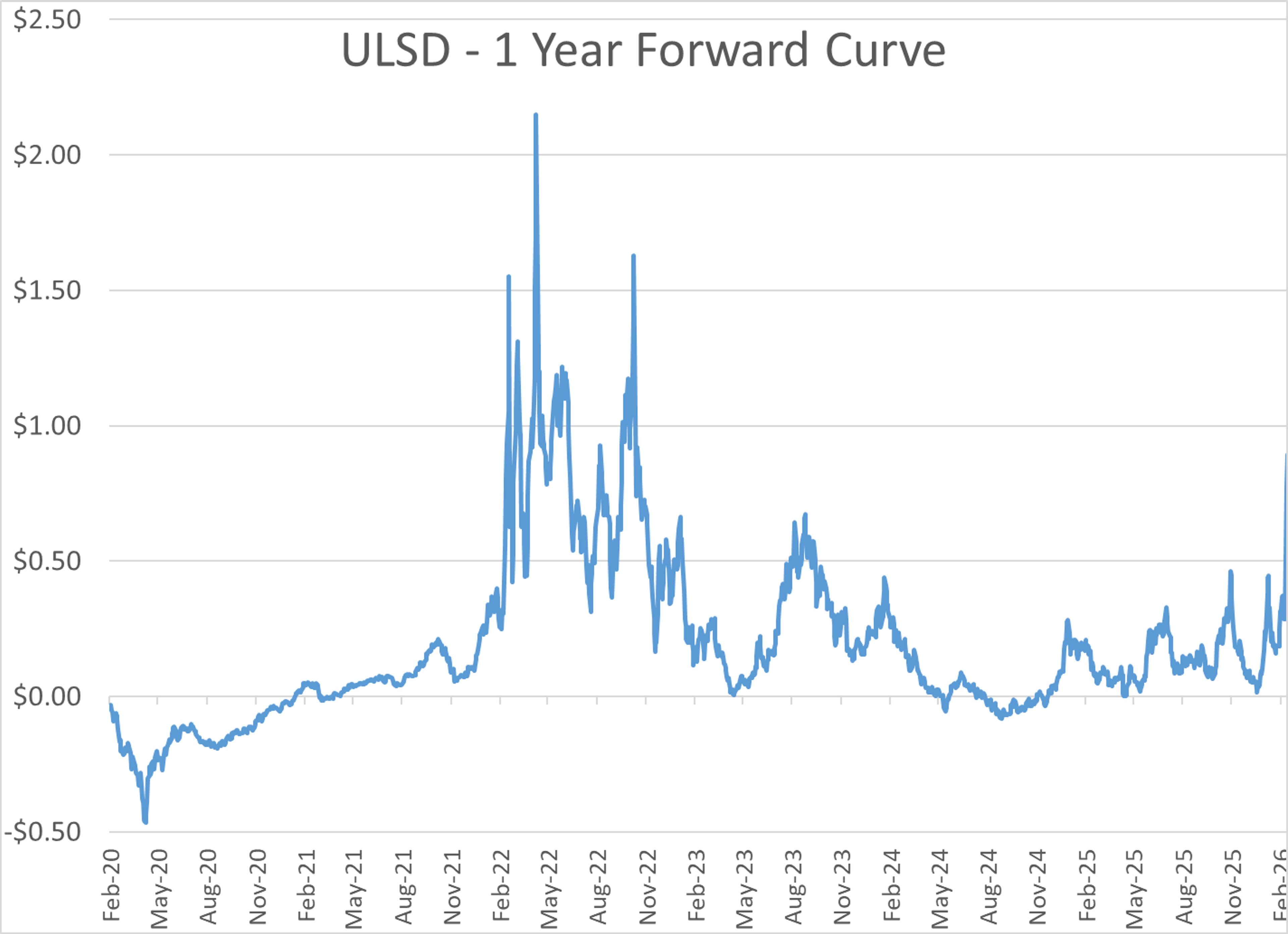
Diesel futures continue to lead the price swings, touching a 3.5 year high at $3.5755 as nearly half of Europe’s middle-distillate imports are reportedly stuck on the wrong side of the strait, and diesel is once again being called on to supplement natural gas supplies as a fifth of the world’s LNG is also out of commission. Although the price action is certainly severe with cash prices up nearly $1/gallon over the past 5 trading days, it’s also relatively tame (so far) compared to what we saw in 2022, suggesting the market still views the Hormuz lockdown as a temporary situation.
A note from the Economist yesterday highlighted the stunning military success achieved so far in the U.S. and Israeli campaigns, but absent from the story was the lack of control so far on the world’s most economically important waterway.
An attack on a U.S. ship sitting at anchor off the Kuwaiti coast threatens both ecological and psychological emergencies, as it’s not just the ships making a run for it through Hormuz being targeted, meaning the hundreds of sitting tankers awaiting safe passage (or insurance) now look more like sitting ducks. The good news is that Iran’s capabilities to make accurate attacks are quickly being diminished, but the bad news – as we’ve watched for years in Ukraine – is that of the thousands of inexpensive drone launches, only one has to be on course to wreck your day.
Speaking of water, Bloomberg had an interesting note on the risk to desalination facilities in the region from the war, making a similar argument to one Texans are familiar with, that ultimately it’s the water that will matter more than the oil.
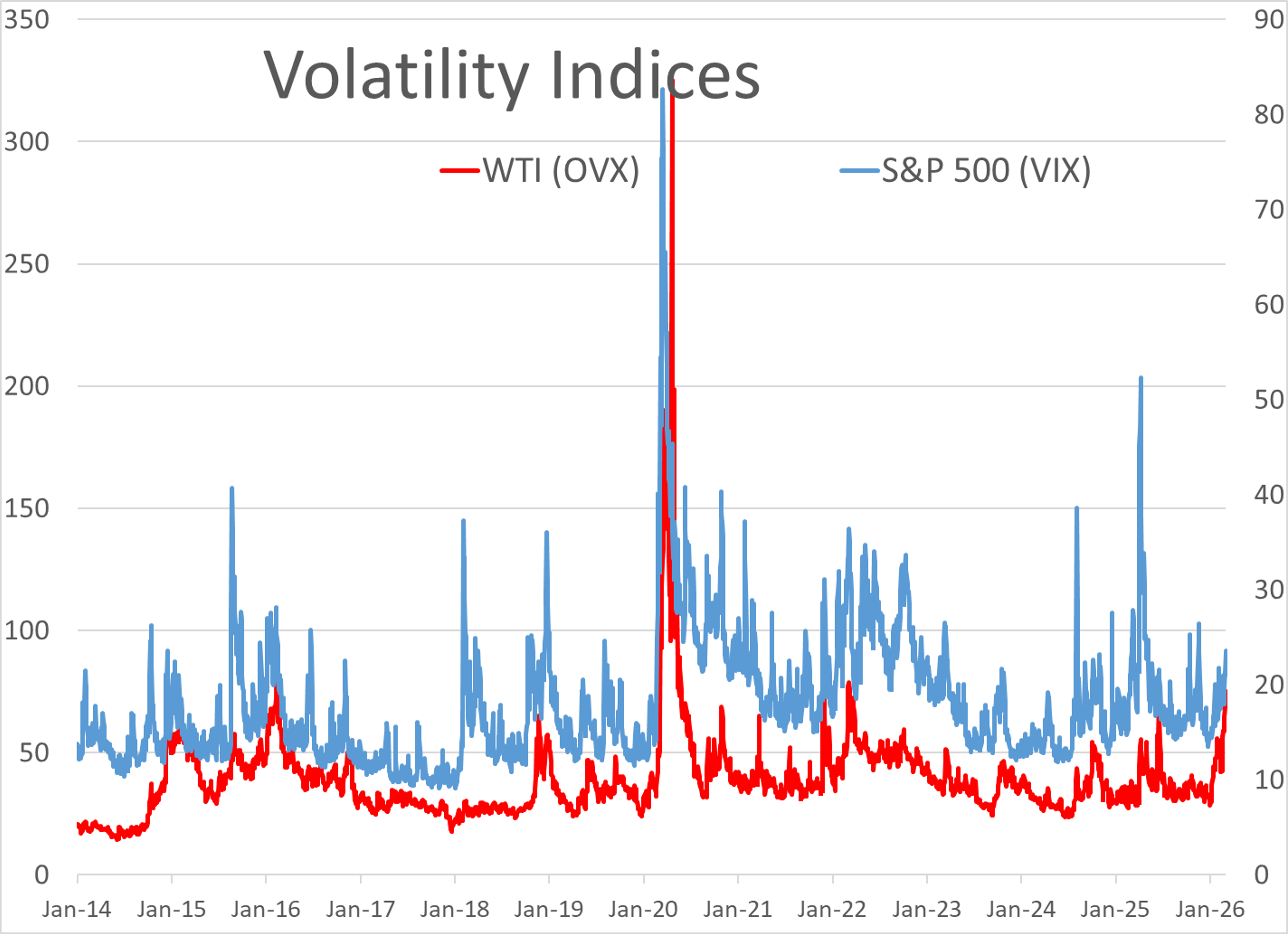
Other things to watch out for as we debate whether or not we’re witnessing 2022 all over again: The CME group will continue to raise margins as volatility spikes, which combined with steep backwardation and increased inventory costs may squeeze some shippers out of the market. We saw a few companies go out of business due to the increased costs and risks 4 years ago, and now we’ll see whether or not those groups feel like touching the stove again.
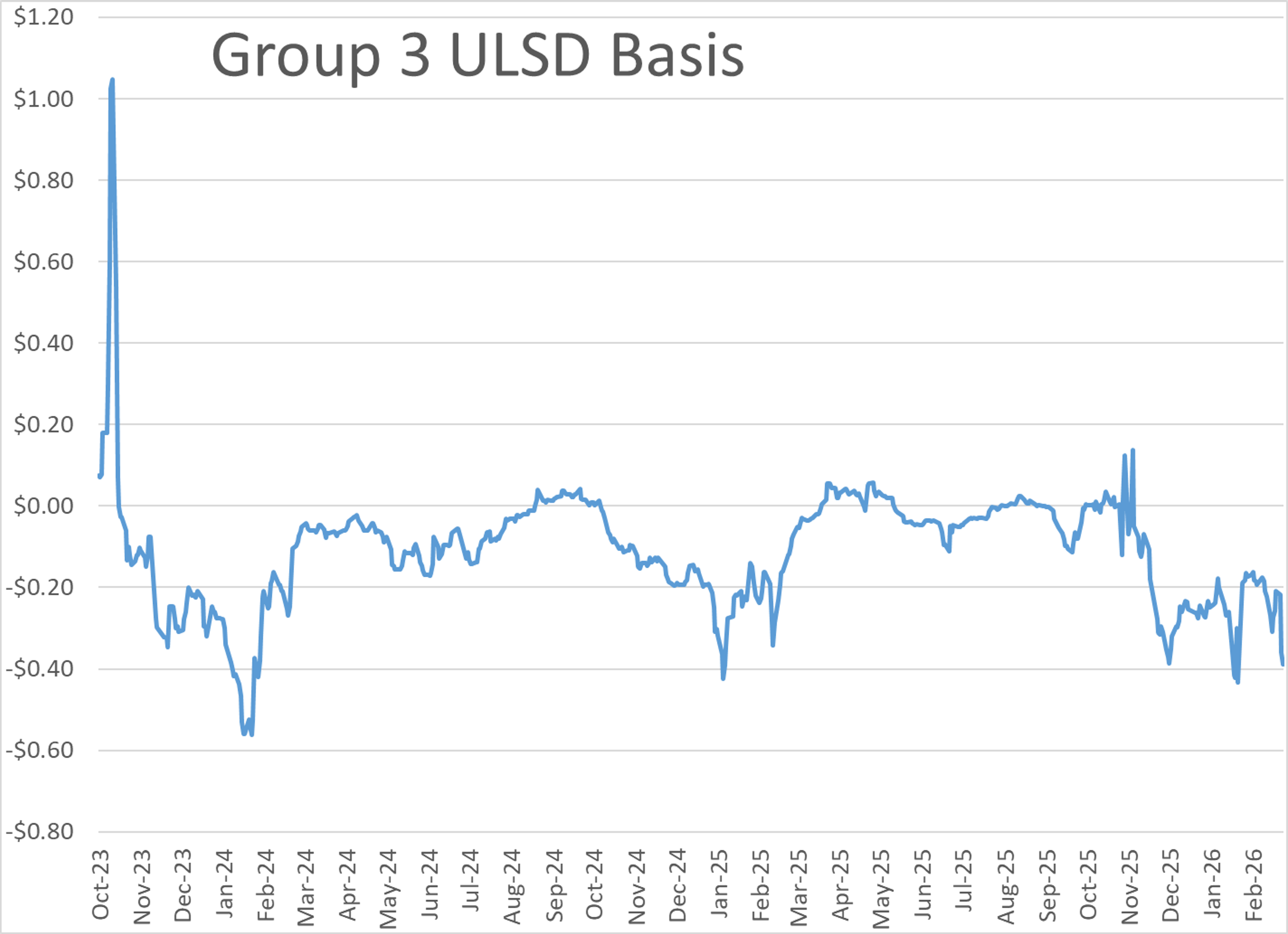
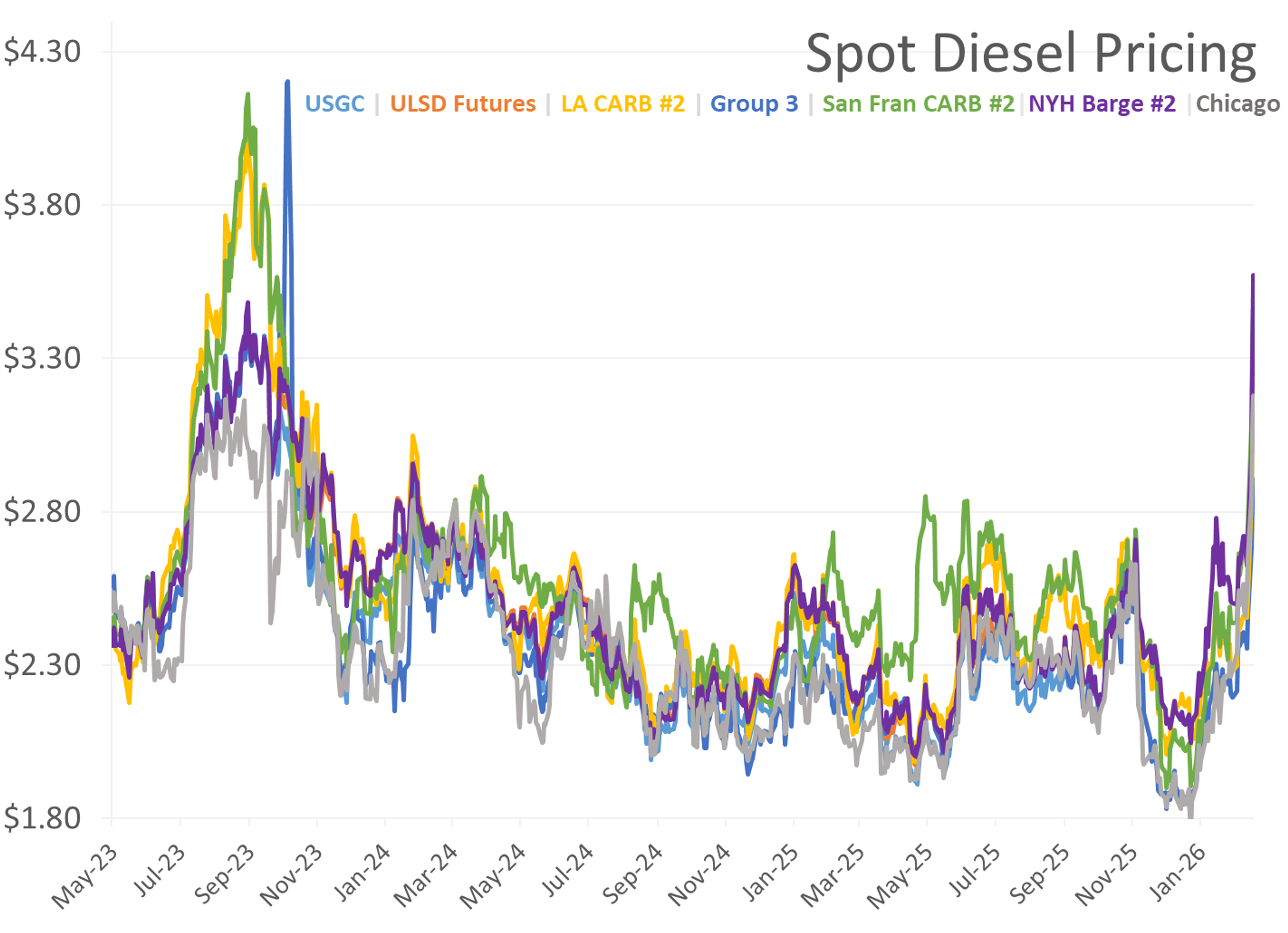
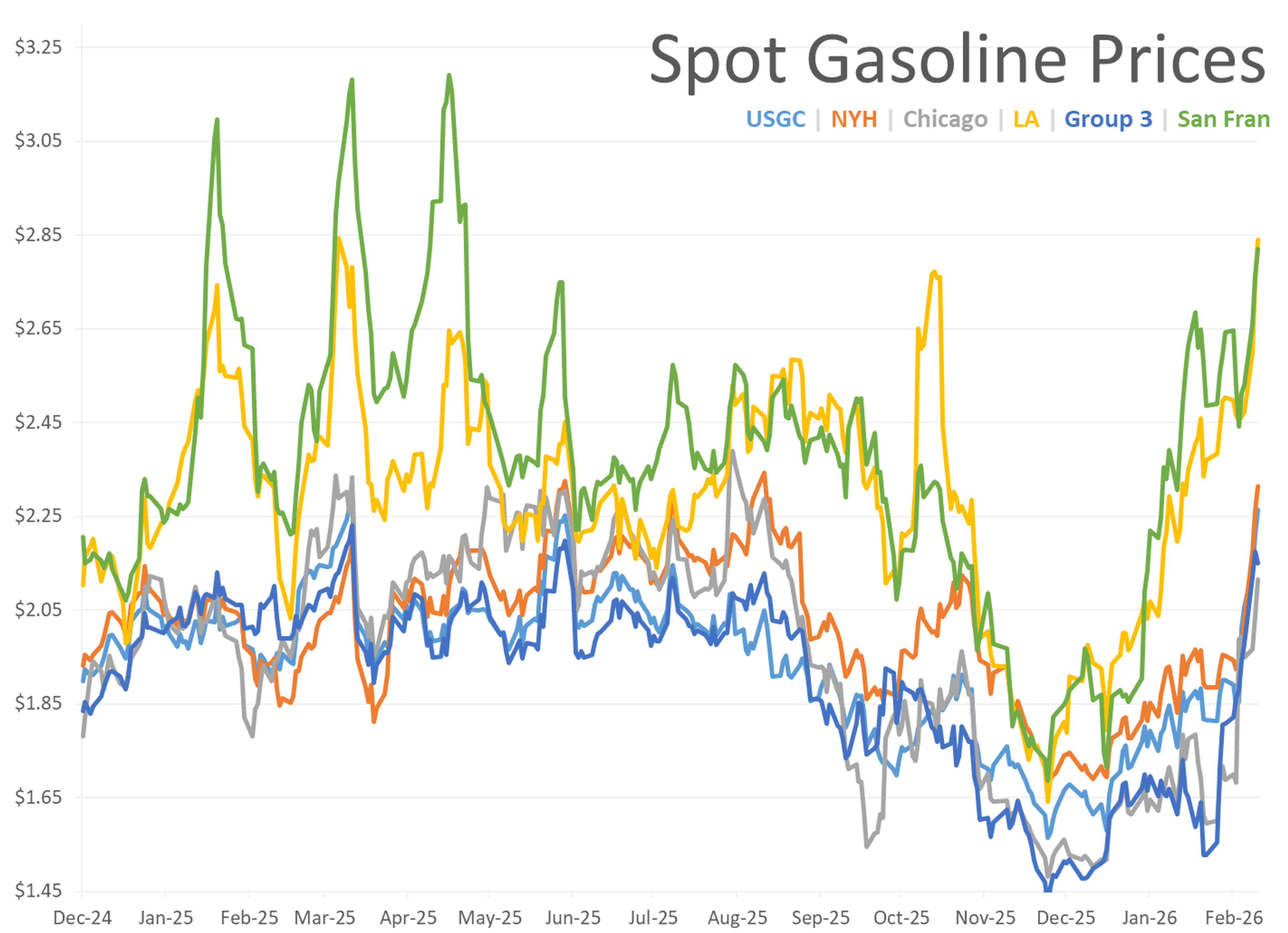
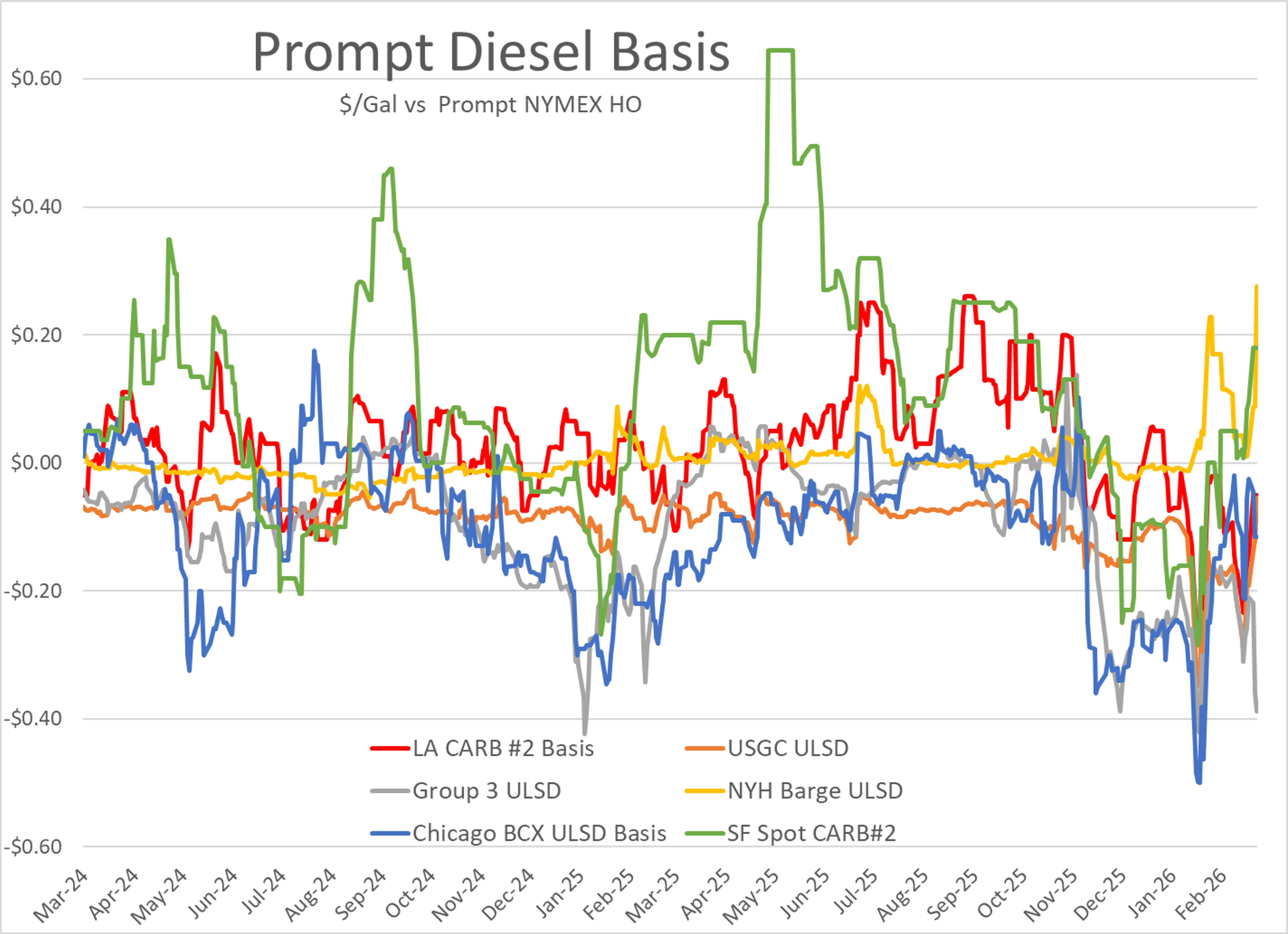
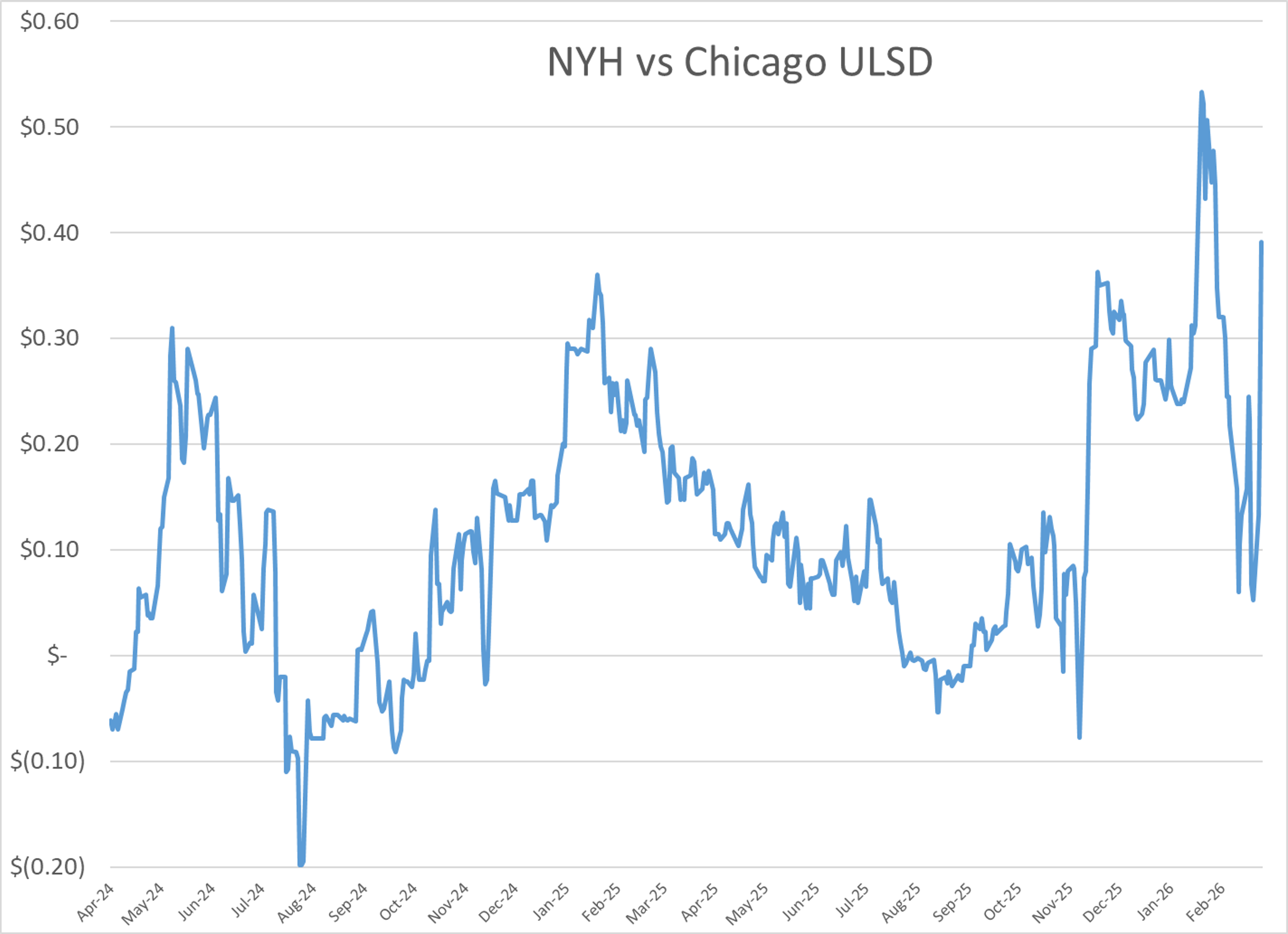
Cash markets across the U.S. are seeing the widest spreads for diesel prices that we’ve seen since the chaotic early days of the Ukraine war, with some 60 cents difference between prompt values in the NY Harbor and the Midwest. See charts below.
Russia’s President isn’t letting a crisis go to waste, threatening to halt its remaining natural gas exports to Europe immediately in retaliation for the continent planning to finally stop its purchases next year – a full 5 years after initial attempts to ween themselves from Russian supplies.
Notes from the DOE’s weekly status report. Charts attached.
Crude stocks built in every PADD except 5 last week with a big drop off in demand. Refinery runs increased substantially in PADDs 1 & 2 setting new seasonal highs. PADDs 3 & 4 are still at seasonal highs as well despite slightly reduced run rates, while PADD 5 continues to move in the other direction, setting fresh seasonal lows. Overall utilization rates remain at the high end of the 5-year range and total U.S. refinery runs are about 450kbd ahead of year ago levels.
Diesel stocks were up slightly with a huge drop in import activity being tempered by falling demand. PADD 1 had a sizeable build but is still a couple million barrels below its 5-year range. PADD 2 also posted a small increase but is at the lower end of its range. PADDs 3, 4, & 5 declined but the former two are well above their seasonal averages while PADD 5 slipped back to the low end of its range. Renewable diesel stocks drew everywhere but PADD 4, which had a healthy increase to close out the year. PADD 2 dropped to its lowest value of 2025, but overall RD stocks finished just ahead of year ago levels.
Despite a slide in demand, gasoline inventories drew with imports falling back below the 5-year range while exports surged to new 2026 high. Stock levels are lowered, but all regions outside of PADD 5 are well above seasonal norms and holding the total U.S. count at a seasonal high, about 6 million barrels above the 5-year range. Ethanol stocks continue to increase despite exports jumping back to 2026 highs, although production levels remain just ahead of their 5-year range even with the slow down over the past couple weeks.
Latest Posts
Bullish Diesel Fundamentals Overshadow Weakness In Gasoline Markets
Week 41 - US DOE Inventory Recap
Energy Markets Juggle Supply Risks, Inflation Pressures, And Geopolitical Conflict
Crude Climbs For A Fifth Day While Global Fuel Supplies Remain Under Pressure
Refining Margins, Tanker Attacks, And OPEC Growth Shape Energy Outlook
Oil Rises As Political Chaos And Supply Risks Shake Markets
Social Media
News & Views
View All
Bullish Diesel Fundamentals Overshadow Weakness In Gasoline Markets
Week 41 - US DOE Inventory Recap