Refinery Strikes And Supply Threats Shift Market Sentiment

It’s a mixed bag for energy markets to start Friday’s trade, and while the most contracts are still looking at modest losses for the week, they’re nowhere near the technical breakdown levels of a few days ago. The optimism for peace has quickly faded as the world’s two biggest belligerents both signaled they’re not ready to make a deal to end their wars and the steady stream of attacks on energy infrastructure has helped keep markets on edge.
Yesterday the U.S. President said no deal with Iran was needed, and pulled the Vice President away from negotiations, which looks a lot like putting him in time out after his post-election rebuke of the war. The Russian President meanwhile is standing firm on territorial demands in Ukraine, and the Kremlin is playing games with whether or not European leaders will be allowed in the next round of negotiations, suggesting the progress noted earlier in the week isn’t likely to move the needle.
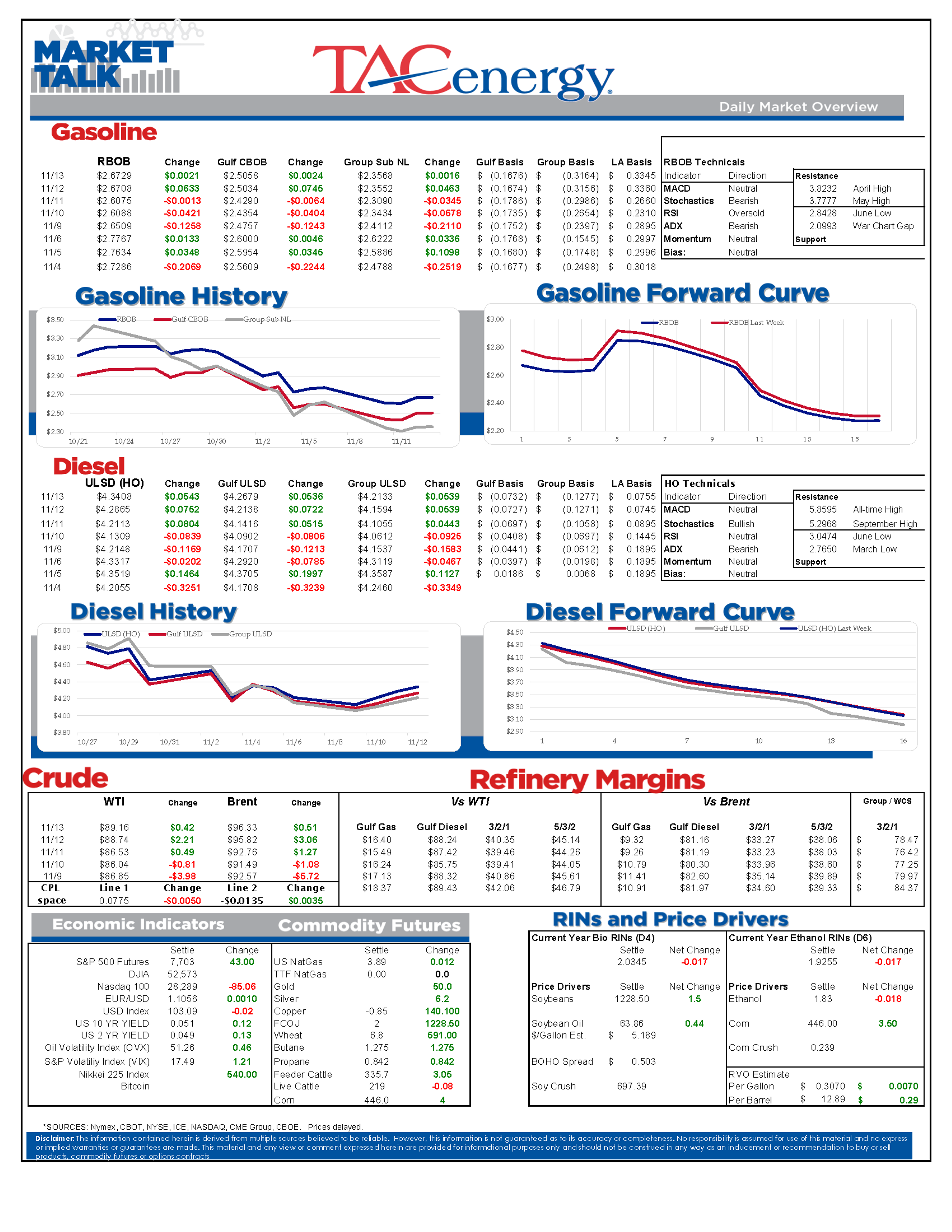
ULSD futures have bounced 35 cents from Tuesday’s low and have just turned positive for the week shortly before 8am central, which will make a notable technical victory for the bulls if the current gains hold on through the settlement.
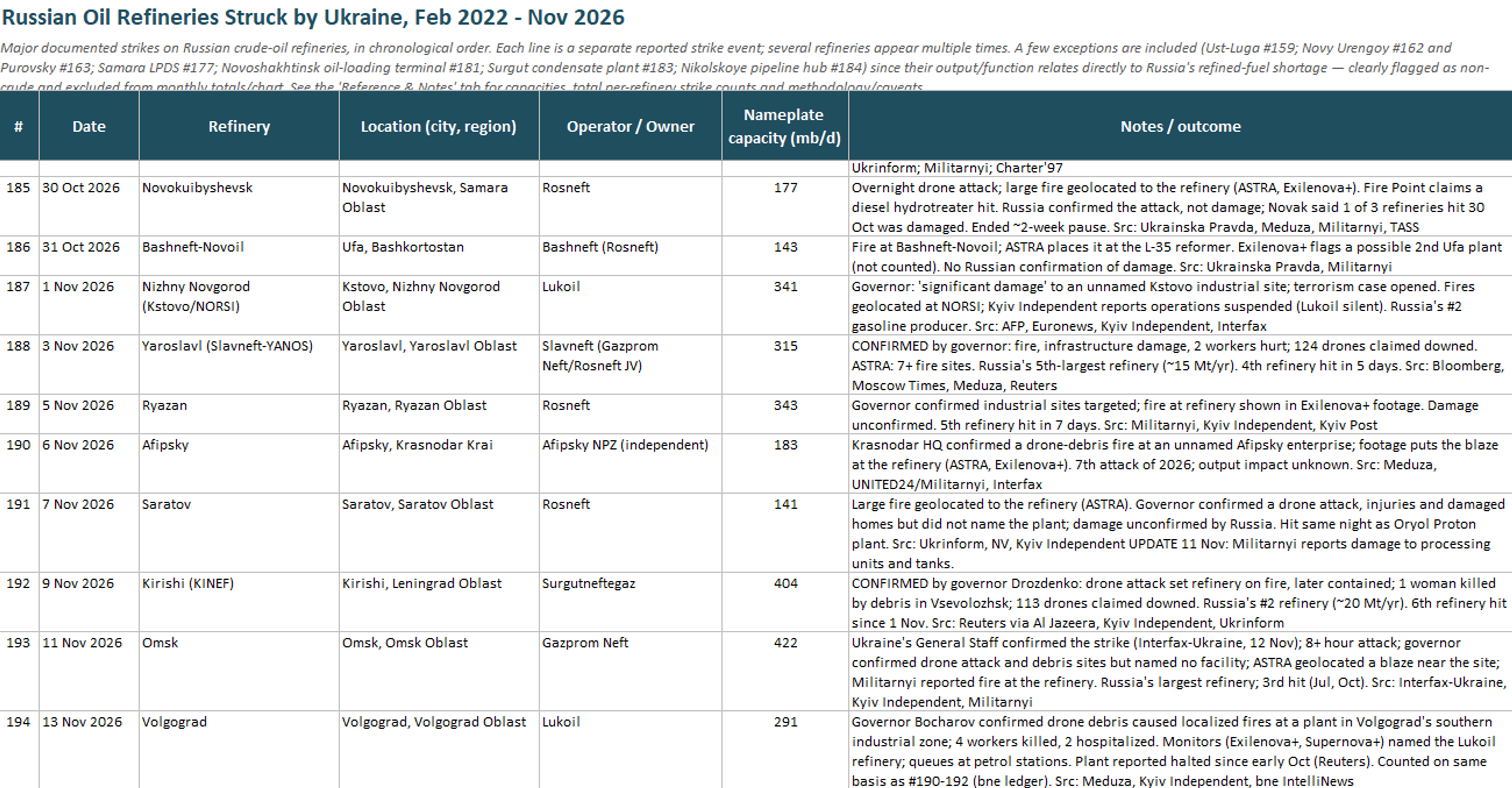
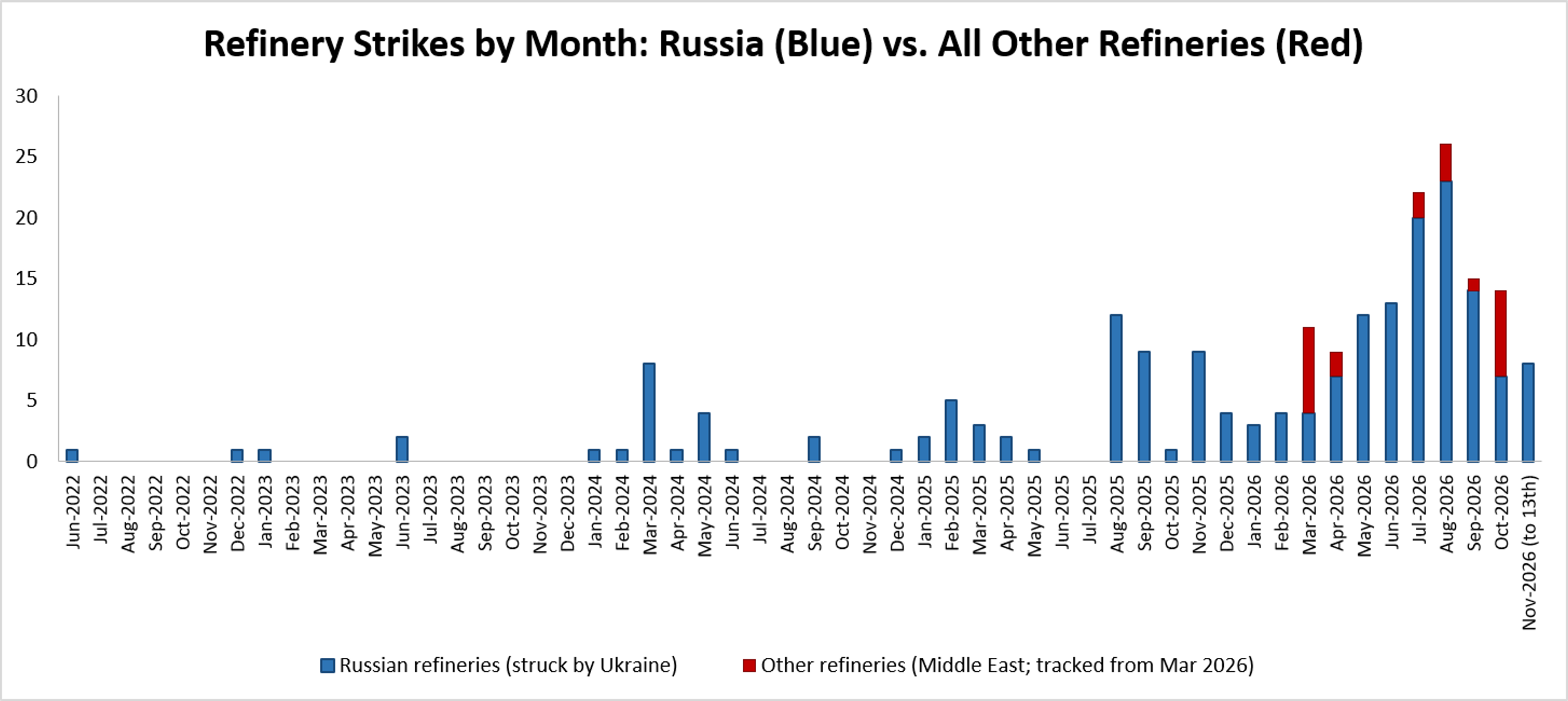
Ukraine’s drones hit the 291mb/day Lukoil Volgograd refinery overnight, marking the 10th strike in the past 2 weeks after Ukraine ended their temporary cease-fire. The refineries hit during that stretch represent around 46% of Russia’s total refining capacity, although it’s impossible to say exactly how much of that output has been taken offline from the strikes. The Volgograd facility was forced to cease operations earlier in the fall due to Ukraine’s attacks, so this latest strike likely does more to slow repairs than reduce current output.
The Houthis claimed 2 strikes against Saudi oil infrastructure Thursday. A drone reportedly hit a pumping station on the East/West pipeline that’s been used heavily this year to bypass Hormuz, and the Yanbu port which is the end of that pipeline and offloads exports to the Red Sea was attacked by a ballistic missile.
PBF reported more unplanned flaring at its 160mb/day Torrance CA officials Thursday, and Energy News Today is reporting that the facility has been forced to cut run rates due to problems in a hydrogen unit. LA diesel basis seemed to shrug off the news Thursday, while LA CARBOB gasoline basis saw a 7 cent rally, but that move could also be blamed on chasing the big double digit gains in the SF and PNW markets earlier in the week.
Chevron announced it would restart its biodiesel production facility in Ralston Iowa, after a 2.5 year shutdown caused by weak economics. The rapidly improving outlook for renewable producers has been well documented this year as the big rally in RIN and diesel values both helped pull many producers out of the red. While the plant’s restart is meaningful, particularly for the local community, it won’t have a large impact on overall supply with max output of 2.7mb/day (42 million gallons total/year) and a timeline of mid 2027 before production is back online. Meanwhile, the company’s 1.3mb/day biodiesel facility in Madison WI that was shut down at the same time as Ralston back in 2024 remains offline with no word on plans to restart.
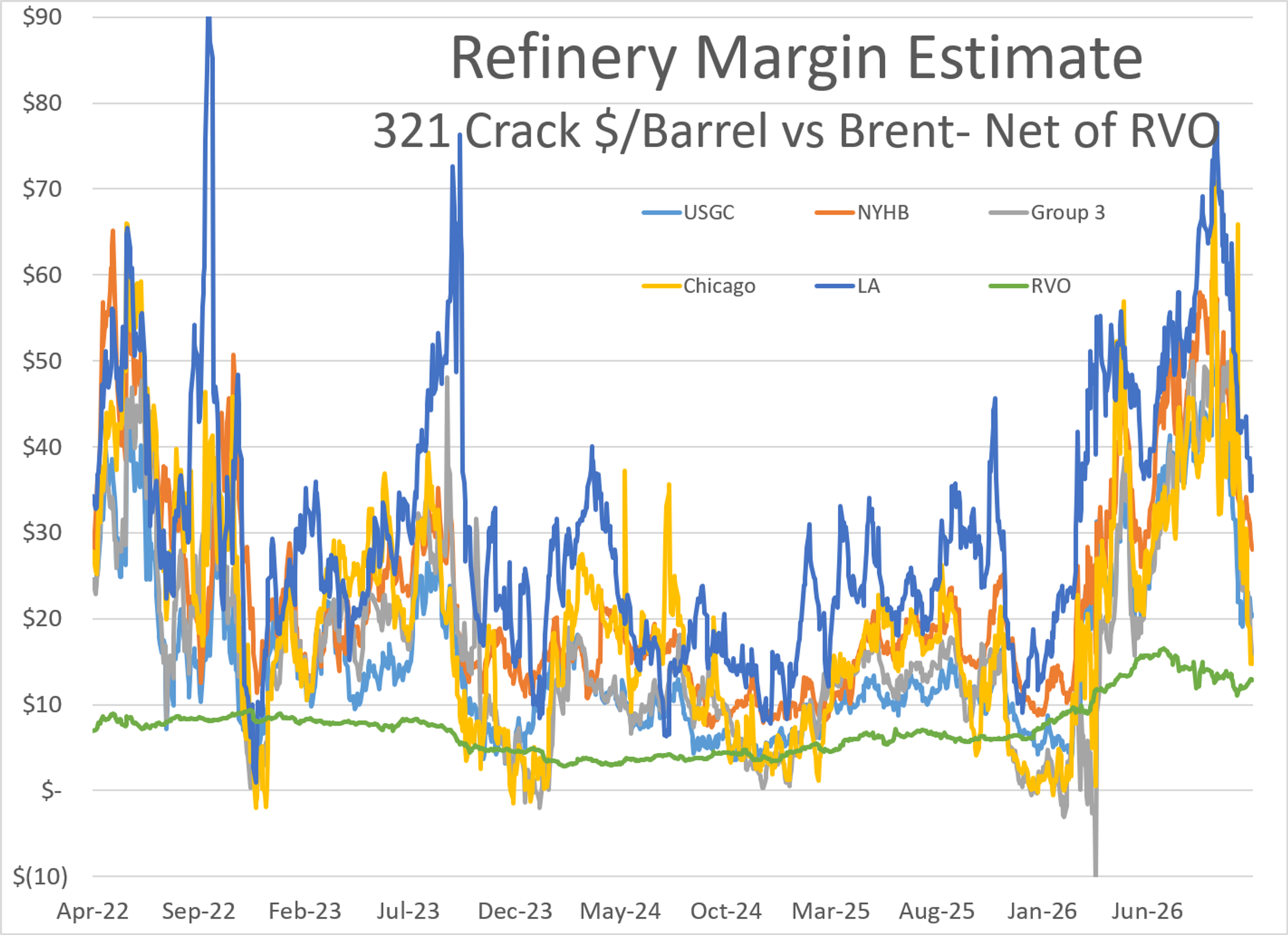
Citgo reported record earnings in the 3rd quarter, with their highest ever throughput at the company’s 3 refineries just in time for the crack spread blowout. While cracks have dropped sharply in Q4, the big Q3 numbers may still be good enough to further delay, or destroy, the chances of Amber energy taking over the company as part of the decade-long court battle since the price they bid looks way too low in this year’s market environment, and the U.S. Treasury seems to be using Citgo’s assets as negotiating leverage with the new Venezuelan regime.
The IEA is forecasting global oil demand to fall by 2.7 million barrels/day this year, and will recover 2 million barrels/day next year, but suggests the recovery will be heavily focused on LPG and ethane demand, while transport fuels will continue to suffer due to high prices accelerating electrification and efficiencies across the global fleet. The agency’s monthly oil market report notes that a “tentative” rebalancing of global markets as gulf exports recovered in October, but highlights the severe tightness in diesel supplies as the overriding concern near term.
Latest Posts
Week 45 - US DOE Inventory Recap
Refinery Outages And Global Conflict Keep Energy Markets On Alert
Veterans Day Trading Sees Energy Complex Bounce On Geopolitical Tensions
Technical Trapdoor Opens Beneath Energy Markets As Diesel Leads Sharp Selloff
Refinery Strikes, Shipping Attacks, And A Market Looking The Other Way
Distillates Take The Lead As Refiners Adapt To Global Supply Challenges
Social Media
News & Views
View All
Week 45 - US DOE Inventory Recap
Refinery Outages And Global Conflict Keep Energy Markets On Alert