Markets Shrug Off War As Fuel Prices Sink To Multi-Month Lows

Energy markets are trading seeing modest losses to start Wednesday’s trading after touching fresh multi-month lows overnight, despite escalating attacks in the Middle East and Russia.
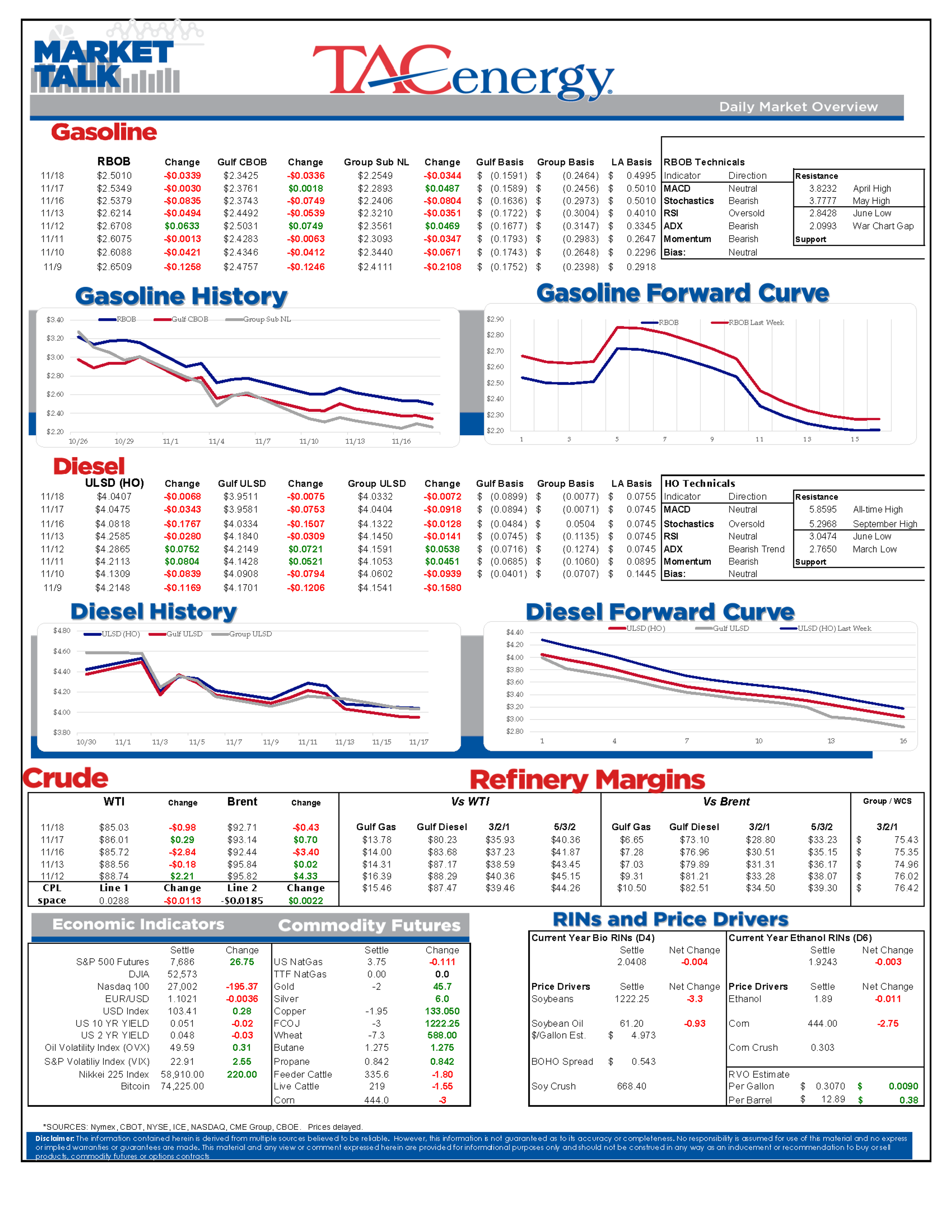
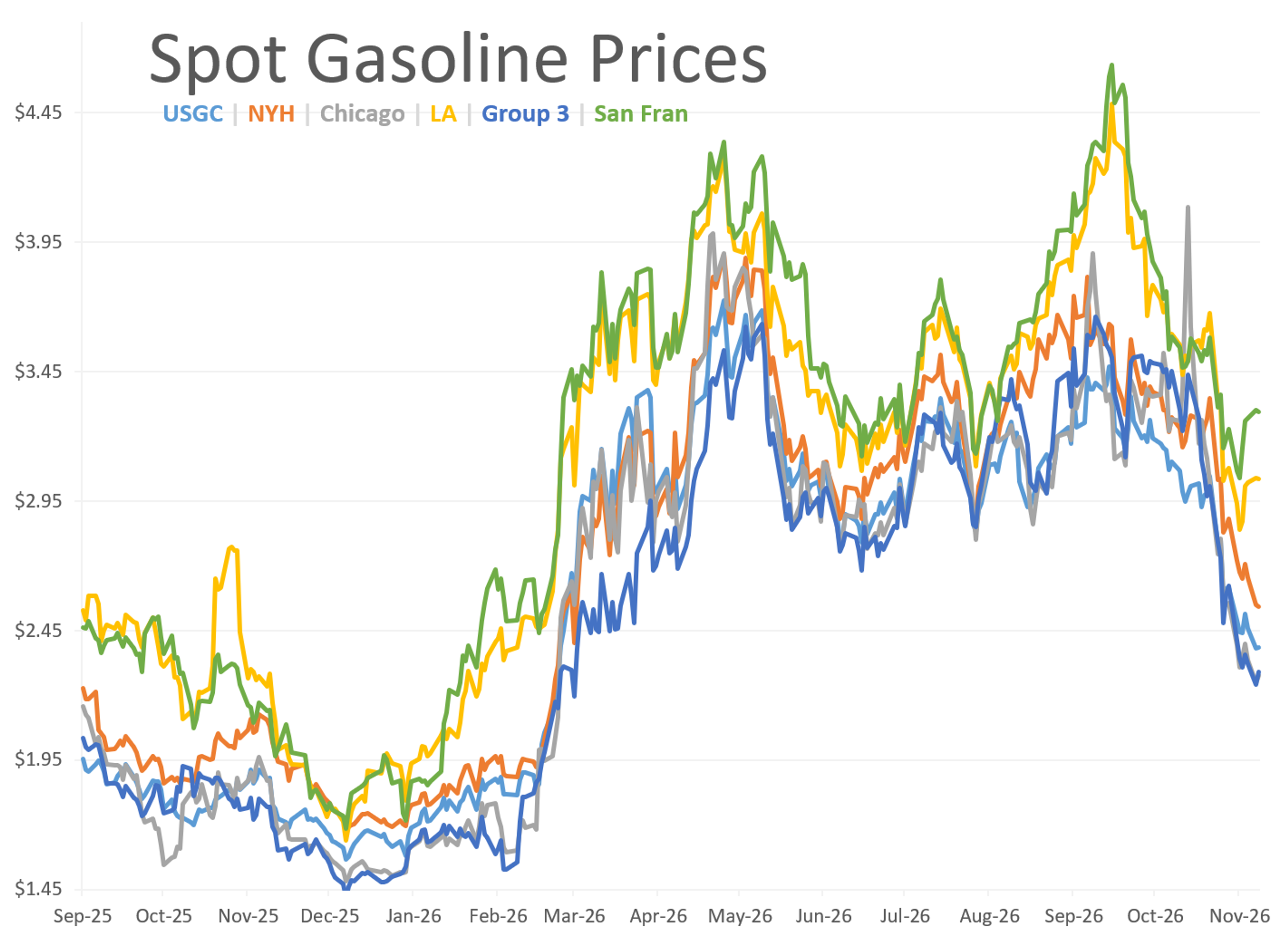
RBOB gasoline futures are trading lower for a 4th straight session and reached a fresh 8 month low overnight at $2.4788, which has helped push retail gasoline prices below $3/gallon in several states (sorry California).
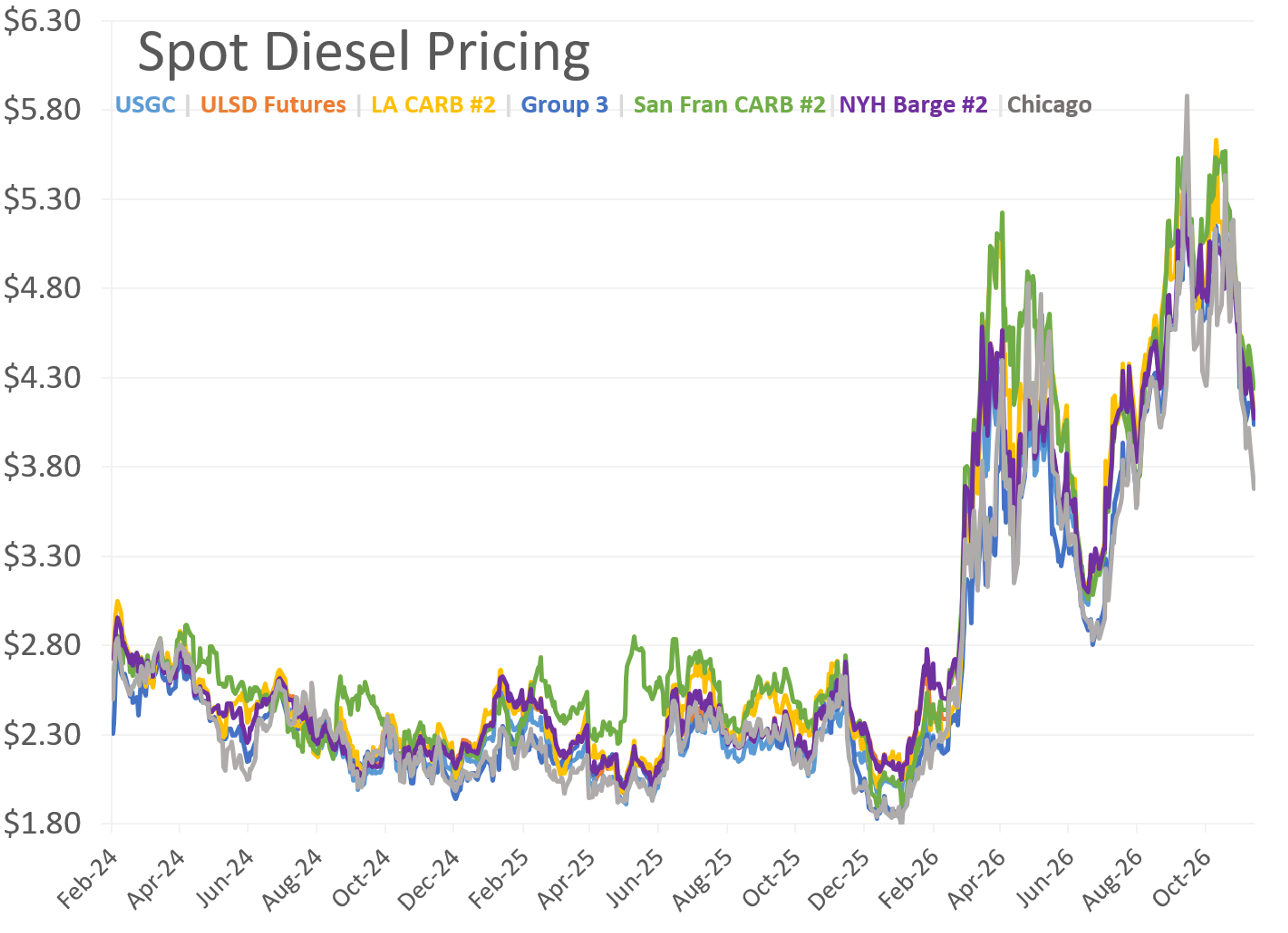
ULSD futures meanwhile touched a 3 month low overnight at $3.9777 before bouncing more than 8 cents to turn positive around 7am central. The weekly trendline that’s held up prices since the Iran war started is once again being tested this week after bouncing 35 cents off that chart support last week. If prices break and hold below the $4 range, which is roughly where the trendline comes into play currently, there’s not much on the charts to stop a slide into the $3.70 range.
The fact that the market continues to shrug off the escalating violence in both wars suggests the long liquidation we’ve seen in the past few weeks by speculators in energy markets is probably continuing, and while it’s impossible to definitively link the two together, the rout in technology stocks could certainly have a spillover effect into the energy arena if hedge funds are forced to liquidate positions to meet margin calls. That said, in addition to the flows of hot money in and out of the market, good old fashioned seasonal demand headwinds for gasoline (the winter demand doldrums are coming) and diesel (the end of harvest, and forecasts for milder winter temps) are also likely at play in the recent pullback.
The U.S. military confirmed strikes on Iran’s Qeshm island in the Strait of Hormuz Tuesday that was apparently targeting missile launch facilities but claims those attacks were defensive in nature, not the start of the next phase of the war which looks more inevitable by the day.
Iran launched more attacks against its neighbors overnight, targeting Bahrain for the 4th time in 5 days and also launching an attack at U.S. assets in Kuwait.
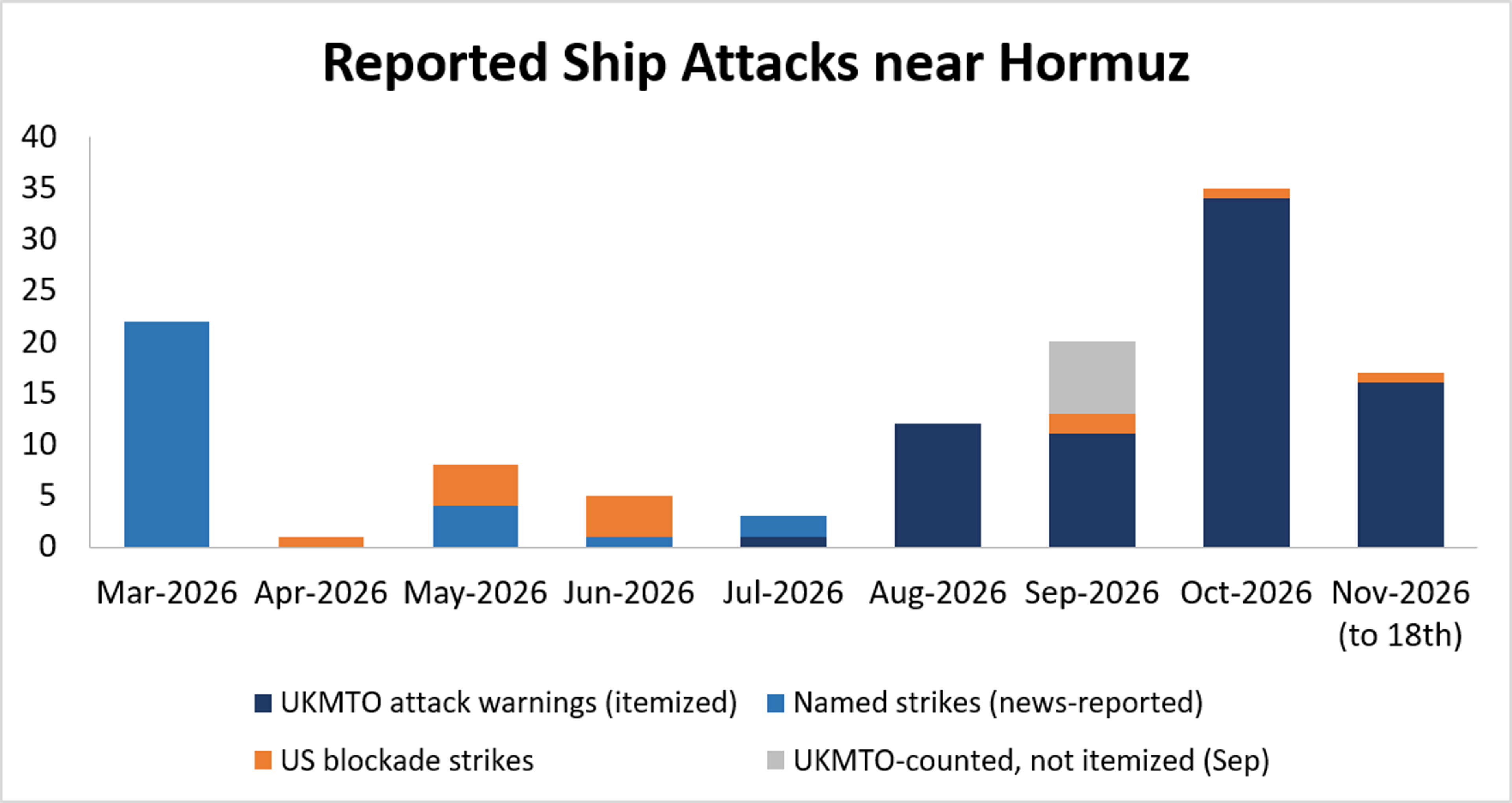
The UKMTO reported another attack on a tanker north of Oman this morning as Iran continues to poke the bear.
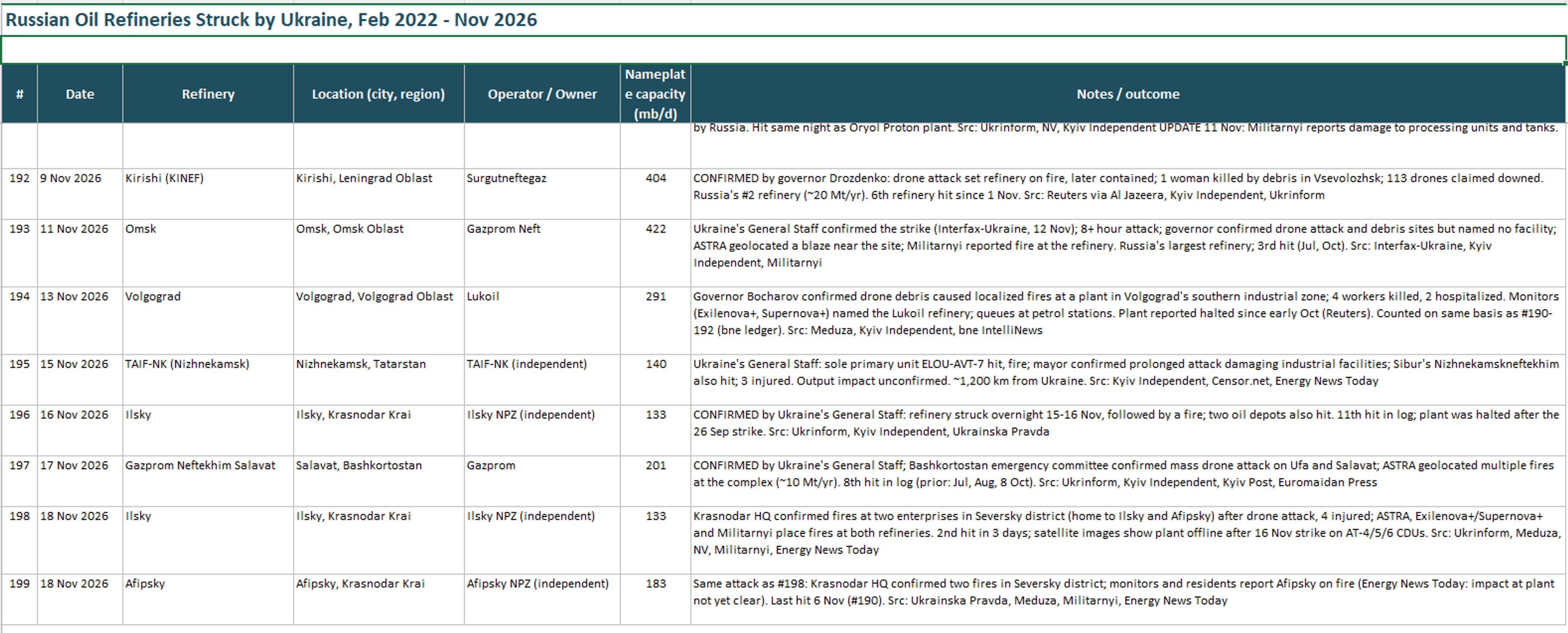
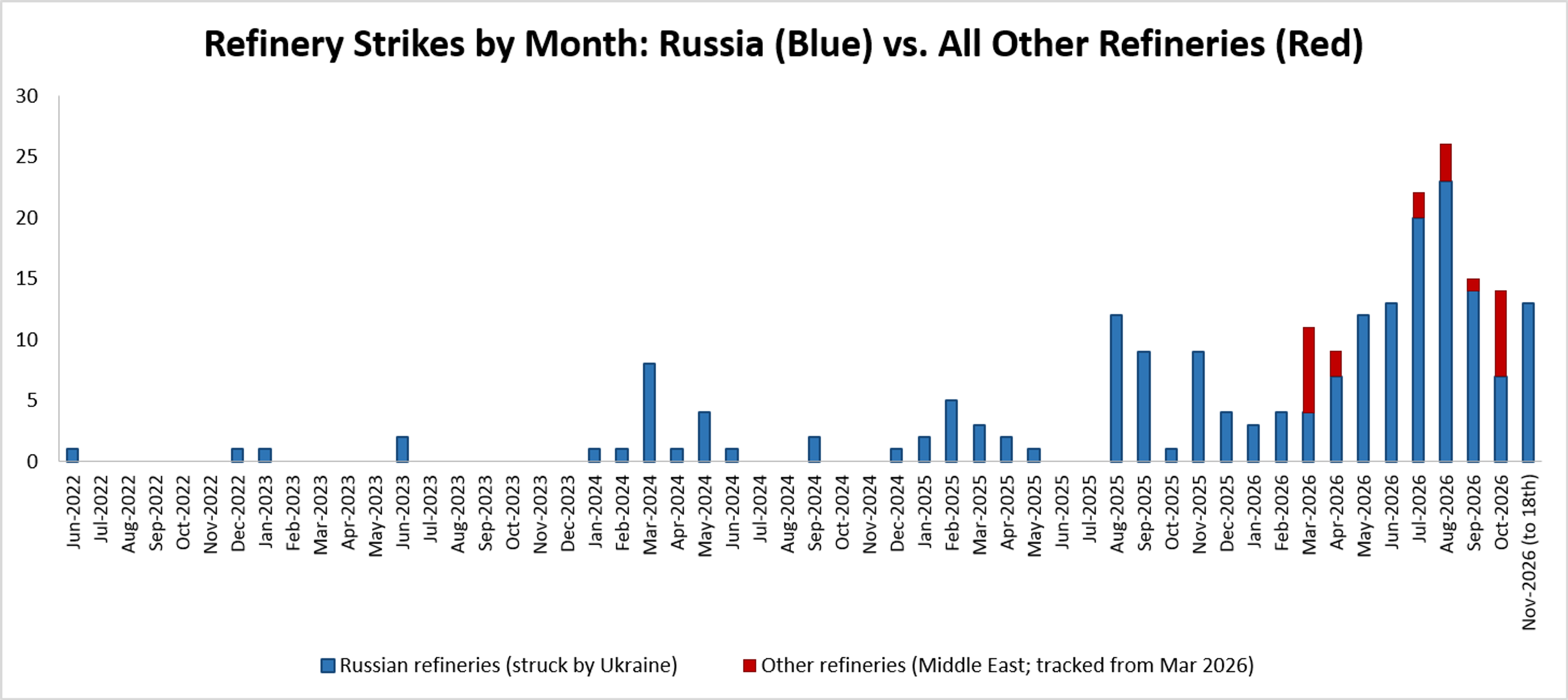
Ukraine’s drones hit 2 more Russian refineries overnight, marking 13 confirmed strikes on refineries so far in November. The 133mb/day Ilsky plant was hit for the 2nd time in 3 days, while the nearby 183mb/day Afipsky refinery was also reportedly hit in the same wave of attacks overnight. While it’s impossible to quantify the exact amount of refining capacity taken offline by these strikes, anecdotal evidence such as retail rationing, export restrictions, and reports of the state encouraging plants to produce lower quality gasoline to try and make ends meet all hint at the material disruption they’re causing.
Meanwhile, the fighting in Yemen rages on, with Saudi-coalition forces claiming they struck 60 Houthi targets this morning while the Houthis launched more missiles at Riyadh.
Despite the raging violence across the middle east, Japanese refiners increased their run rates nearly 9% (225mb/day) last week to 2.8 million barrels/day as the increased exports out of the war zone is apparently allowing those facilities to pick back up after months of restrictions.
The API reported healthy inventory builds for crude oil (5.2 million barrels) and gasoline (5.1 million) while distillates saw a modest increase of 351,000 barrels for the week.
The EIA’s weekly report is due out at its normal time this morning.
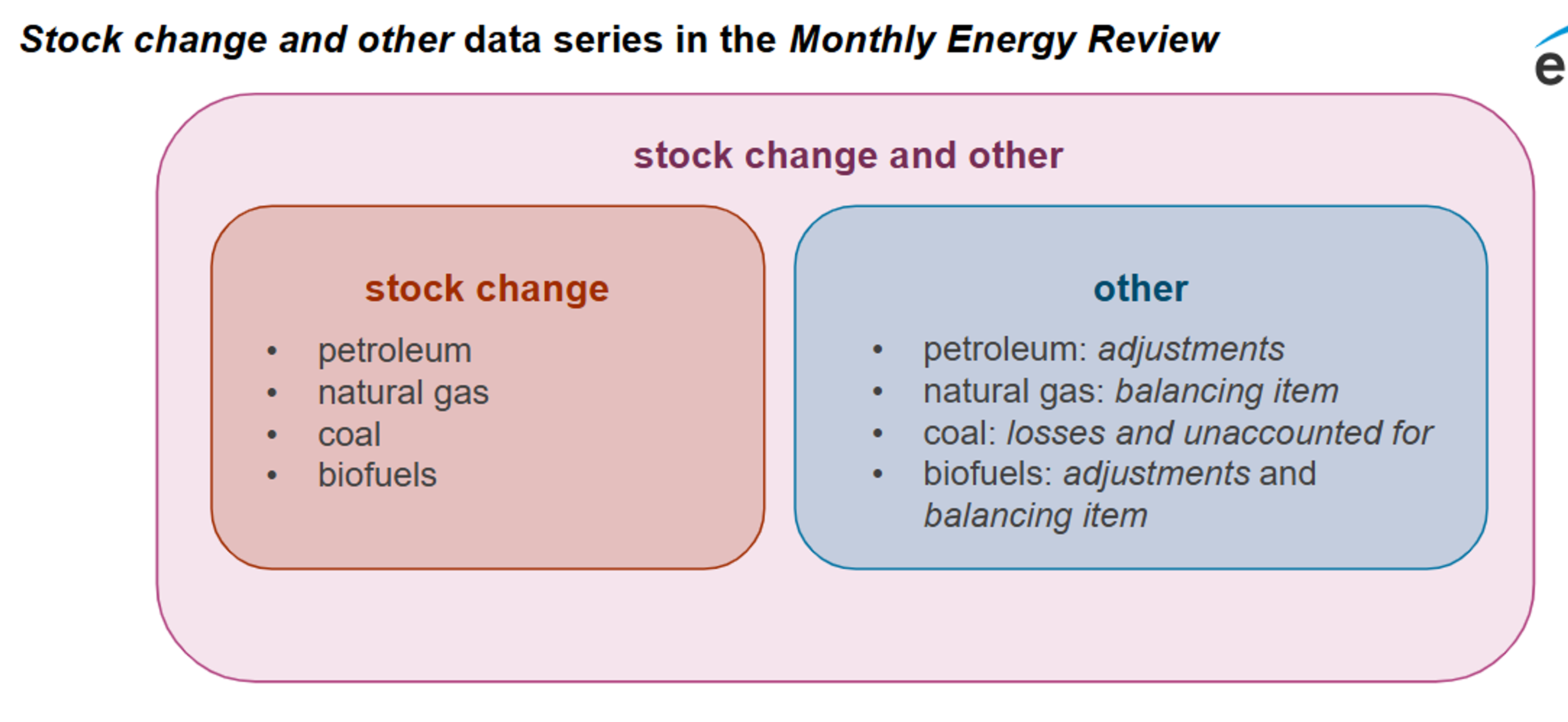
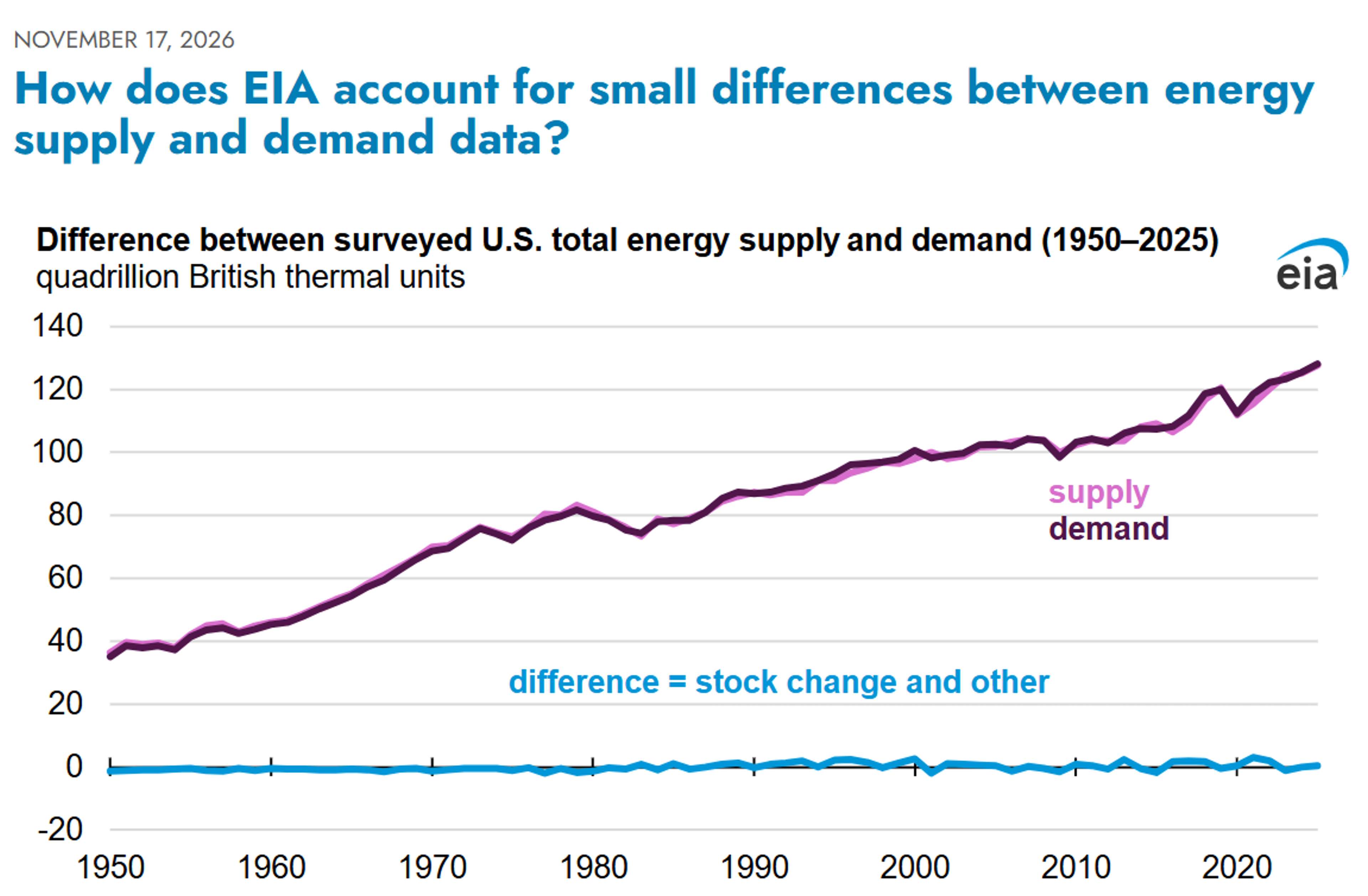
If you’re into government petroleum accounting news, the EIA gave you a gift yesterday with a report on how the agency accounts for differences between their supply & demand data in the weekly and monthly reports. While the EIA’s stats don’t seem to be as much of a guesstimate as the BLS payroll stats, the adjustment factors have been a big issue in recent years as record U.S. Crude oil production has also brought along record petroleum liquids output that’s hard to define. For reference, the U.S. is now producing more than 14 million barrels of oil daily, which is more than any other country’s total liquids output, and the U.S. total liquids production (including condensate and other natural gas liquids like propane, ethane & butane) is close to 25 million barrels/day, which is more than Saudi Arabia and Russia combined.
Valero reported an upset in an FCC unit at its 180mb/day Mckee TX refinery in the TX Panhandle that feeds W. TX, NM, CO and the Group 3 markets. The event looks to be short-lived and does not appear as though it will have much impact on their production. Speaking of short-lived, the rally in Group 3 ULSD values didn’t last long with differentials pulling back 6 cents on Tuesday.
Latest Posts
Cheap Crude Keeps Refiners Running Despite Weak Fuel Economics
Markets Keep Selling While Global Energy Risks Keep Growing
Refinery Strikes And Supply Threats Shift Market Sentiment
Week 45 - US DOE Inventory Recap
Refinery Outages And Global Conflict Keep Energy Markets On Alert
Veterans Day Trading Sees Energy Complex Bounce On Geopolitical Tensions
Social Media
News & Views
View All
Cheap Crude Keeps Refiners Running Despite Weak Fuel Economics
Markets Keep Selling While Global Energy Risks Keep Growing