Diesel Leads Energy Markets Lower As Technical Support Crumbles

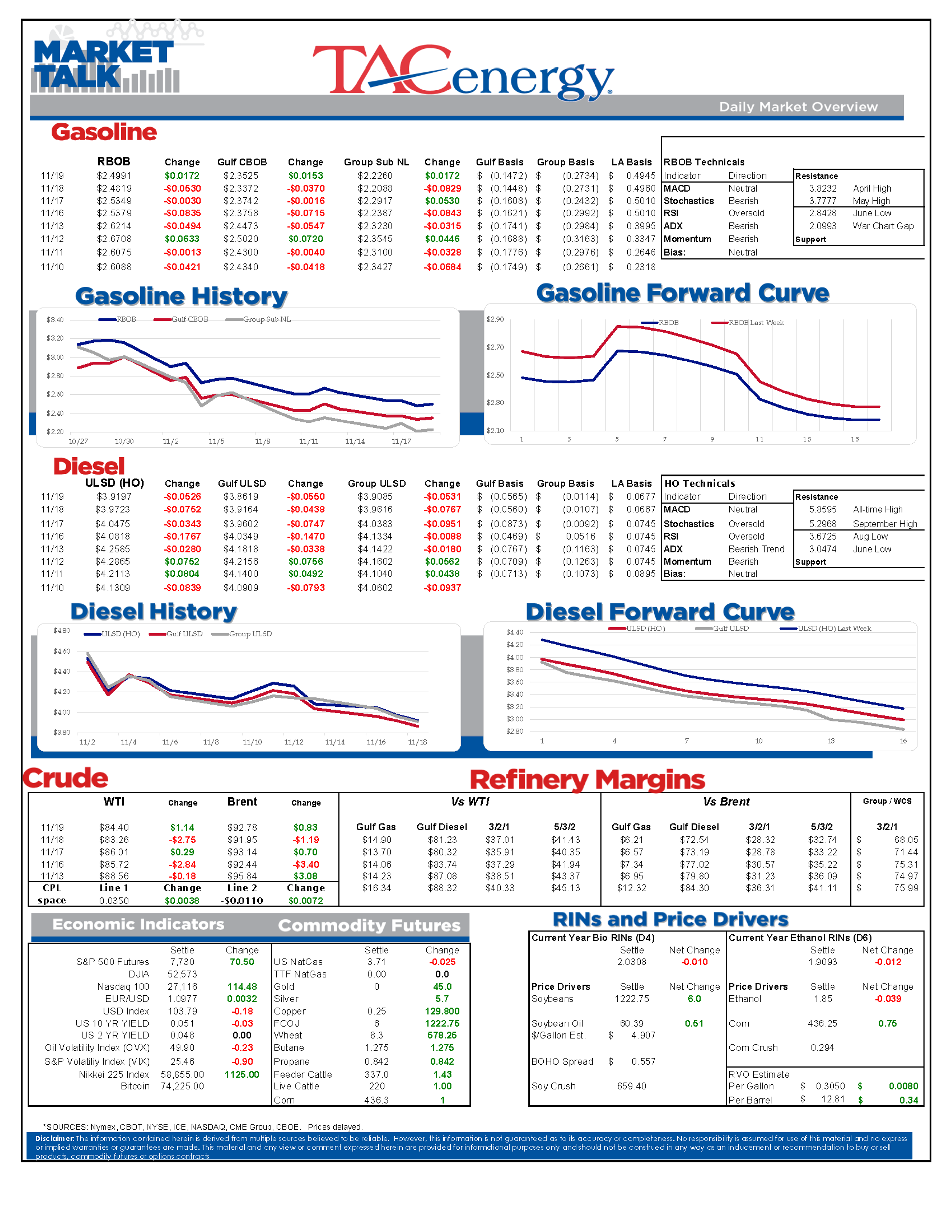
It’s a mixed bag for energy markets to start Thursday’s trading with oil and gasoline futures seeing a modest bounce after hitting multi-month lows, while ULSD is sliding once again after breaking through chart support Wednesday.
Yesterday’s breakdown of technical support layers (both the 200 day MA, and the weekly trendline) near the $4 level for ULSD futures was followed up by another wave of selling that pushed values to a fresh 3 month low of $3.8841 overnight. From here there’s not much on the charts to stop prices dropping another 20 cents or so, until we hit the early August lows around $3.67. There’s been a clear liquidation event by money managers in oil and products
Ukraine’s drones didn’t hit any Russian oil refineries in the past 24 hours, but they did strike an oil logistics hub in Taterstan.
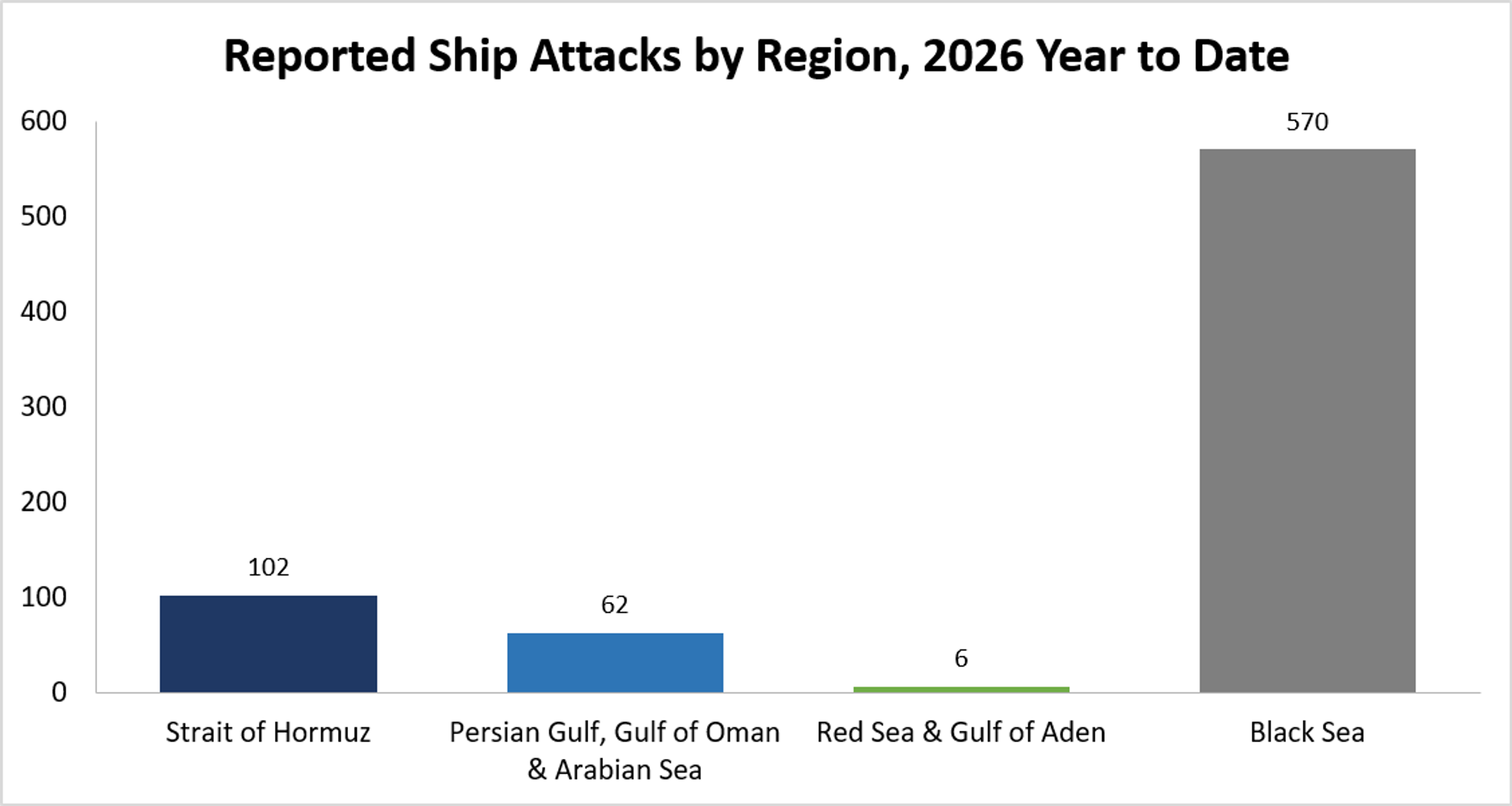
The UKMTO reported 2 tanker attacks off the Omani coast Wednesday, but none yet today. The U.S. military has continued to hold back from broad retaliation for the increase in strikes on ships and U.S. bases in the region over the past week, with CENTCOM reporting that no U.S. service members have been injured in any of the attacks. Furthermore, after a 3rd U.S. aircraft carrier arrived in the Middle East for just the 2nd time in the past 20 years, there was plenty of speculation that a new wave of attacks was imminent, but now one of those carriers appears to have left the area and is reportedly heading back to patrol waters near Japan.
With friends like these, who needs enemies? An LPG tanker was sunk off the coast of (NATO Member) Bulgaria yesterday, which marks the 7th ship attack off their Black Sea Coast in the past 6 weeks as Russia’s war with the West continues to spread, while the U.S. President met with the Russian and Chinese Presidents in Shenzen.
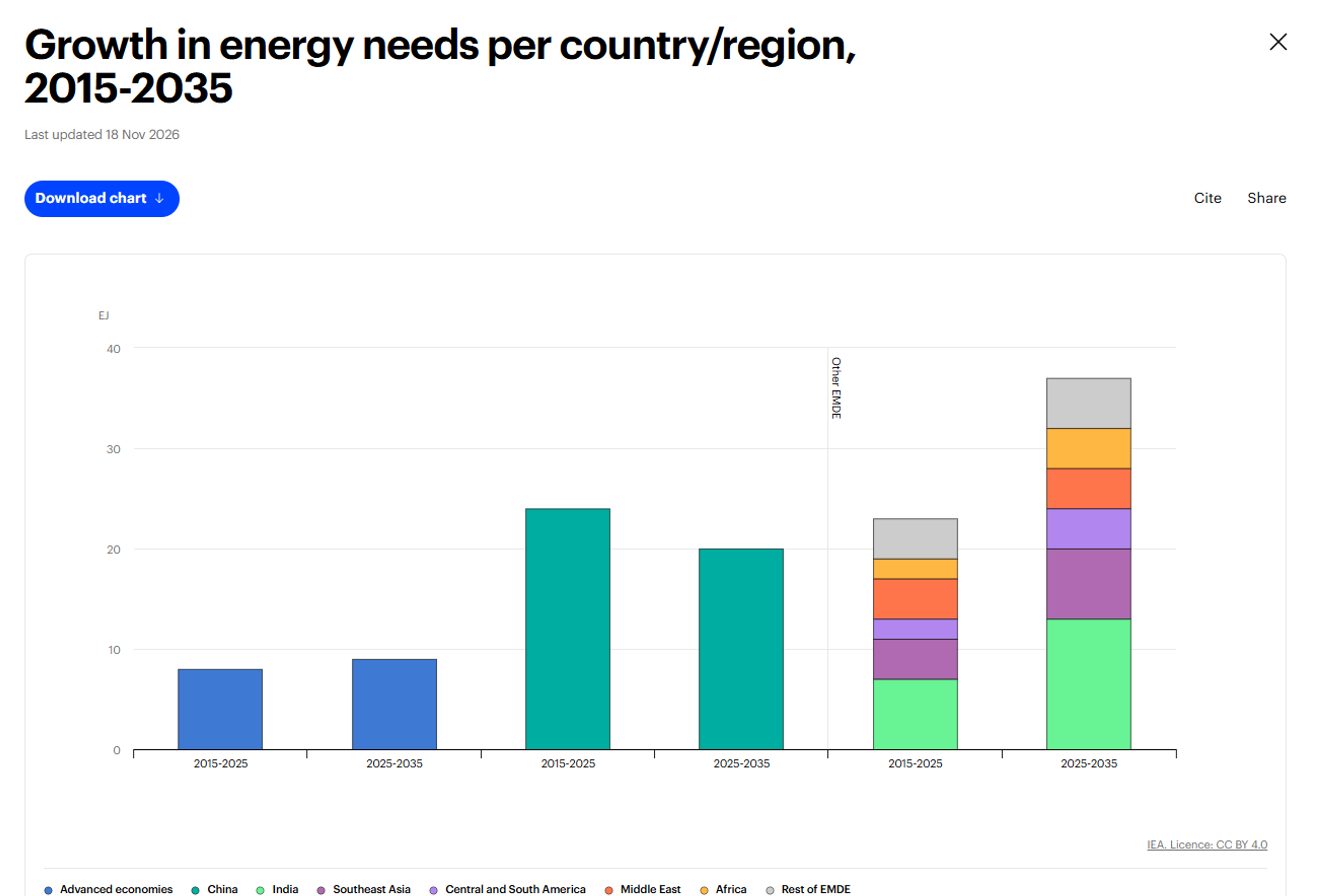
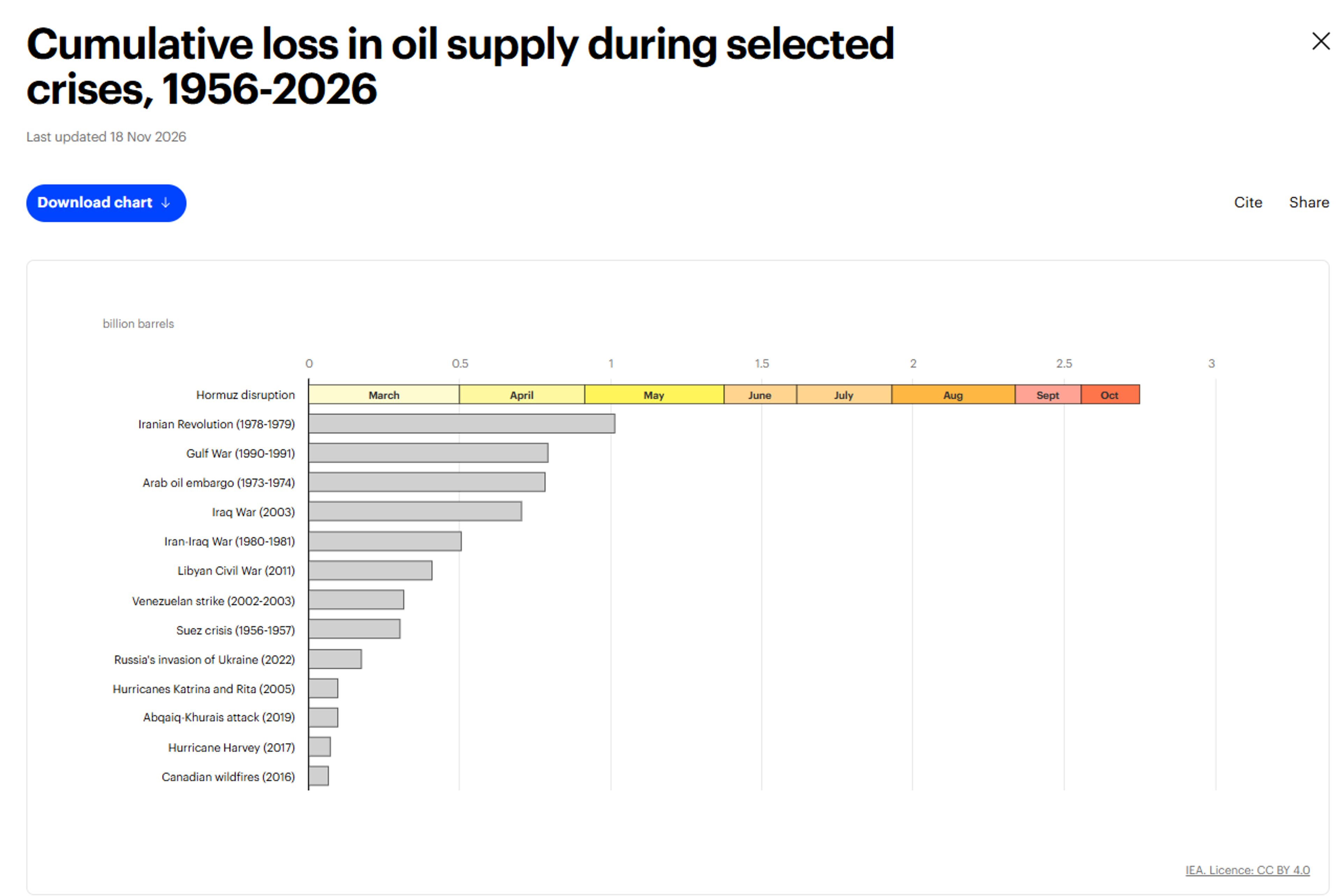
The IEA published its annual World Energy Outlook, highlighting how the Hormuz disruption has dwarfed any previous supply shocks over the past 70 years. The report also highlights something it’s easy to forget as the U.S. has grown from the world’s largest energy buyer, to its largest seller in the past 20 years: 75% of the world’s population live in oil and gas importing countries, and more than half of the world’s population depends on the Strait of Hormuz for 30% or more of their supply. In typical IEA fashion, the report sounds an alarm of the potential lasting impacts on the economy and environment the longer the conflict goes on. On the demand side of the ledger, the report highlights how India has taken the lead in global energy growth after 2 decades of Chinese dominance came to an end.
Citgo reported they were forced to shut a unit at their 180mb/day Lemont IL refinery overnight after an upset. The filing to the Illinois Emergency Management Agency does not specify which unit was shut, and since it happened around midnight there’s no other news available yet on the cause. While there’s never a good time for an unplanned unit closure at a refinery, the market impact may be less now than a couple of weeks ago as the peak harvest demand has passed, and the nearby 275mb/day Exxon Joliet refinery has recovered from multiple upsets earlier in the fall.
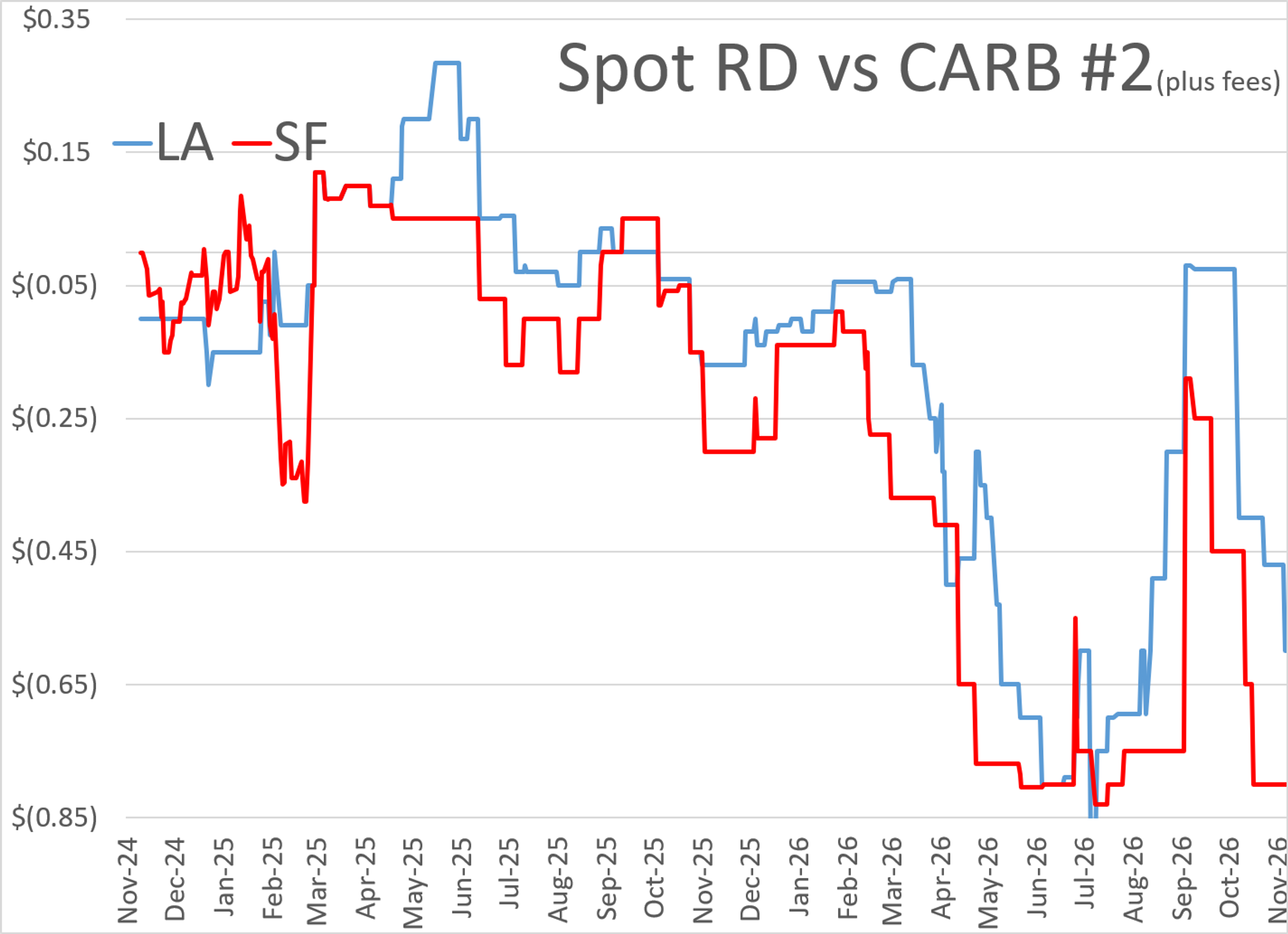
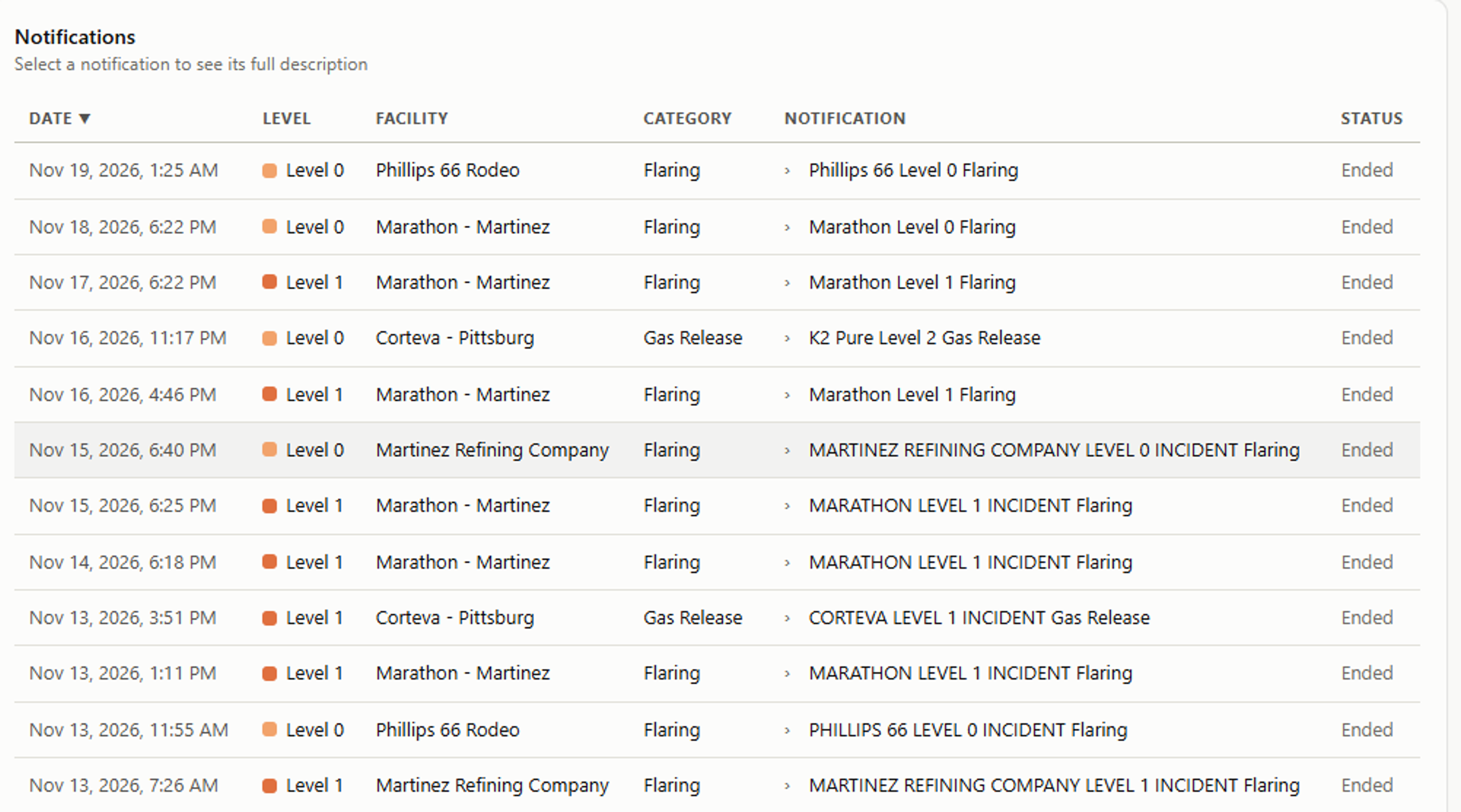
Marathon has reported flaring at its 48mb/day Martinez CA RD facility for the past 9 days, with conflicting reports on what’s going on swirling around the market. Energy News Today reported Wednesday that the facility was forced to shut earlier in the week due to a mechanical upset, while other sources suggest the facility is back up and running following maintenance. The local RD market is behaving as if the plant is online, with heavy discounts to CARB Diesel (plus all the fees) continuing throughout California.
P66 also reported level 0 flaring at their 50mb/day Rodeo CA RD facility this morning, but that low level alarm is unlikely to spook the market.
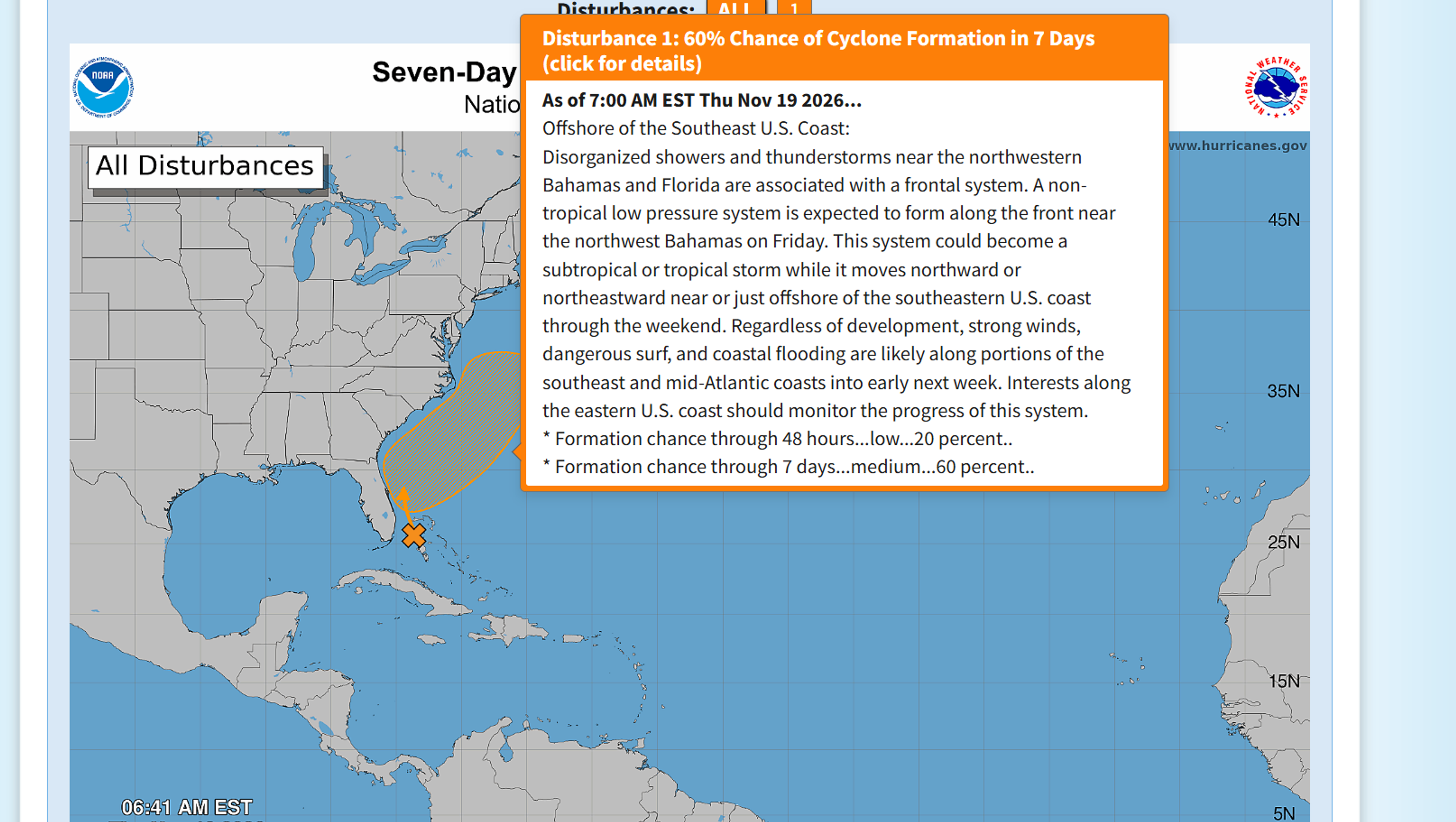
One of the slowest Atlantic Hurricane seasons on record isn’t going down without a fight. The National Hurricane Center is giving 60% odds of development to a system moving off the SE coast of Florida over the coming days. While the odds of this becoming a major storm are still low, more coastal disruptions across the Mid Atlantic states appears likely through next week. The West Coast is also being inundated with heavy rain and waves, creating logistical headaches of several varieties, not least of which is hampering the state’s booming (credit-driven) poo collection businesses.
Notes from the DOE’s weekly status update. Charts, and AI analysis of the report are attached.
Commercial crude stocks built, despite down imports and up exports, with a huge positive swing in the adjustment factor. Refinery runs were down but oil production ticked up to a fresh record high of 14,032 Mb/day. The SPR drew again and now sits about 2% above the first weekly data point recorded in 1982. The commercial build outweighed the SPR draw last week for an overall net increase in back-to-back weeks, although still at 44-year seasonal lows.
Refinery runs slowed across the country last week along with a 32 Mb/day reduction in PADD 1 capacity. PADD 1 is still running at seasonal highs along with PADDs 2 & 3, while PADD 4 stayed in line with year ago levels at the high end of the chart and PADD 5 held steady at below average rates. In total, U.S. refineries are maintaining seasonal highs and are currently about 4% above year-ago levels.
Diesel stocks built despite increased exports and demand, although demand remains low and production kicked up to a 9-year seasonal high. PADD level stocks were mixed with most at the low end or below their 5-year ranges. PADD 3 held above average and PADD 5 increased 12.5% to leap above average after spending 11 straight weeks below the 5-year range. Total U.S. diesel inventories are still charting below the range at about 7.5 million barrels below average.
Gasoline stocks built with a 164% increase in imports, most of which landed in PADDs 1 & 5 to help stocks push above their 5-year averages. PADD 4 posted the only draw for the week and is the only region holding below average balances. The others are sitting comfortably above with PADD 2 hitting a seasonal high and PADD 5 moving near the high-end of the chart, well ahead of year-ago levels. Total U.S. gas is now sitting at the high-end of the 5-year range as well, nearly 5% over the seasonal average.
Jet fuel stocks built as increased imports jumped to a 19-year seasonal high and demand fell back into the 5-year range. Exports increased as well and stayed at seasonal highs, as did production levels. The increases in PADDs 1 & 3 moved both to 10-year seasonal highs and PADD 5’s build held inventories between 2024 & 2025’s above average levels. PADD 2 slipped below average with last week’s decline and PADD 4 stayed below its 5-year range for a 6th consecutive week despite the stock build. Total U.S. jet fuel hit a 16-year seasonal high and moved back above the chart range for the first time since August.
Latest Posts
Week 46 - US DOE Inventory Recap
Markets Shrug Off War As Fuel Prices Sink To Multi-Month Lows
Cheap Crude Keeps Refiners Running Despite Weak Fuel Economics
Markets Keep Selling While Global Energy Risks Keep Growing
Refinery Strikes And Supply Threats Shift Market Sentiment
Week 45 - US DOE Inventory Recap
Social Media
News & Views
View All
Week 46 - US DOE Inventory Recap
Markets Shrug Off War As Fuel Prices Sink To Multi-Month Lows