Ceasefires, Airstrikes, And False Starts: Another Wild Week In Energy

It’s a mixed bag for energy markets as we wrap up another extremely volatile week. Trading algorithms that account for the majority of futures trading these days seem to have been given a harsh a lesson in geopolitical nuance that went something like this.
Tuesday Night/Wednesday:
Cease Fire and “Strait reopened” reports: Prices drop a lot
Thursday morning:
Israel still bombing Hezbollah, Iran keeps the strait closed: Prices bounce
Thursday Afternoon
Israel Says they’ll talk to Lebanon: Prices drop
Thursday Evening
Israeli bombing continues and some realize Lebanon’s government is not the same as Hezbollah: Prices bounce
Friday Morning
Reports of a more “Low Key” war being requested by the U.S. President seem to be contributing to a modest price pullback, while his frustration with the Strait still not opening may keep sellers at bay.
It’s important to note that despite so much talk about the Iran Tollbooth and other ways the Strait is returning to business, there are actually fewer ships transiting today than there were before the ceasefire was announced.
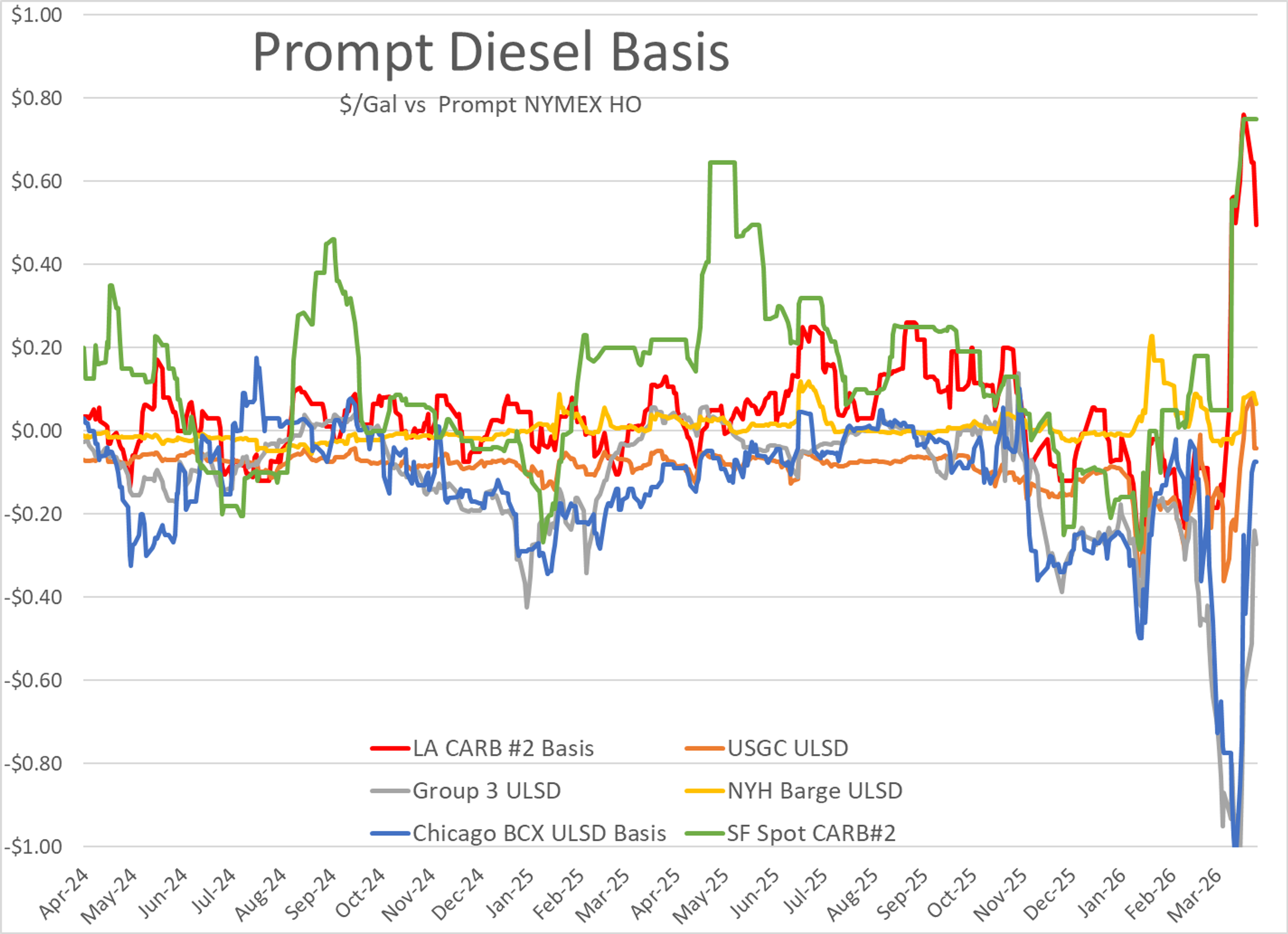
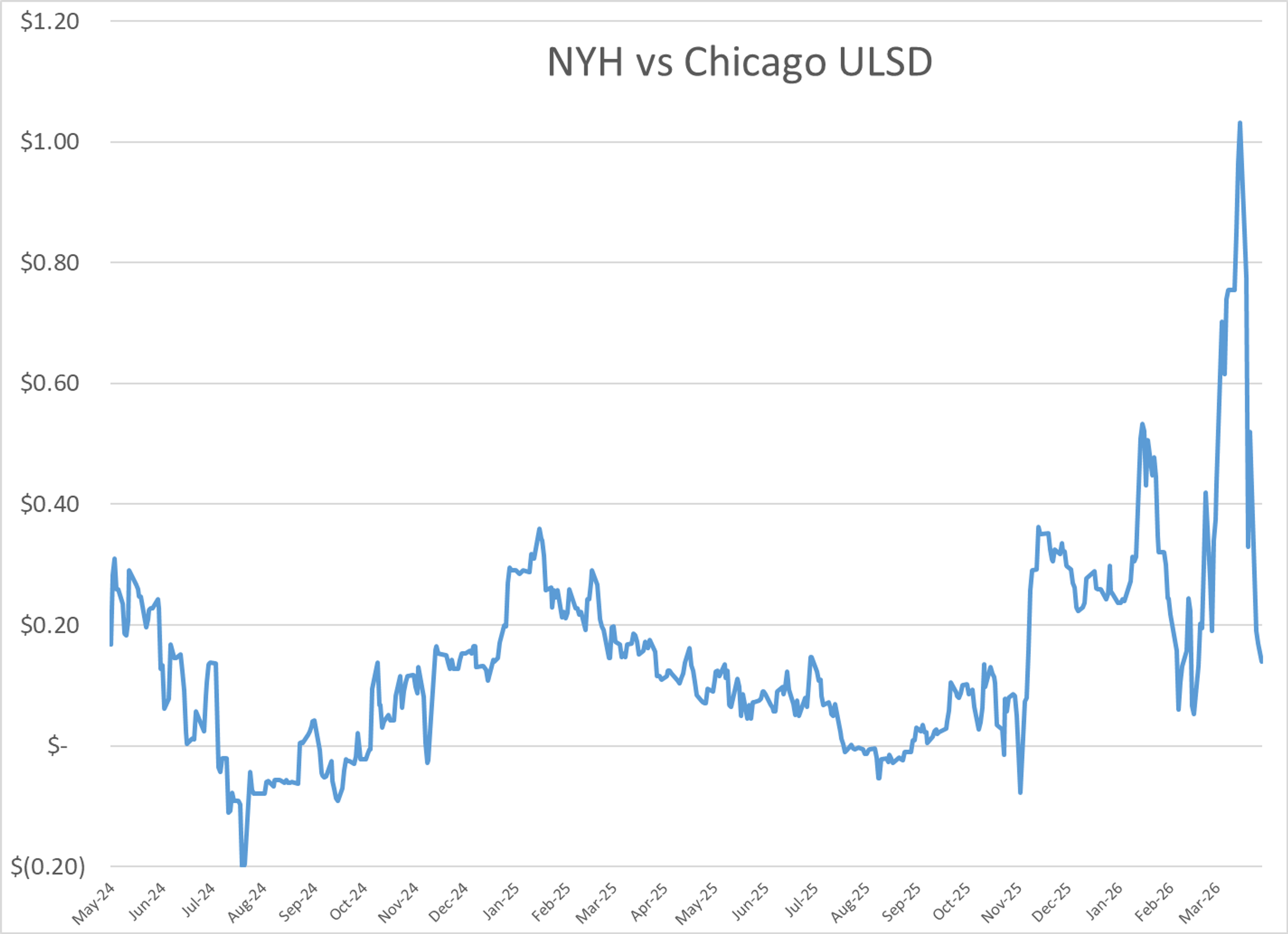
The wild swings in futures have kept spot markets interesting with the mean reversion trading in differentials continuing after diffs in some markets hit record highs last week at the same time others were reaching record lows. LA spot diesel diffs have dropped 30 cents this week, with reports that Marathon is returning to normal operations after an upset seeming to help push values lower. Mid Continent values had a strong rally after reaching record lows last week, as regional maintenance, some spring ag demand and the easing of heat spreads all contributed to less-weak values.
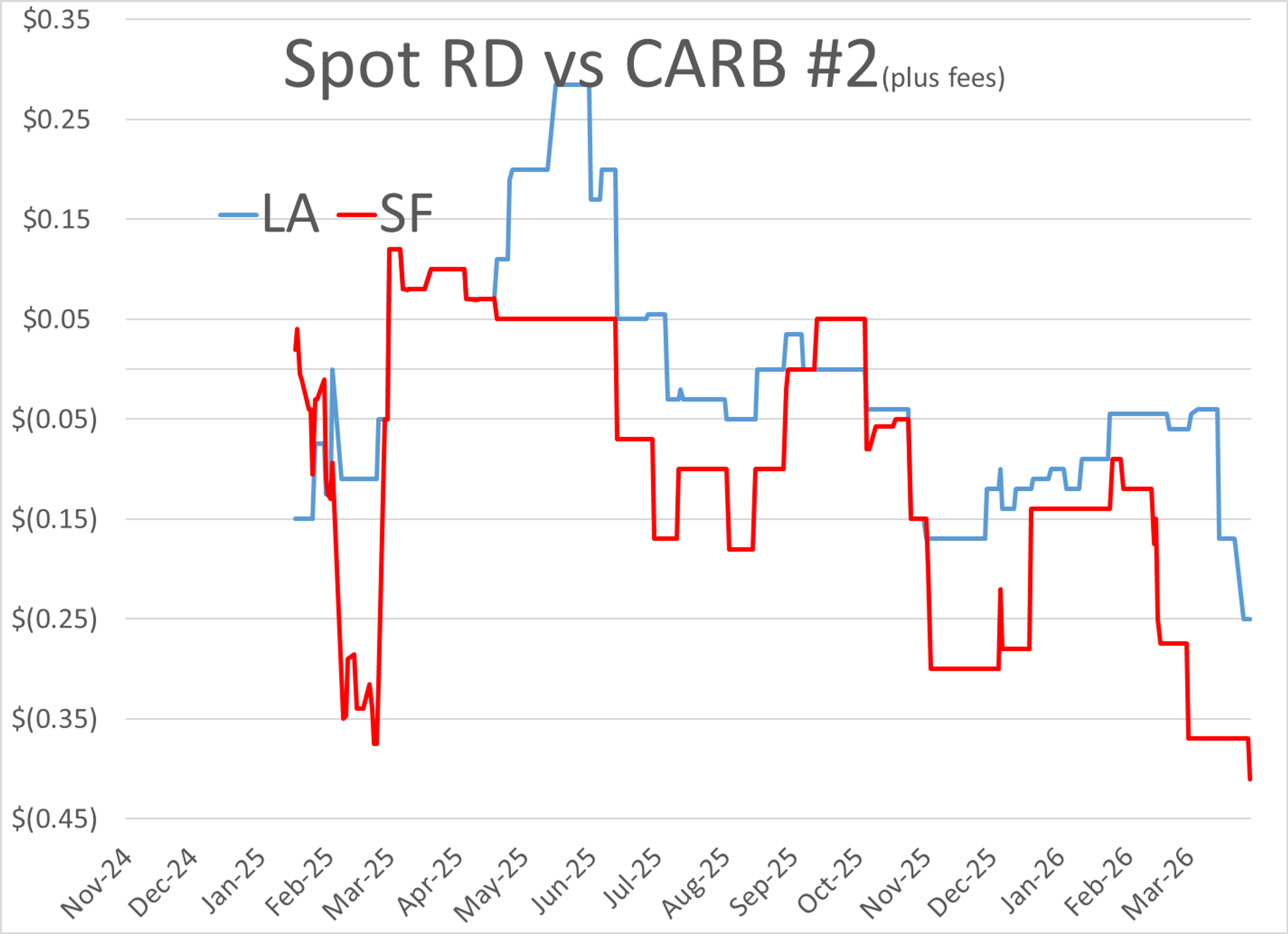
The extremes in diesel values are also creating a surge in supply for Biodiesel and RD. Numerous markets in the eastern 2/3s of the country that avoided bio blends a year ago now when producers were knocking on death’s door are now making B5 and higher blends the standard as biodiesel supplies are offered at steep discounts to futures. The discounting in RD has also become dramatic on the West Coast, where producers are getting the benefit of both the spike in futures and basis differentials for CARB diesel.
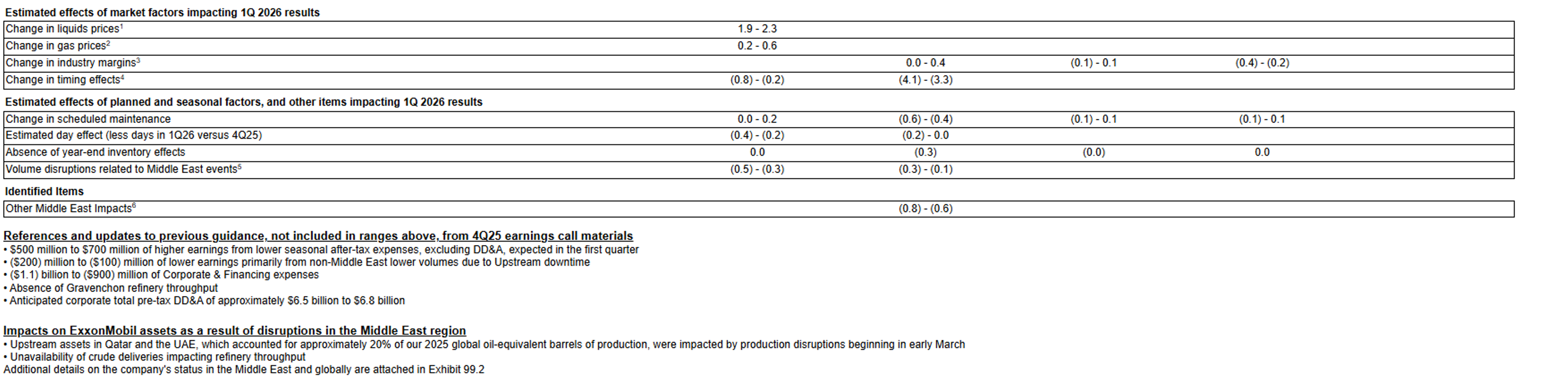
Exxon Mobil offered a look at the impacts of the war in an SEC filing Wednesday highlighting how this event has been simultaneously a blessing and a curse for the industry. On the good side, the company estimates that the increase in oil prices will add around $2 billion in earnings this quarter, but roughly half of those gains will be wiped out by lost production from its Middle East assets. Most notably it’s estimating a $600-$800 million dollar loss due to “…a settled financial hedge that was not offset by the associated physical shipment due to supply disruptions in the Middle East.” In addition, the company expects that the timing effects of physical deliveries vs the financial hedges will create a temporary loss in the neighborhood of $4 billion, along with a huge cash burn to cover their hedging margin requirements, although the company is adamant that unlike the one time delivery item above, once these other positions are all unwound they will be profitable.
While the Strait of Hormuz remains THE story in energy markets, here are a few other worthwhile reads on other topics.
A pair of reports from the folks at Stillwater highlighting why Renewable Diesel has helped California get ahead of schedule in its diesel emissions reduction plans, and why gasoline is still lagging behind.
FreightWaves had an interesting note following the EPA’s relaxation of DEF sensor requirements, with a warning to anyone who thinks they can simply stop using the UREA & water cocktail in certain engines.

Latest Posts
Refinery Outages, Storm Risks, And Export Constraints Lift Distillates
Week 40 - US DOE Inventory Recap
Diesel Leads Energy Markets Lower Despite Mounting Geopolitical Risks
Energy Markets Mixed As Diesel Rallies And Supply Concerns Persist
Supply Disruptions Persist As Markets Focus Elsewhere
Geopolitics, Diesel Shortages, And Refinery Cuts Shape Energy Markets
Social Media
News & Views
View All
Refinery Outages, Storm Risks, And Export Constraints Lift Distillates
Week 40 - US DOE Inventory Recap