A Turbulent Week For Energy: Strong Jobs, Rising RINs, And A Diesel Disruption

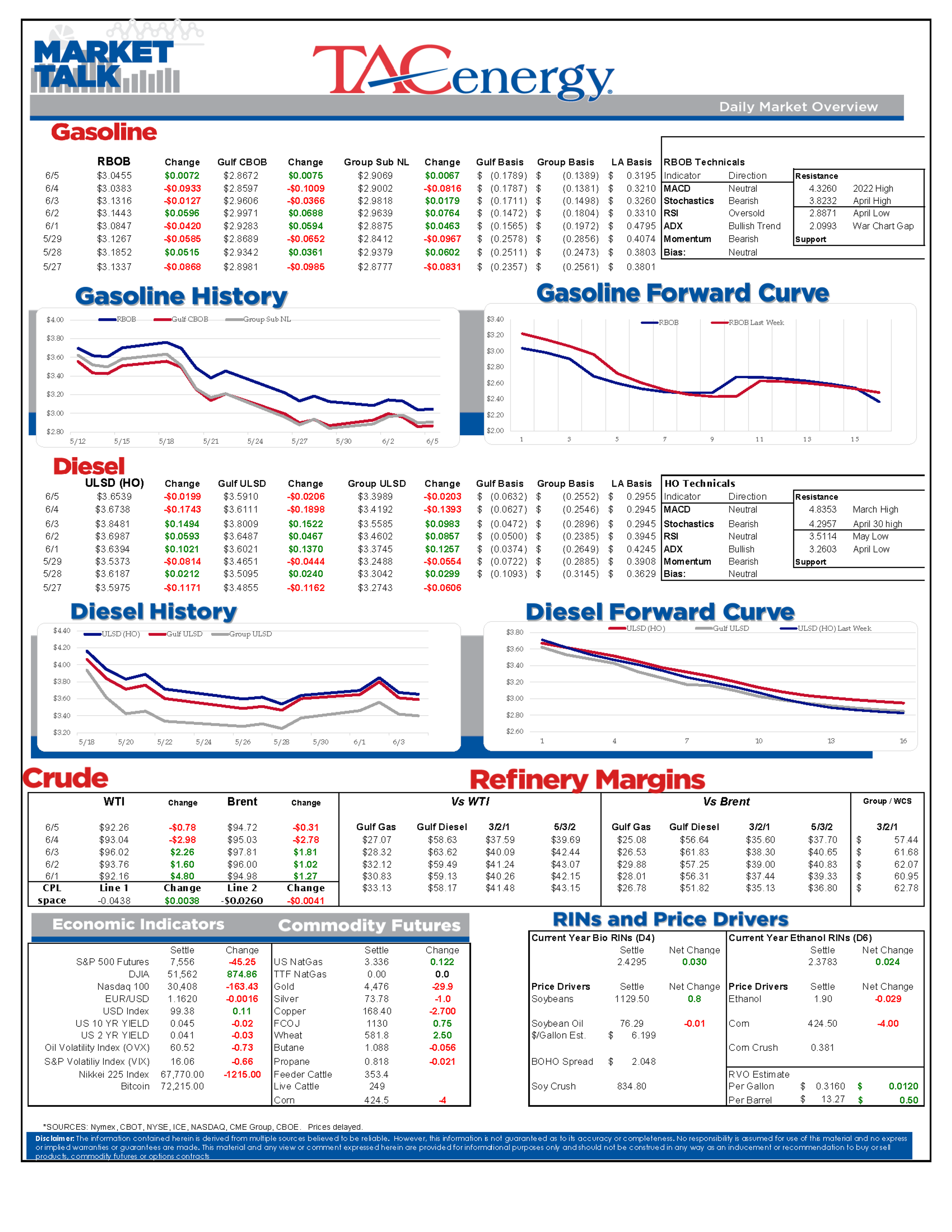
It’s a mixed bag for energy markets to wrap up another wild week with ULSD and crude oil contracts seeing modest losses in the early going, while RBOB futures are seeing small gains on the day.
News that Hezbollah has vehemently rejected the ceasefire agreement between Israel and Lebanon which contributed to the big Thursday pullback, and a new attack on Oman’s key oil export hub haven’t stirred futures, which suggests that the market either cares more about congress pushing back on the President’s war powers, or they’re simply not paying attention to the increased warnings coming from industry leaders on the increasingly dire state of domestic fuel supplies.
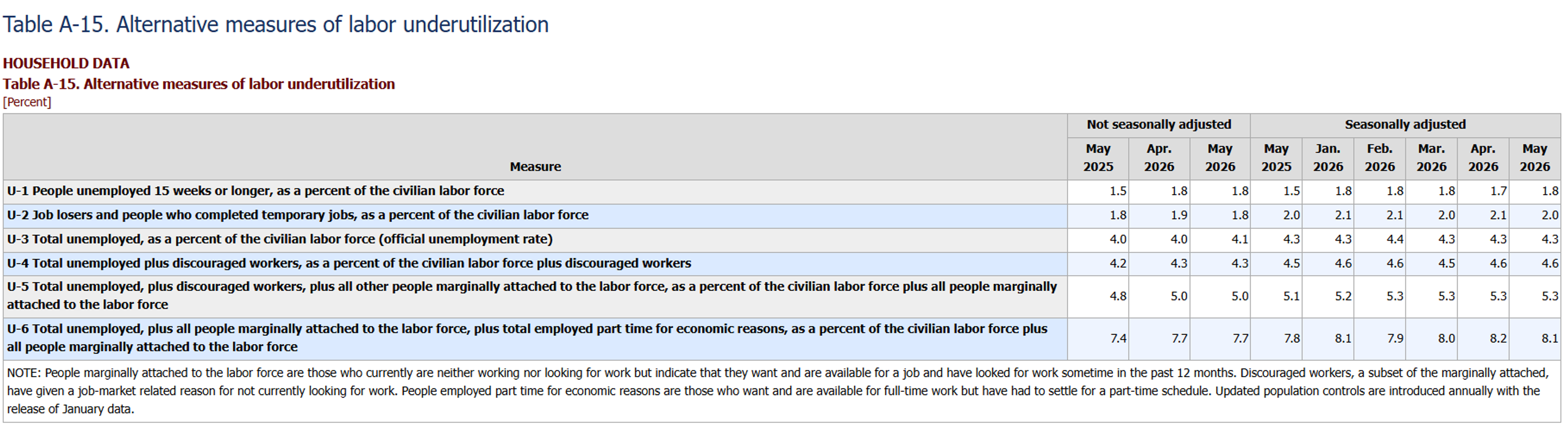
The BLS estimated strong jobs growth in its most recent payrolls report, reporting an increase of 172,000 jobs in May while the March and April estimates were increased by a combined 93,000 jobs. The headline unemployment rate (“U-3”) was unchanged at 4.3%, while the less manipulated “U-6” rate dipped by a tenth to 8.1%. The report was much stronger than any notable published forecasts, and gives a bit of good news for workers, but bad news for those hoping the new Fed Chair will be pushing to lower interest rates anytime soon.
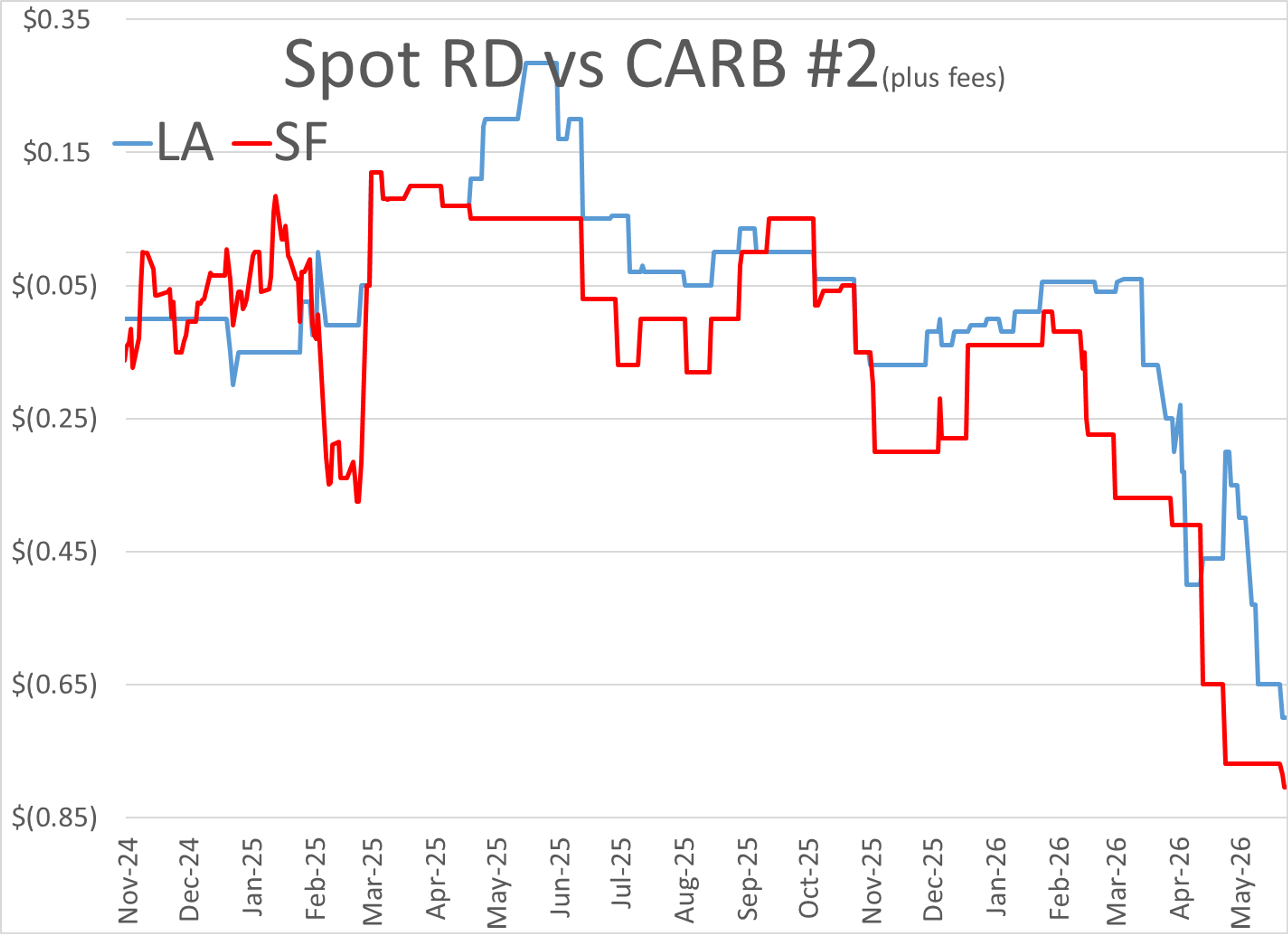
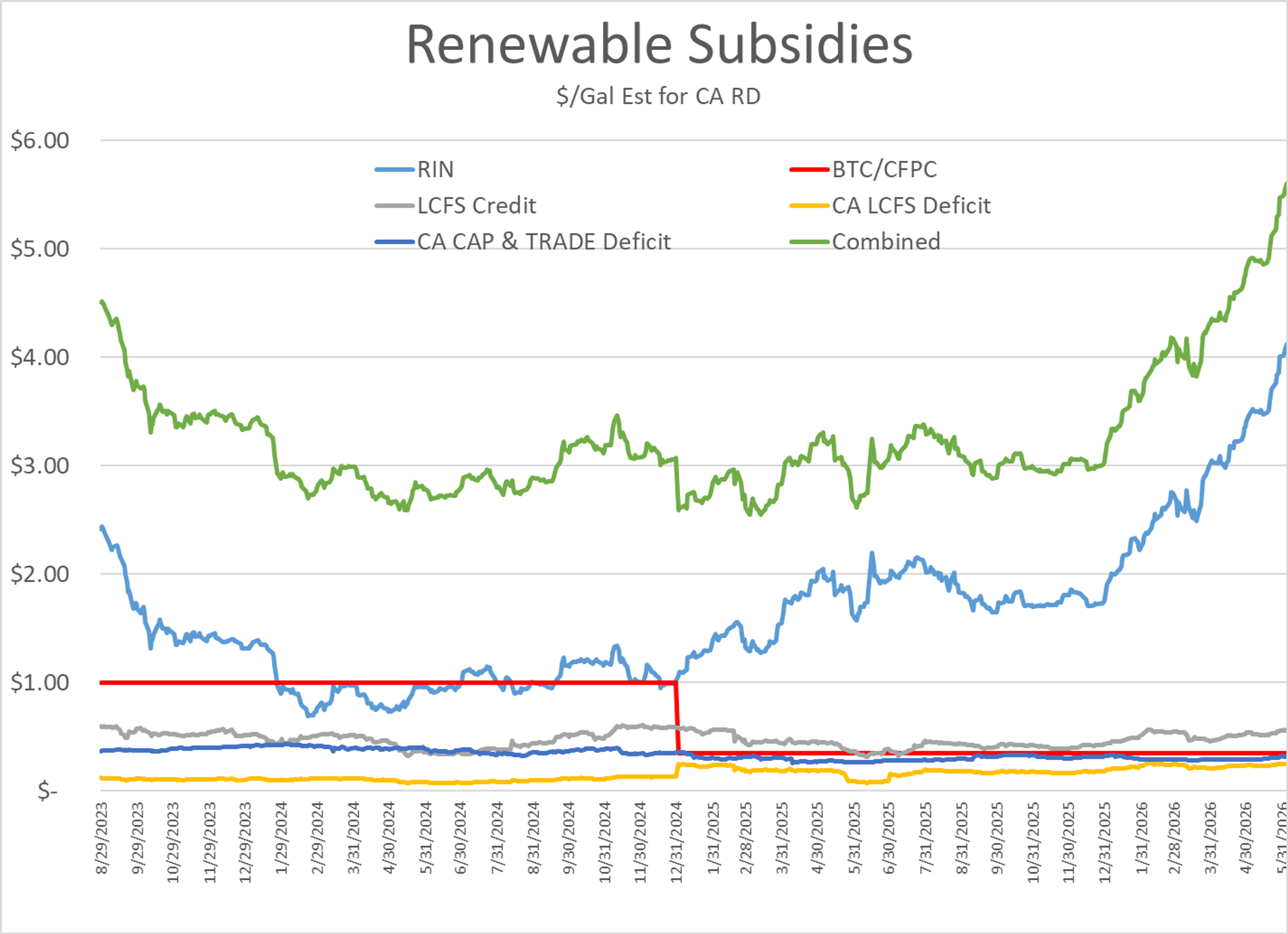
It’s no longer just people moving from California to Texas: The RIN Rally (along with the loss of incremental credit incentives for SAF) has prompted maximum production from US RD producers. Most of that RD goes to California thanks to the state’s extra incentives via LCFS and Cap & Trade programs, but suddenly California finds itself oversupplied with RD. After trading at record setting discounts to CARB diesel (and fees) of 70-80 cents/gallon, recent deals for RD in the state have dropped to discounts to NYMEX ULSD (HO) futures as well, after trading at 40-60 cent premiums just a few weeks ago. That supply glut is backing up barrels into the USGC where much of it is produced, and suddenly it’s not worth shipping the product West, even with the Jones Act waivers still in place. Since the 20 cent/gallon Texas diesel excise tax only applies to petroleum based fuels, RD99 is now cheaper than traditional diesel grades at the handful of terminals along the Gulf Coast that are capable of handling RD.
Somewhat ironically, Texas is one of the few states offering that type of tax break for using renewable fuels, so don’t expect this phenomenon to spread to other states too quickly, although the search for new homes for the sudden influx of RD will bring small volumes to other markets as well. Note that New York state has a tax break of up to 20 cents/gallon for biodiesel blending, but hasn’t yet been smart enough to apply that same credit to renewable diesel.
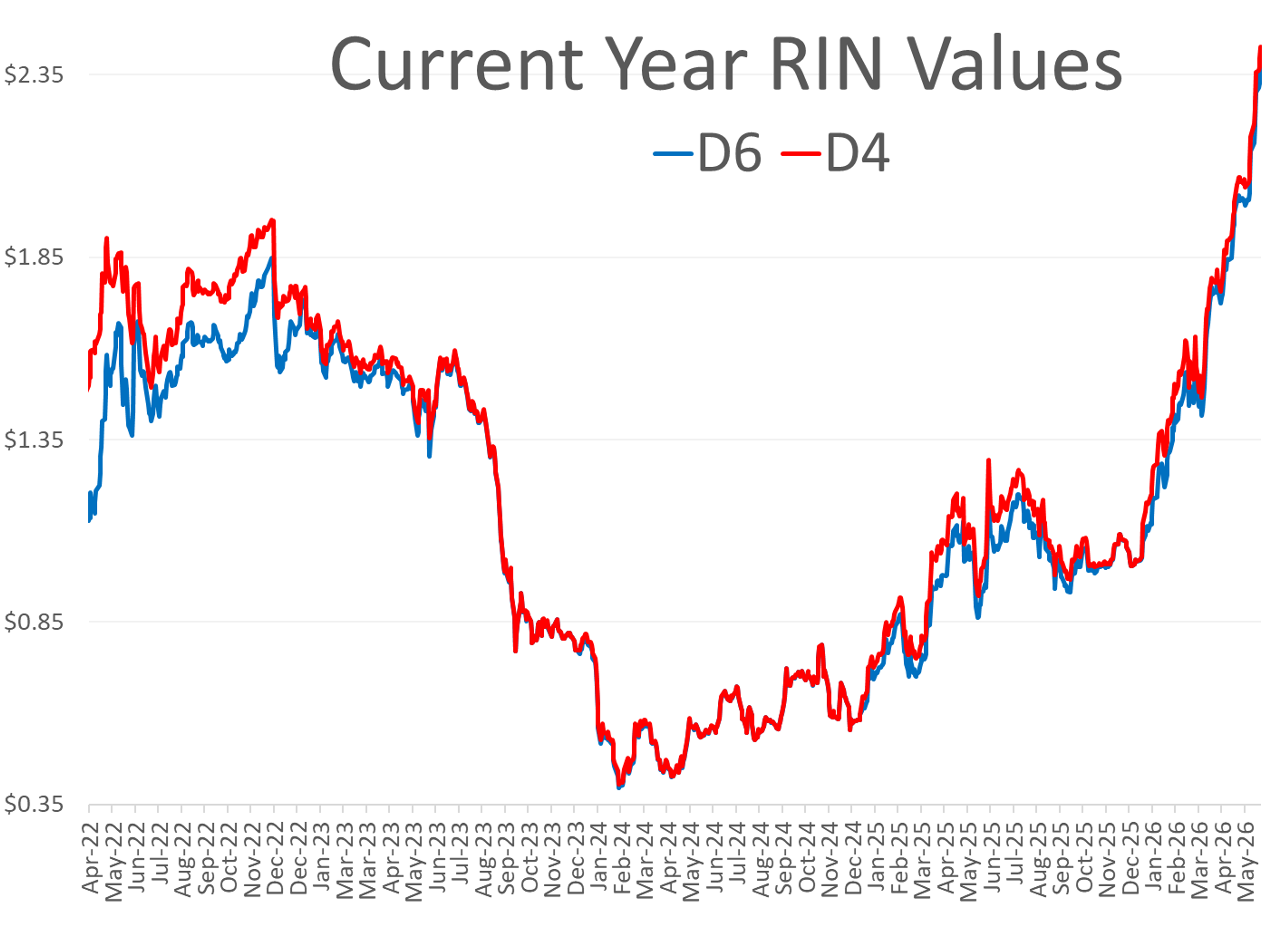
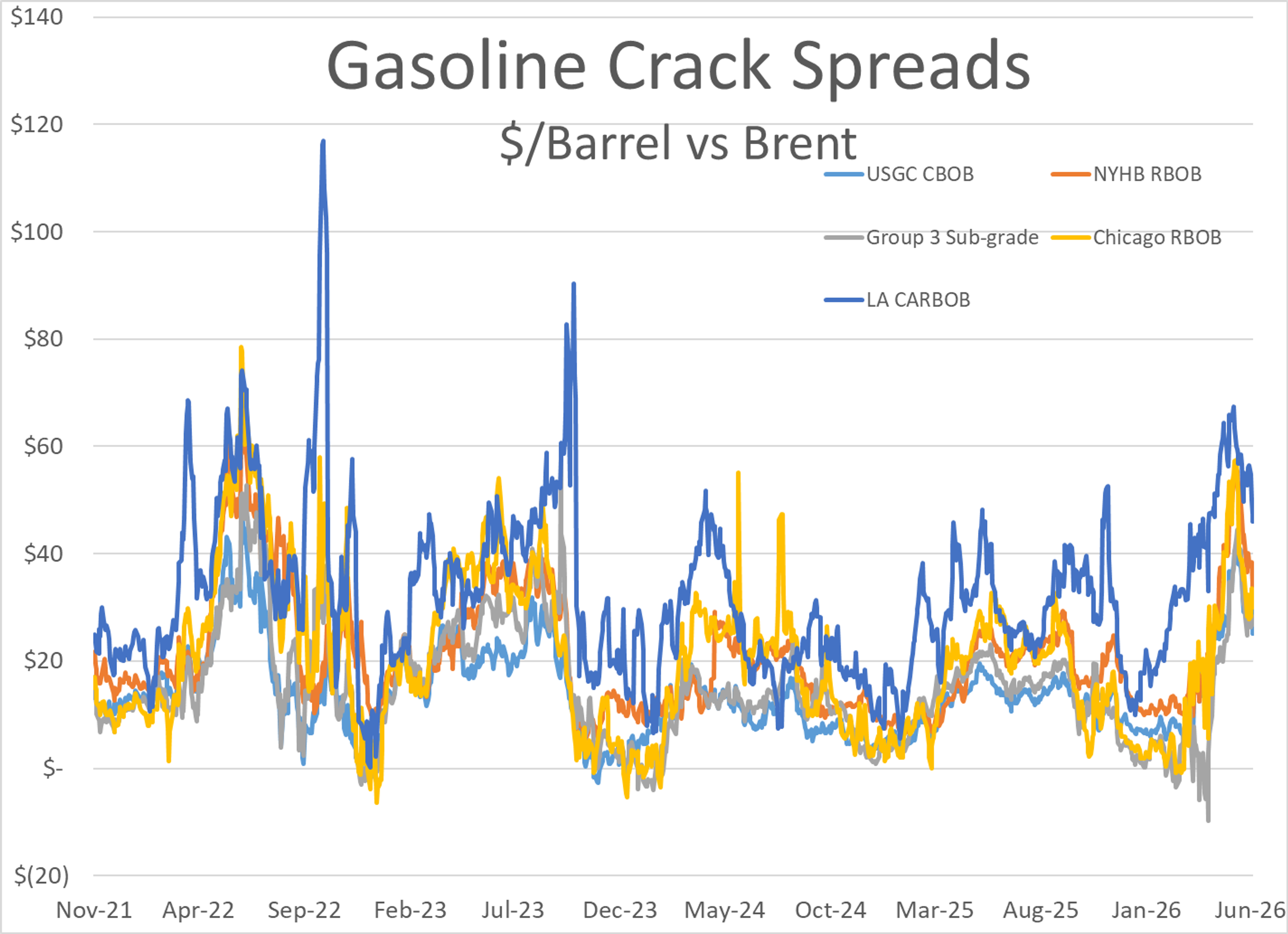
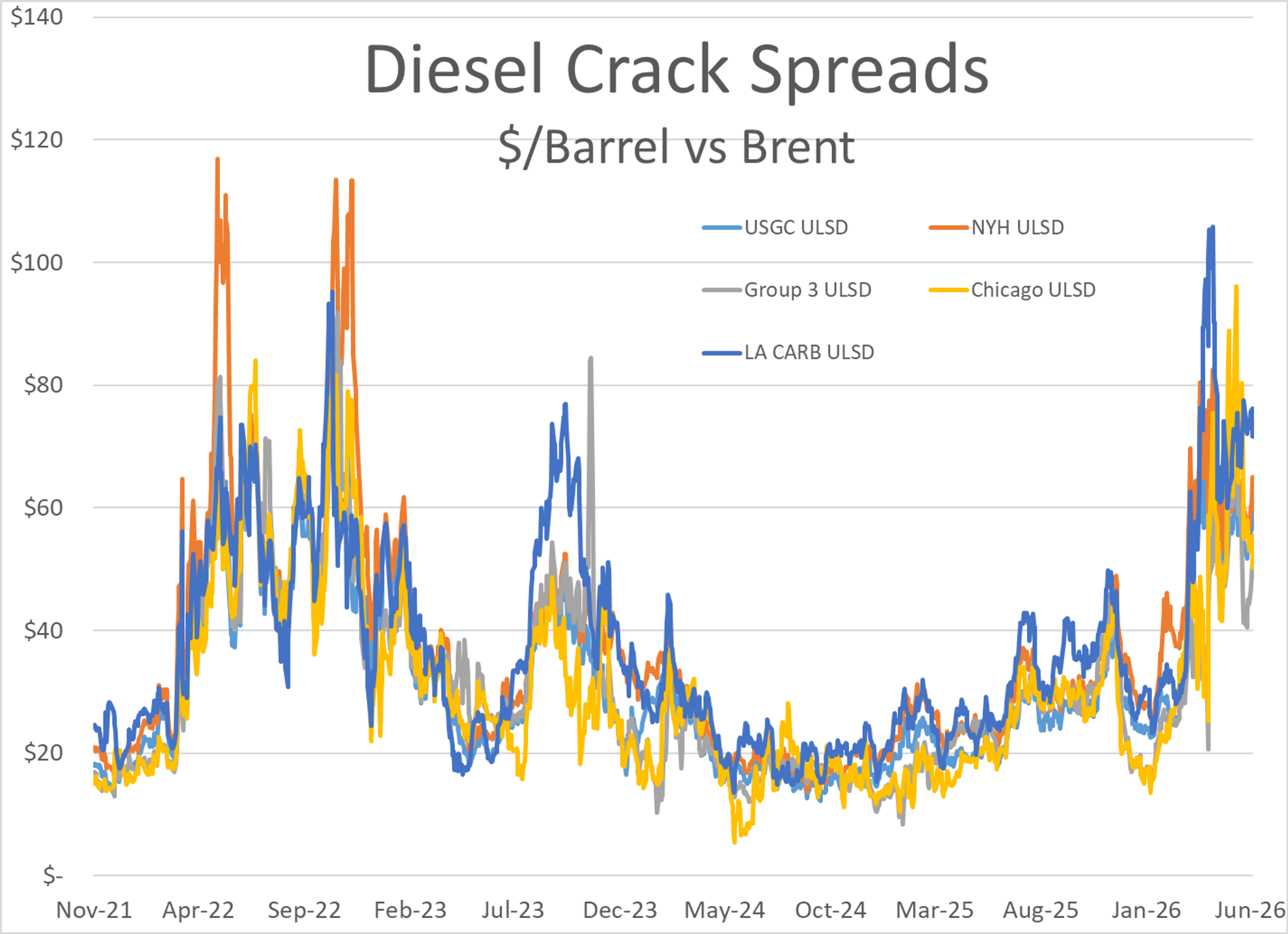
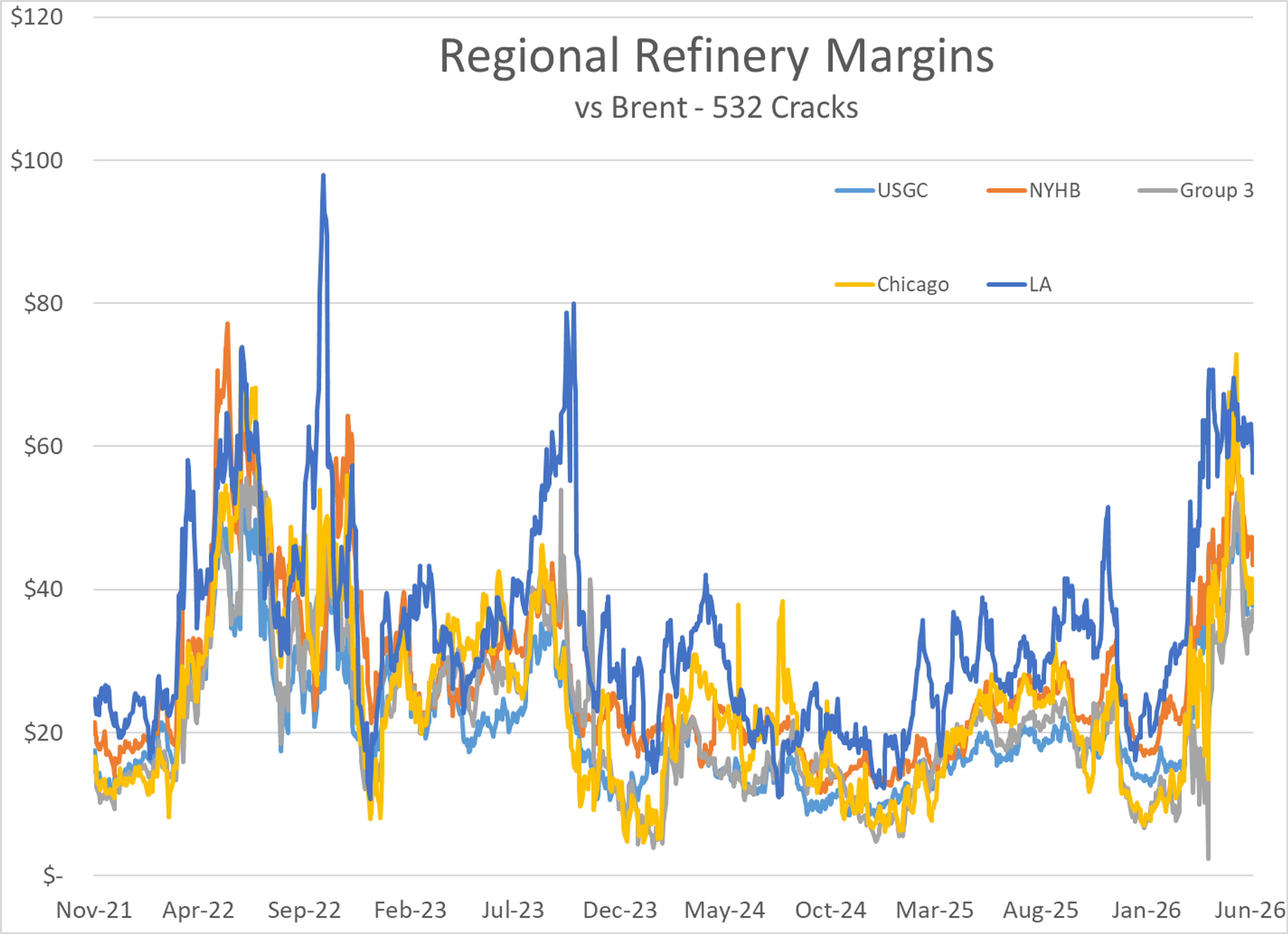
That RIN rally is also prompting the traditional refining industry to push back with the AFPM filing a petition for review against the EPA’s new RFS laws that set blending targets that the industry can’t meet, particularly after several biofuel producers were forced to shut down or de-convert units after losing millions last year. So far the RIN market has shrugged off that lawsuit, with D4 and D6 values both reaching fresh record highs close to $2.40/RIN Thursday, which puts the cost per barrel of the RVO north of $13/barrel for US facilities. While U.S. refiners continue to run full out thanks to crack spreads pre-RVO holding in the $40-$60 range, there is no doubt that the higher RIN values will have some plants considering either lowering output or exporting more to avoid those costs.
Latest Posts
Bullish Diesel Fundamentals Overshadow Weakness In Gasoline Markets
Week 41 - US DOE Inventory Recap
Energy Markets Juggle Supply Risks, Inflation Pressures, And Geopolitical Conflict
Crude Climbs For A Fifth Day While Global Fuel Supplies Remain Under Pressure
Refining Margins, Tanker Attacks, And OPEC Growth Shape Energy Outlook
Oil Rises As Political Chaos And Supply Risks Shake Markets
Social Media
News & Views
View All
Bullish Diesel Fundamentals Overshadow Weakness In Gasoline Markets
Week 41 - US DOE Inventory Recap