Low Gasoline Inventories And Rising Global Tensions Keep Energy Markets On Edge

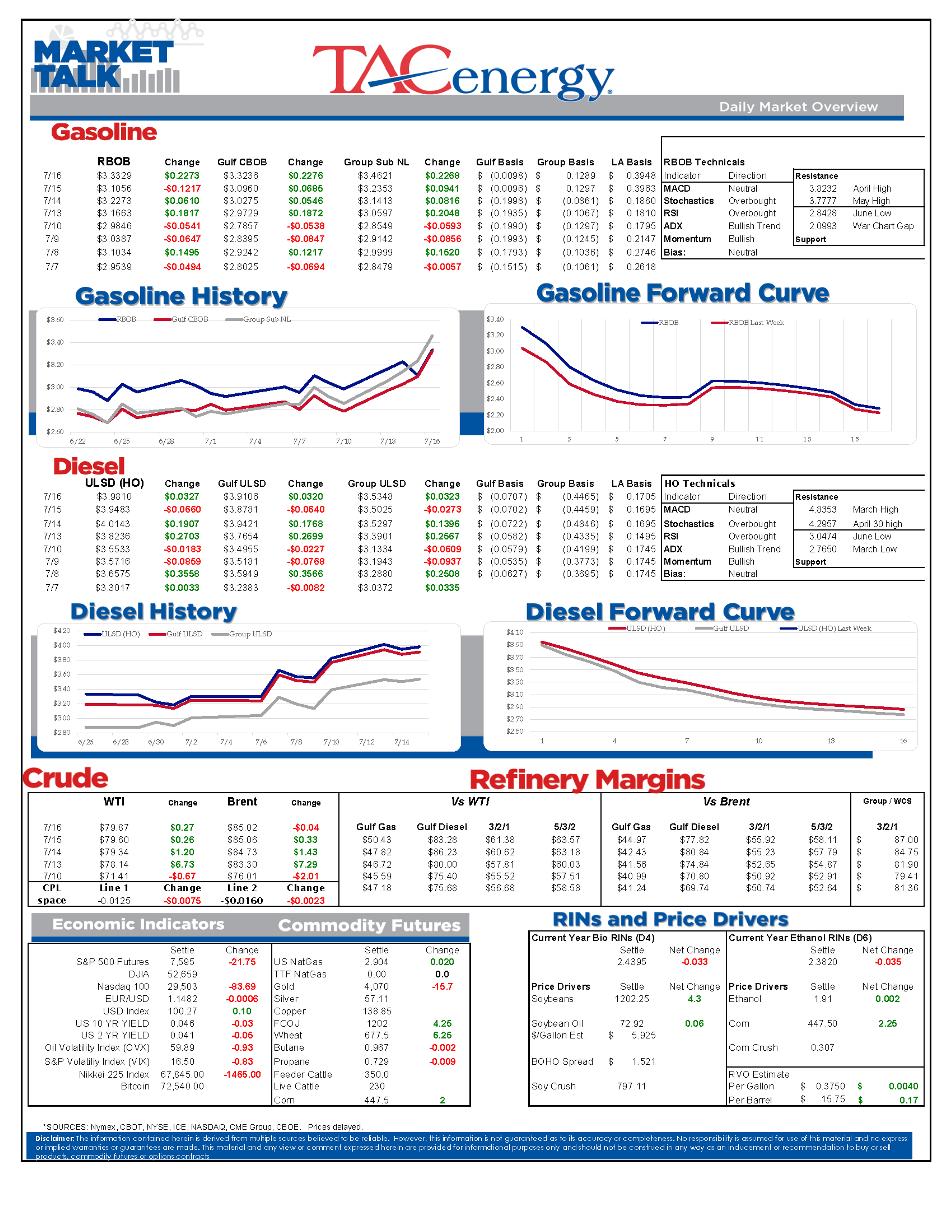
Refined product futures are starting the day with moderate gains after a mixed finish yesterday saw the ULSD contract settle lower for the first time since the Iran war kicked off again. News that the White House is looking to expand military operations, possibly including used ground forces to seize and occupy Kharg Island, is taking credit (being blamed?) for the move higher this morning.
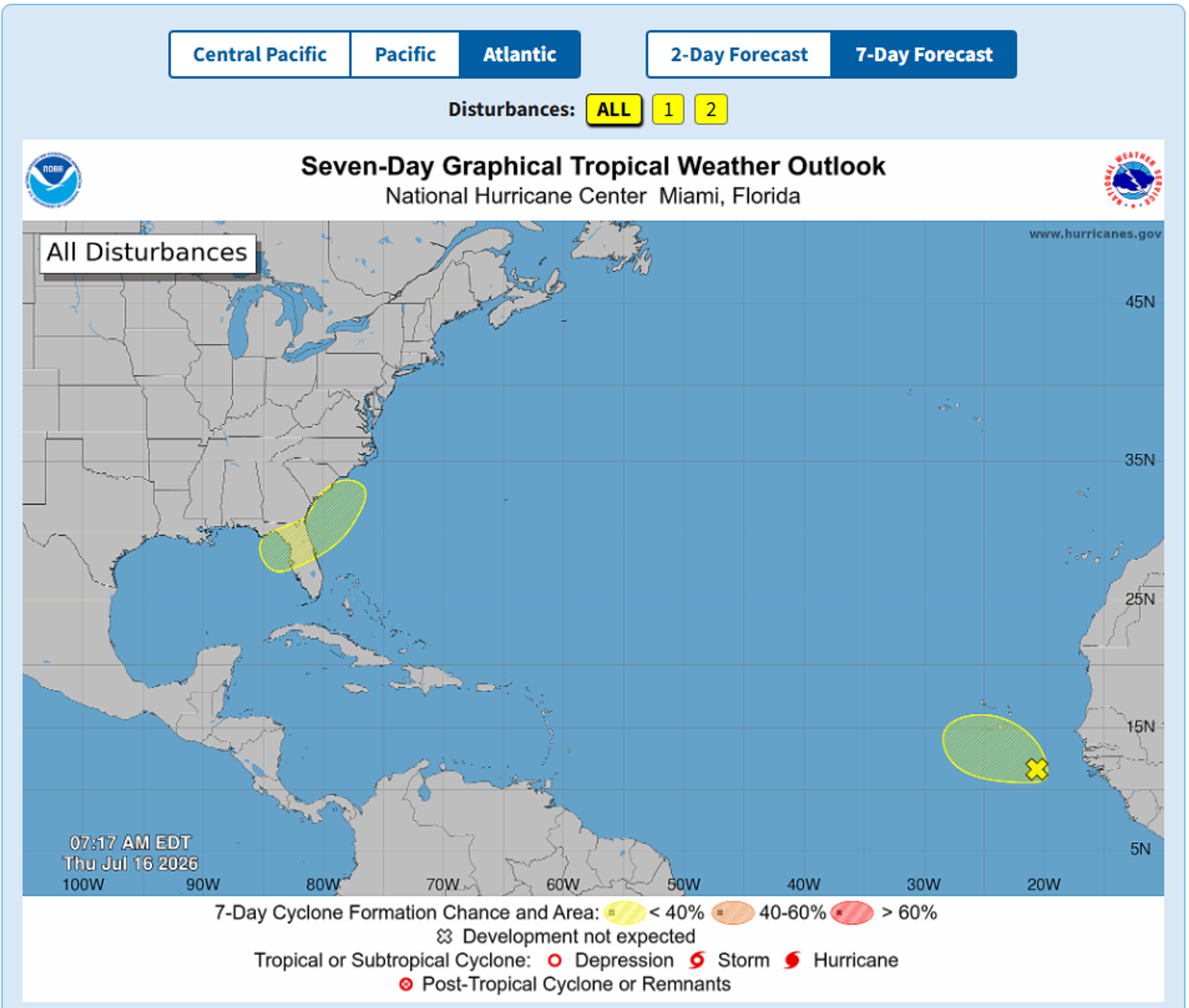
Two areas of interest have popped up in the Atlantic overnight, both with 10%-20% chance of development over the next week. The small disturbance crossing Florida and wrapping around the Georgia and South Carolina coast isn’t likely to be anything more than a rain-maker for coastal communities. One proverbial eye will be kept on the system forming near Cabo Verde, but the ‘little-system-that-probably-can’t’ has a long way to go, and a lot of growing up to do, before threatening U.S. energy infrastructure.
The EIA published a note this morning, mostly covering market action everyone is already aware of: big drop in crude oil prices from April to June due to cease-fire talks, huge crack spreads enjoyed by refiners, multi-year high distillate exports from the U.S., and prices jumping on conflict resumption. Full Q2 rehashing here.
Notes on the yesterday’s DOE report:
Total U.S. crude inventories fell again last week with another 3mm barrels released from the SPR. Commercial crude stocks also dwindled, despite production being at an all-time high, as exports increased and refinery runs ticked higher. Stocks drew across all PADDs except 5 with each running at the low end or under their 5-year ranges.
Refinery runs picked up everywhere except PADD 2 for an overall net increase. PADDs 2-4 are running at seasonal highs while PADD 1 has moved back above average as it recovers from the Trainer upset. PADD 5 is holding below its 5-year range but has shut 2 refineries in the past 10 months, so it isn’t surprising to see run rates charting lower when compared to recent years. Total U.S. throughput is running above the 5-year range and utilization has held at 8-year seasonal highs for the past 5 weeks.
Diesel stocks built off a big drop in post-holiday demand that went from a 5-year seasonal high to a 5-year seasonal low week over week. All PADDs except 5 increased but are still holding well below average inventories. Total U.S. inventories are just ahead of year ago levels but still running along the low end of the 5-year range.
Total gasoline inventories sunk to the lowest level of the year, a 14-year seasonal low. Contrary to the typical pre-holiday spike and sharp post-holiday drop, the EIA’s demand estimate was essentially unchanged over the July 4th weekend, leaving the decrease in imports and production as the main drivers of last week’s draw. PADD level changes were mixed but inventories are generally low outside of PADD 4, with PADD 3’s decline extending a stretch of 9-year seasonal lows to a third consecutive week.
Jet fuel stocks increased with a slip in demand while export activity kicked back up to another all-time seasonal high. Increased production levels sustaining weekly seasonal highs and above average imports helped push total inventories to their highest level of the year, a 16-year seasonal high.
Latest Posts
Crude Climbs For A Fifth Day While Global Fuel Supplies Remain Under Pressure
Refining Margins, Tanker Attacks, And OPEC Growth Shape Energy Outlook
Oil Rises As Political Chaos And Supply Risks Shake Markets
Volatility Returns As Traders Weigh Storm Risk And Global Supply Threats
Crude, Diesel, And Storm Risks: Key Drivers Behind Today's Rally
Refinery Outages, Storm Risks, And Export Constraints Lift Distillates
Social Media
News & Views
View All
Crude Climbs For A Fifth Day While Global Fuel Supplies Remain Under Pressure
Refining Margins, Tanker Attacks, And OPEC Growth Shape Energy Outlook