Supply Strains, Short Covering, And LNG Growth Shape A Volatile Energy Outlook

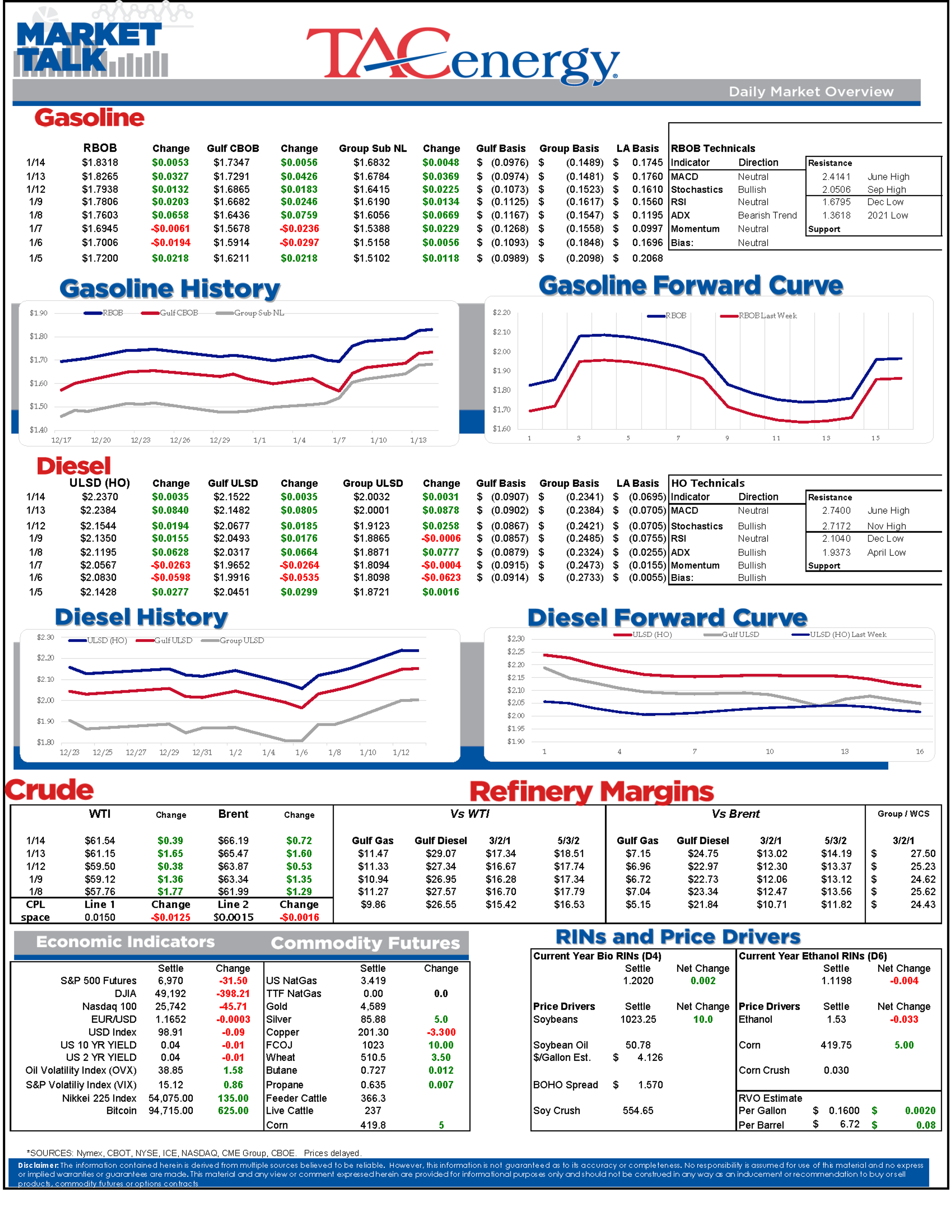
Energy markets are trading higher for a 5th straight session Wednesday, following a big Tuesday rally that pushed several contracts to 6 week highs.
While the flurry of geopolitical headlines continues to keep traders on edge, there also seems to be a technical aspect to this recovery rally after chart support held in recent weeks and some of the huge speculative short positions in Brent crude appear to be getting squeezed out.
Even though Venezuela and Iran are getting most of the attention for their potential impact on oil flow, it’s Kazakhstan’s oil output that’s seen the largest actual disruption in recent weeks. The country urged U.S. and European leaders to secure tanker transportation to the CPC terminal on Russia’s Black Sea coast because Ukraine’s drones aren’t playing very nice. That terminal accounts for more than 1 percent of total global oil output and is the key conduit for Kazakhstan’s production to reach the global market.
Meanwhile, Kazakhstan agreed to slash its output by more than ½ million barrels/day in the coming months to make up for overproducing its OPEC & Friends quota last year, and likely due to the risk of further attacks on the CPC and tankers disrupting its export capacity.
The API’s weekly estimates showed large inventory builds across the board of 8.2 million barrels of gasoline, 5.3 million barrels of crude oil and 4.3 million barrels of diesel. Large builds are not uncommon this time of year as the country takes a couple of weeks to get moving again following the holiday hiatus. The DOE’s weekly report is due out at its normal time this morning and will be delayed a day next week due to the MLK Day holiday on Monday.
Futures will trade during the holiday Monday but will not post a settlement. Spot markets will not be assessed so most of the industry will take the day off, and most prices will carry through the weekend until Tuesday unless something interesting happens with futures on Monday.
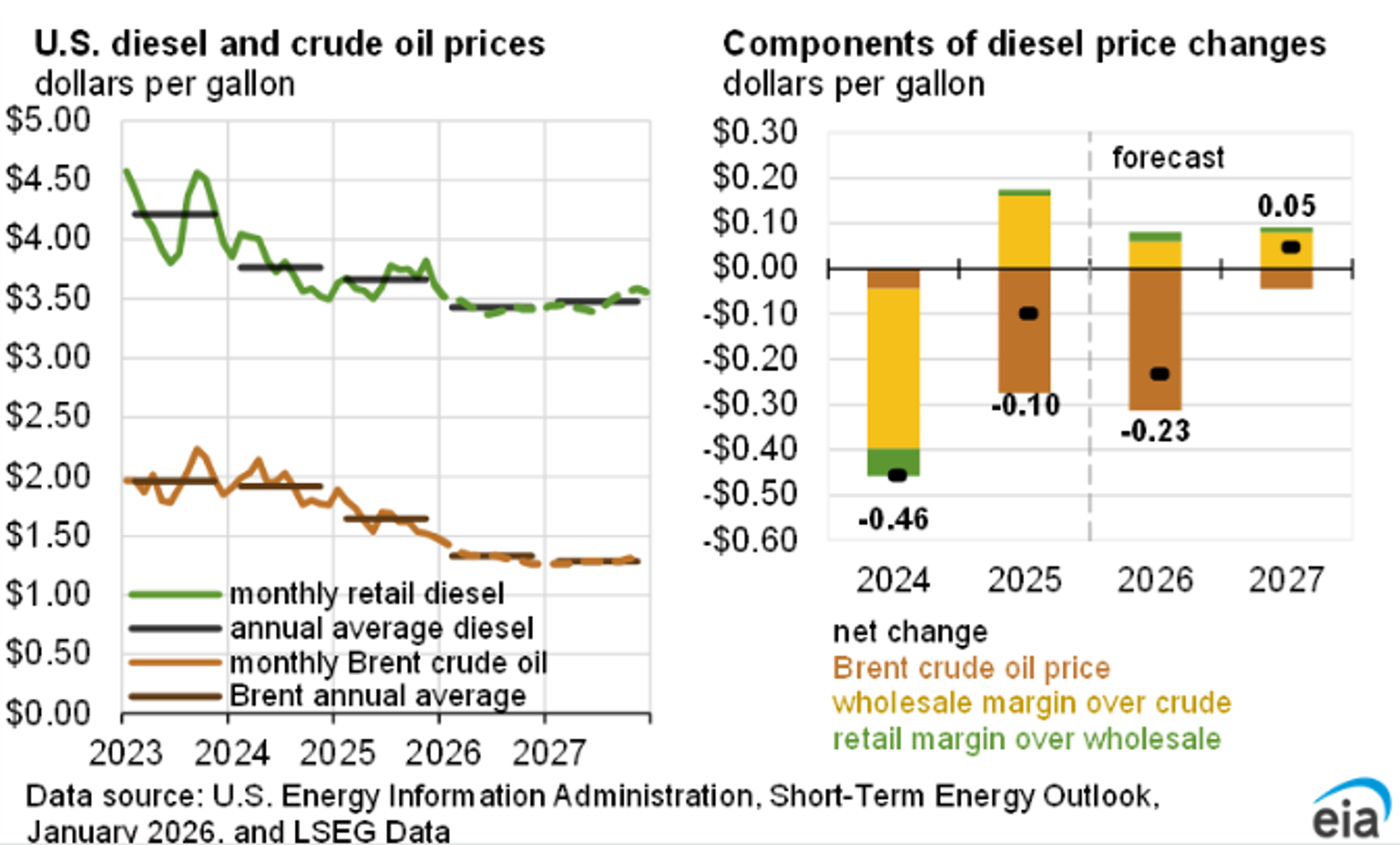
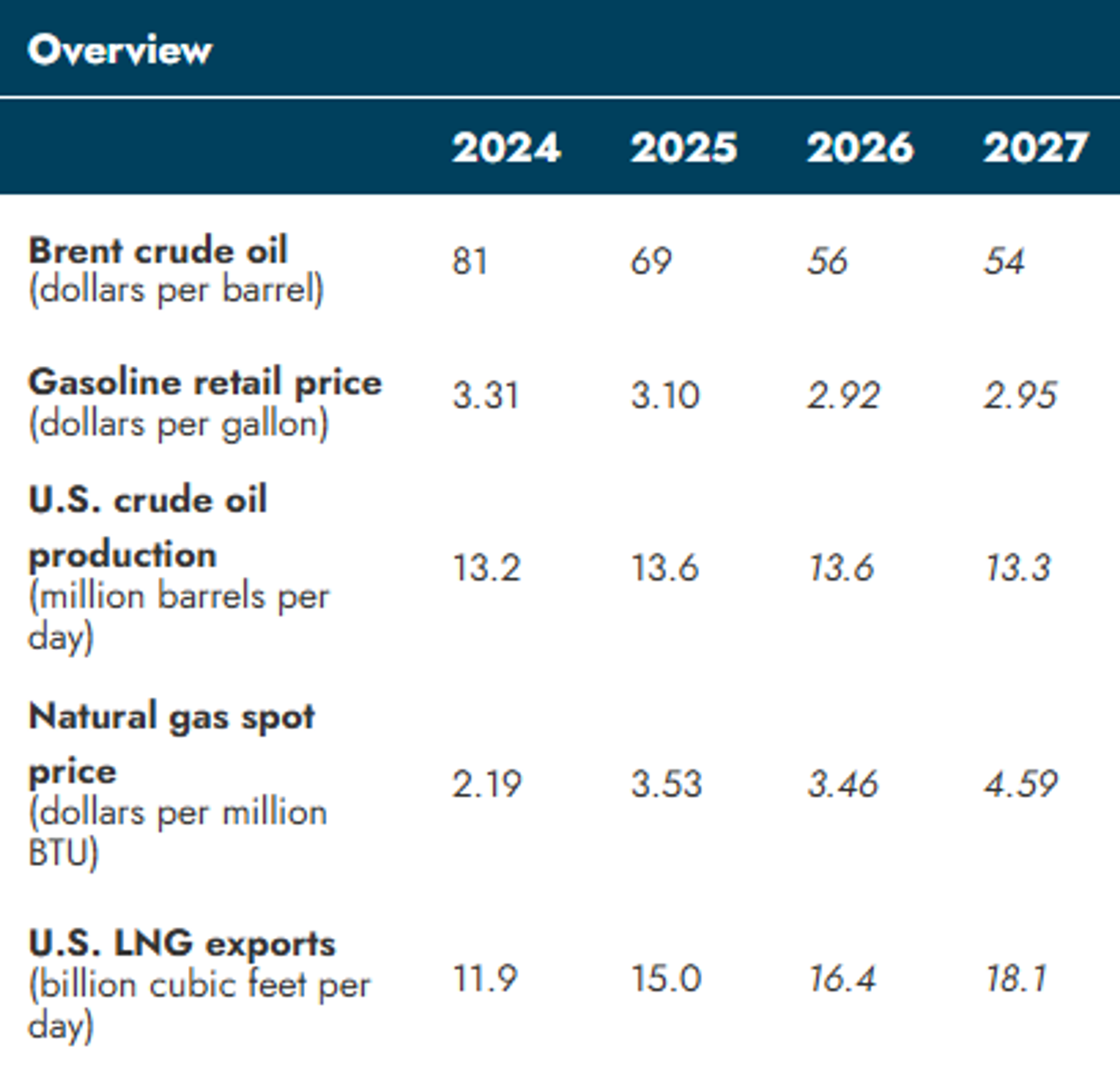
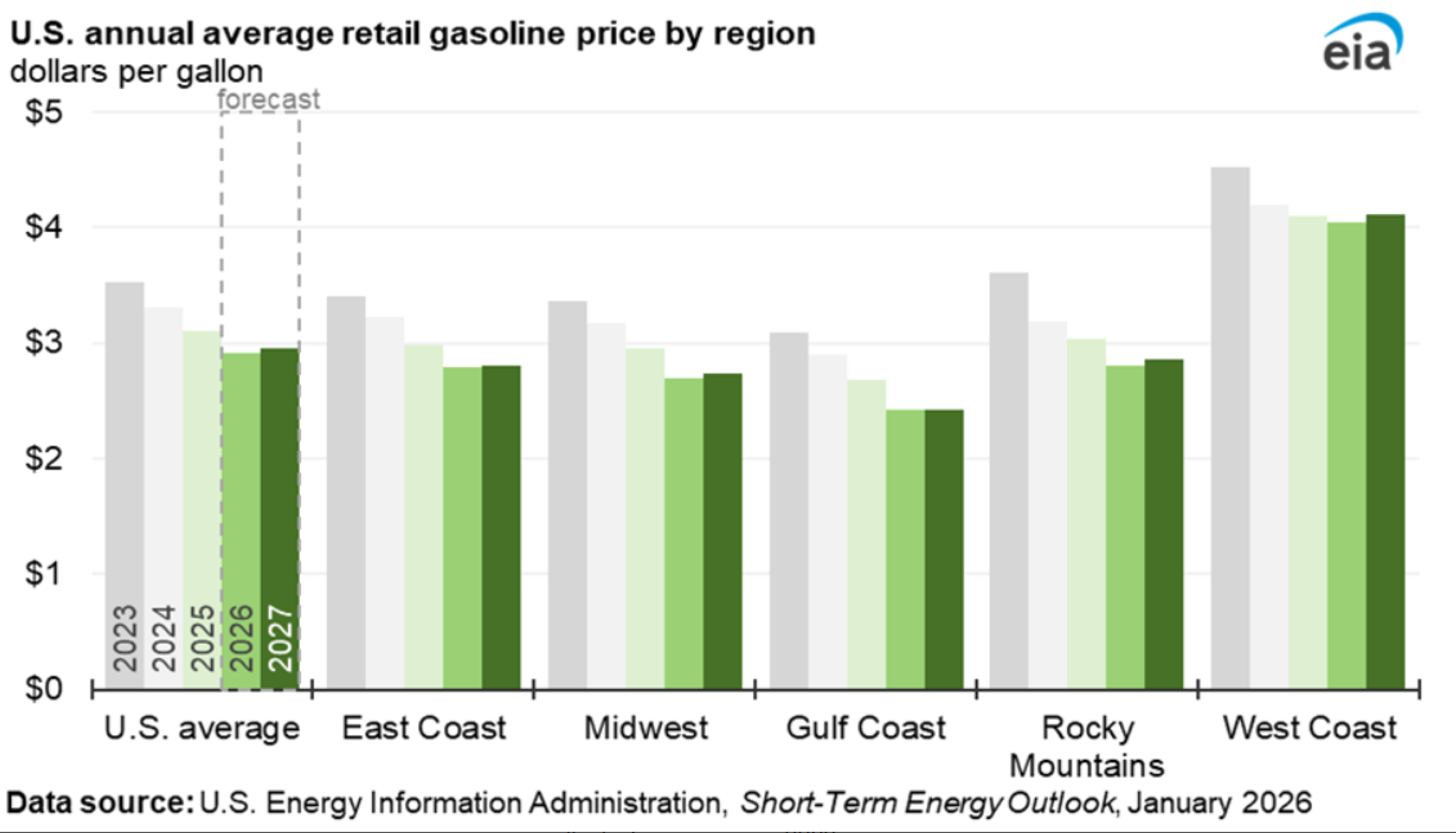
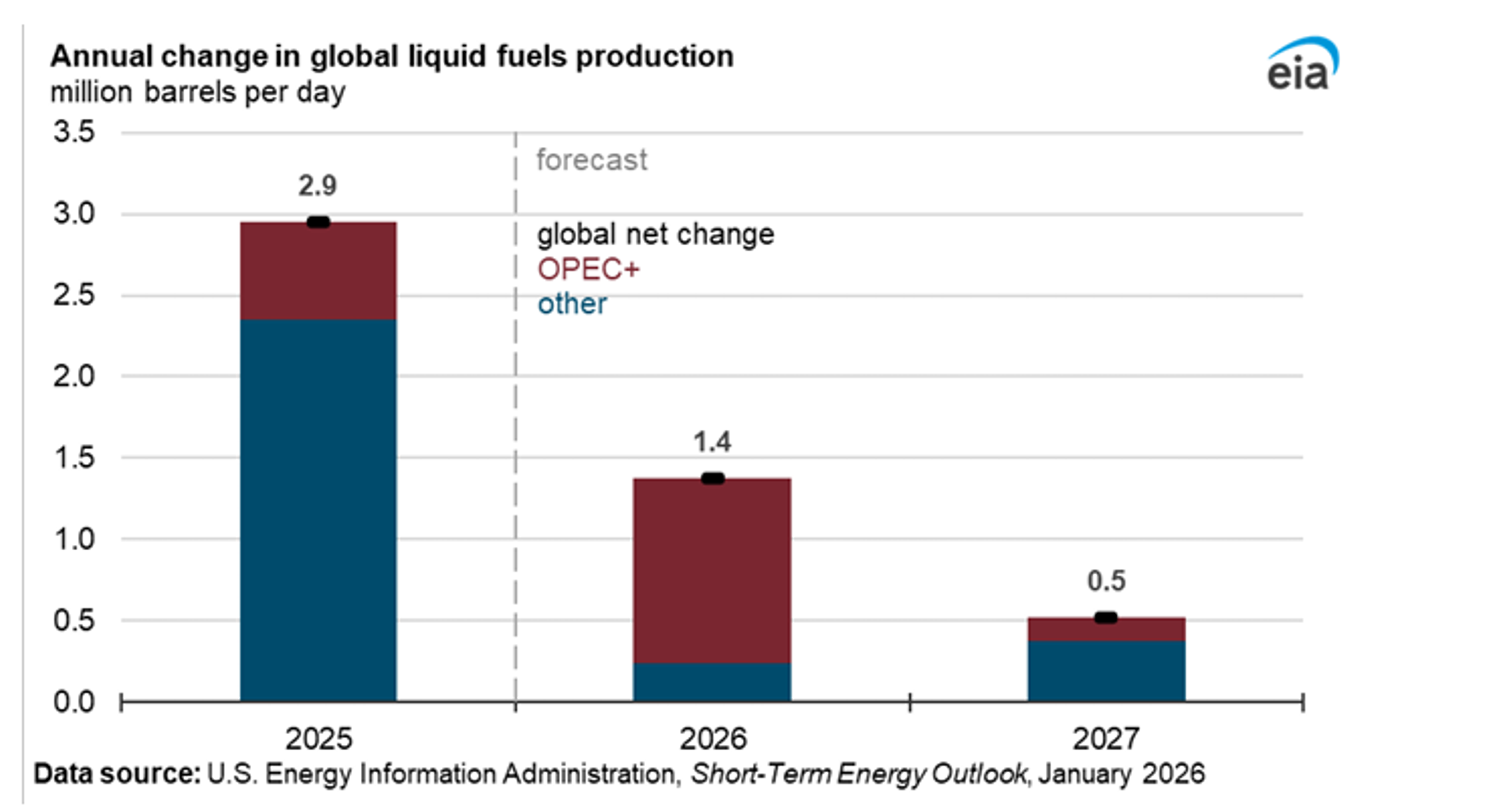
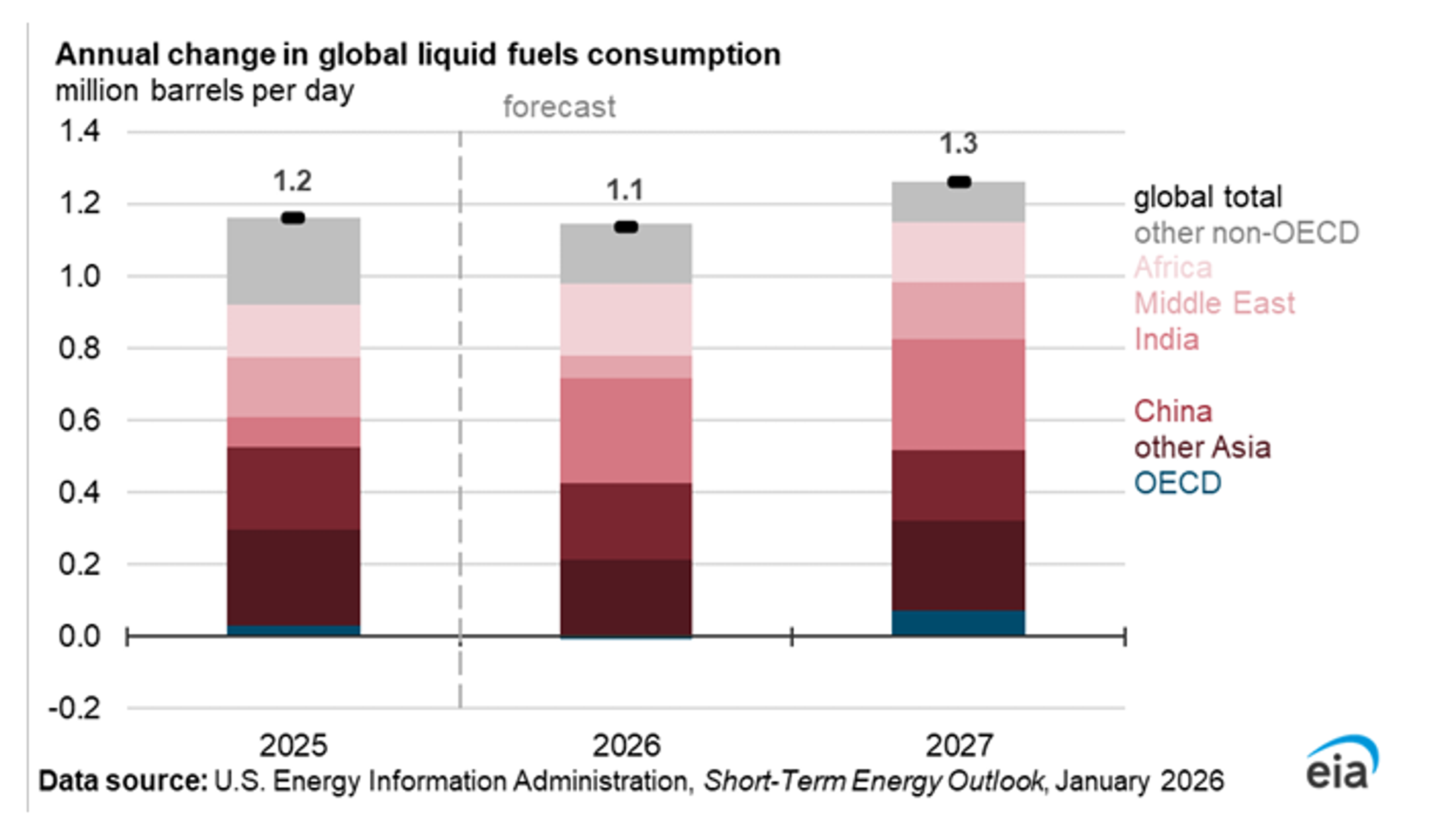
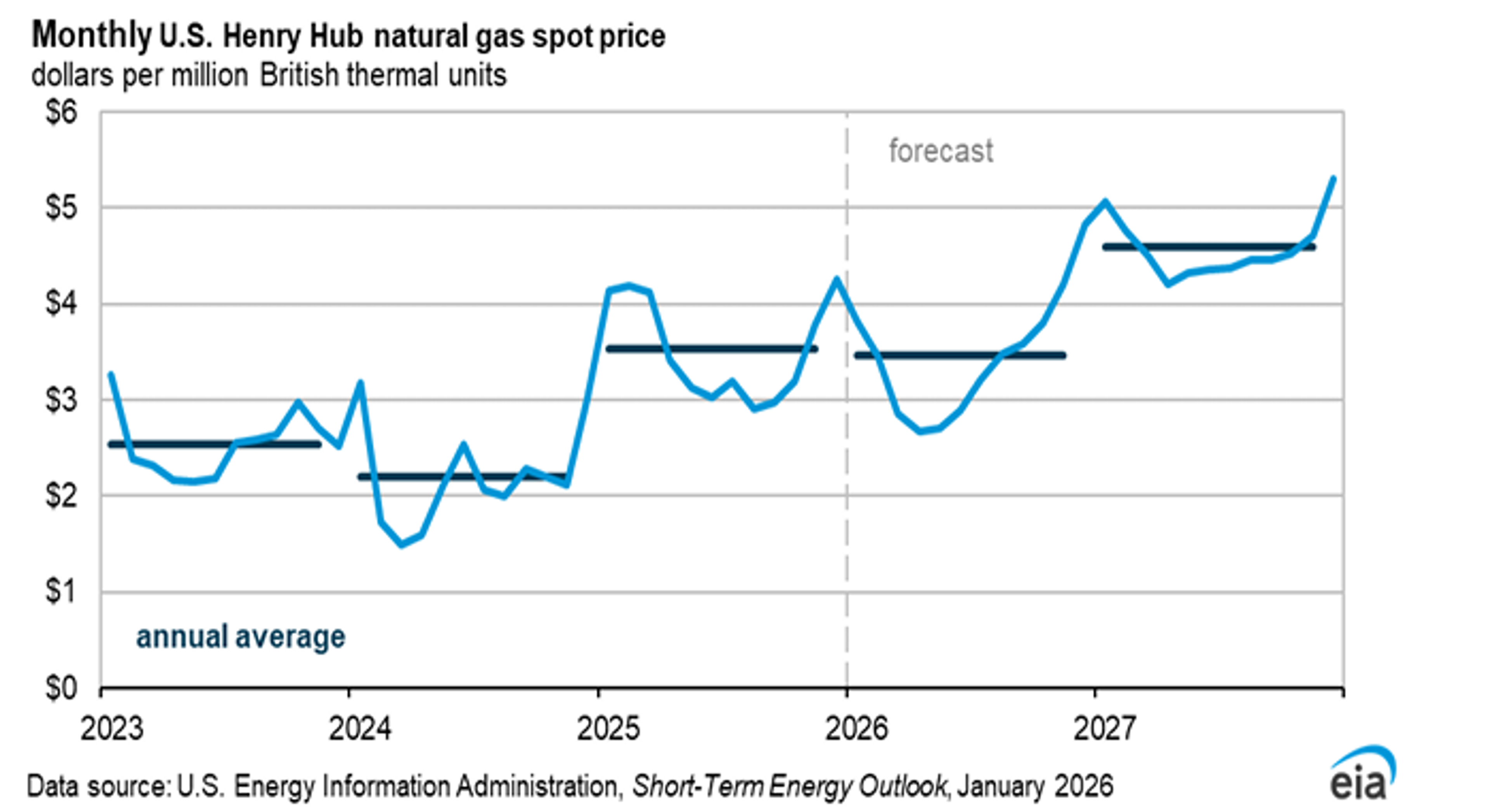
Yesterday the DOE released its monthly Short Term Energy Outlook, which included the first forecasts for oil production and prices through 2027. The agency’s forecast suggests prices will remain under pressure in 2026 but then will begin to climb again in 2027 as the alleged supply overhang diminishes. The forecast also highlights the rapid growth in U.S. LNG export capacity over the next two years, which they predict will help push Natural gas prices north of $4.50/million BTU.
Marathon reported a fire in an alkylation unit at its 630mb/day Galveston Bay (AKA Texas City) refinery late Monday night. Energy News Today reports that unit was one of several at the plant undergoing 2 months of planned maintenance, so the fire should not impact current production rates.
BP announced it would be taking write-downs of $4-$5 billion related to their failed transition businesses that were all the rage a few years ago. The company also noted stronger refining margins during the quarter (which will be a theme for all refiners in Q4) which was offset in part by weak trading results. BP is also beginning negotiations with union employees at its 430mb/day Whiting IN refinery and is proposing job cuts that will likely prove contentious and have the potential to lead to a strike.
In another sign of the tide change in low-carbon influence on the industry, an activist investor announced this week it was changing tactics and no longer challenging big oil on their net-zero pipe dreams but instead challenging them on the looming drop in oil and gas demand rather than emissions targets.

Latest Posts
Oil Rises As Political Chaos And Supply Risks Shake Markets
Volatility Returns As Traders Weigh Storm Risk And Global Supply Threats
Crude, Diesel, And Storm Risks: Key Drivers Behind Today's Rally
Refinery Outages, Storm Risks, And Export Constraints Lift Distillates
Week 40 - US DOE Inventory Recap
Diesel Leads Energy Markets Lower Despite Mounting Geopolitical Risks
Social Media
News & Views
View All
Oil Rises As Political Chaos And Supply Risks Shake Markets
Volatility Returns As Traders Weigh Storm Risk And Global Supply Threats