Oil Prices Retreat As US–Iran Tensions Cool And Sanctions Timelines Slip

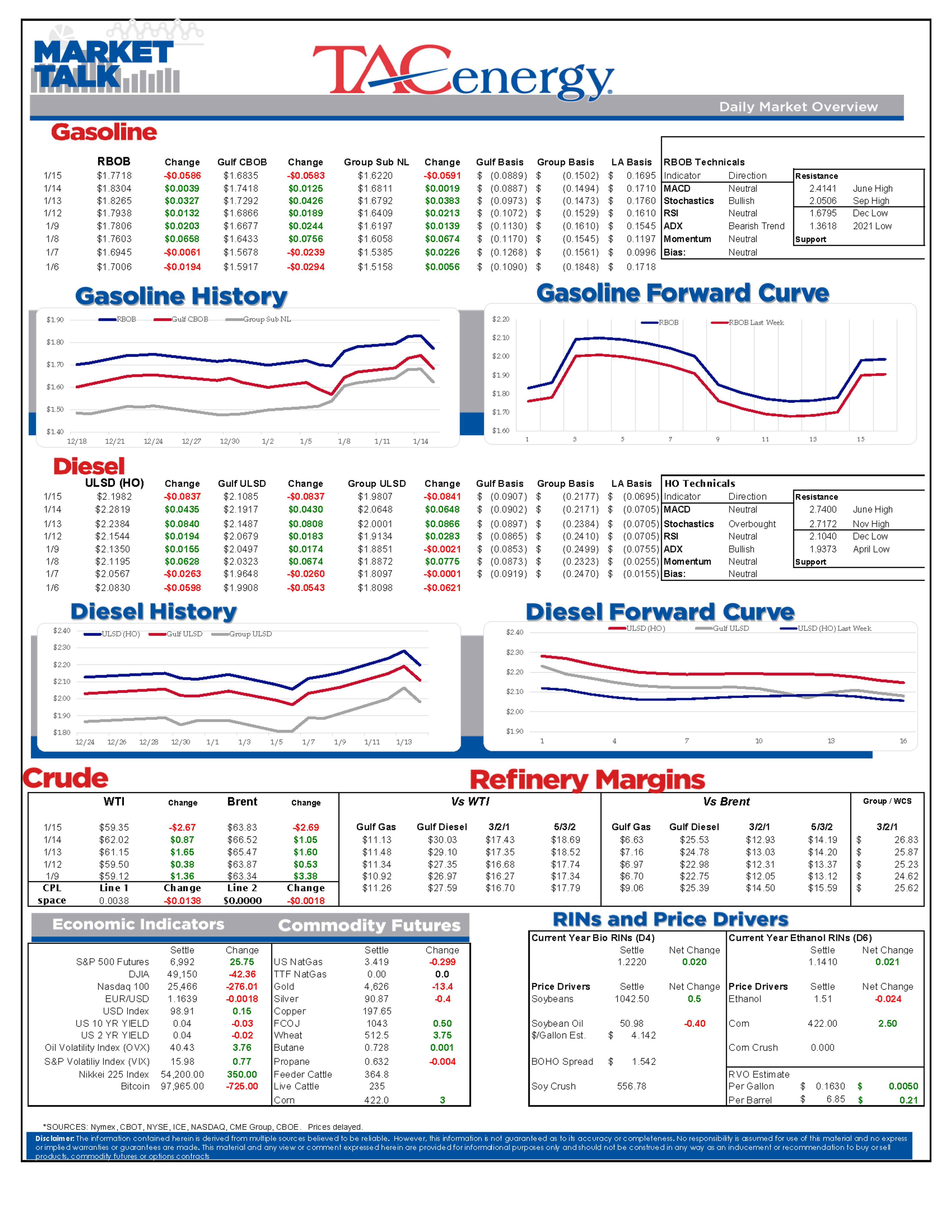
Reversal Thursday is in full swing this morning with the crude oil futures leading the way lower as WTI and Brent prompt month contracts drop over 4% in premarket trading. Refined product futures are following their progenitor benchmarks closely behind with RBOB and HO each dropping around 3.3% to start the day.
The day of the week shouldn’t be given all the credit: the selling pressure we are seeing this morning actually began in post-settlement trading yesterday, after the White House softened its rhetoric on potential intervention in the Iran vs Iranians conflict. The announcement that Iran was stopping its crackdown on its protestors (despite leaving executions on the table) came just hours after the U.S. began pulling its forces out of military bases within Iran’s immediate reach, signaling an impending strike. So far there’s been no indication if eventually bombing Iran is psychologically important to the U.S. administration.
Just a few more weeks, OK? Adding to this morning’s bearish sentiment is the extension granted to Lukoil International by the United States Treasury, giving the Russian oil company until February 28th to sell its assets. The sanctions were announced last October with the original deadline of the asset sale set for December 13th, which first got extended to January 17th, and now to the end of February.
Kazakhstan reached out to its fellow European countries, along with the U.S., requesting assistance in ensuring the safety of oil transport in the Black Sea, following Tuesday’s drone attacks that targeted three tankers heading to the Caspian Pipeline Consortium’s (CPC) marine terminal. The CPC facilitates 80% of Kazakh oil exports.
Notes on yesterday’s DOE report below:
Crude inventories built everywhere except PADD 5 with increased imports and production remaining near all-time highs despite a slight decline last week. Refinery runs ticked up again and remain strong across the country less PADD 5, although last week’s increase pulled West Coast throughput up to within a negligible difference to its 5-year average.
Mixed regional changes balanced out for essentially no change to the country’s below average diesel stocks, despite a pop in demand. PADDs 1, 2, & 5 are still below average regardless of last week’s movement while PADD’s 3 & 4 hold above.
Gasoline inventories increased across all regions, adding 9 million barrels and a fresh seasonal 5-year high to the total U.S. balance. All PADDs except 1 & 5 are well above seasonal norms, particularly PADD 3 where storage has increased each of the past 10 weeks, climbing to levels not seen since January 2020.
Ethanol stocks are tracking just ahead of their 5-year average but starting 2026 below the previous two years despite exports remaining tame last week while production boosted to an all-time high.
Latest Posts
Oil Rises As Political Chaos And Supply Risks Shake Markets
Volatility Returns As Traders Weigh Storm Risk And Global Supply Threats
Crude, Diesel, And Storm Risks: Key Drivers Behind Today's Rally
Refinery Outages, Storm Risks, And Export Constraints Lift Distillates
Week 40 - US DOE Inventory Recap
Diesel Leads Energy Markets Lower Despite Mounting Geopolitical Risks
Social Media
News & Views
View All
Oil Rises As Political Chaos And Supply Risks Shake Markets
Volatility Returns As Traders Weigh Storm Risk And Global Supply Threats