Forward Curves Shift As Energy Markets Adjust To Easing Supply Risks

It’s a mixed bag for energy markets to start Thursday’s trading with crude and ULSD futures seeing small losses while RBOB gasoline futures cling to small gains. It appears we’re witnessing a bit of consolidation after the wave of heavy selling wiped out the war premium for oil prices.
While Iran’s Republican Guard continues to saber rattle over the new Oman-UN linked route to transit the Strait, shipping activity continues to pick up. One unusual note is that it’s now an excess of barnacles that are a bigger hindrance to shippers than drones and mines, adding to the list of logistical details that most of us take for granted when we expect our fuel supply to be readily available.
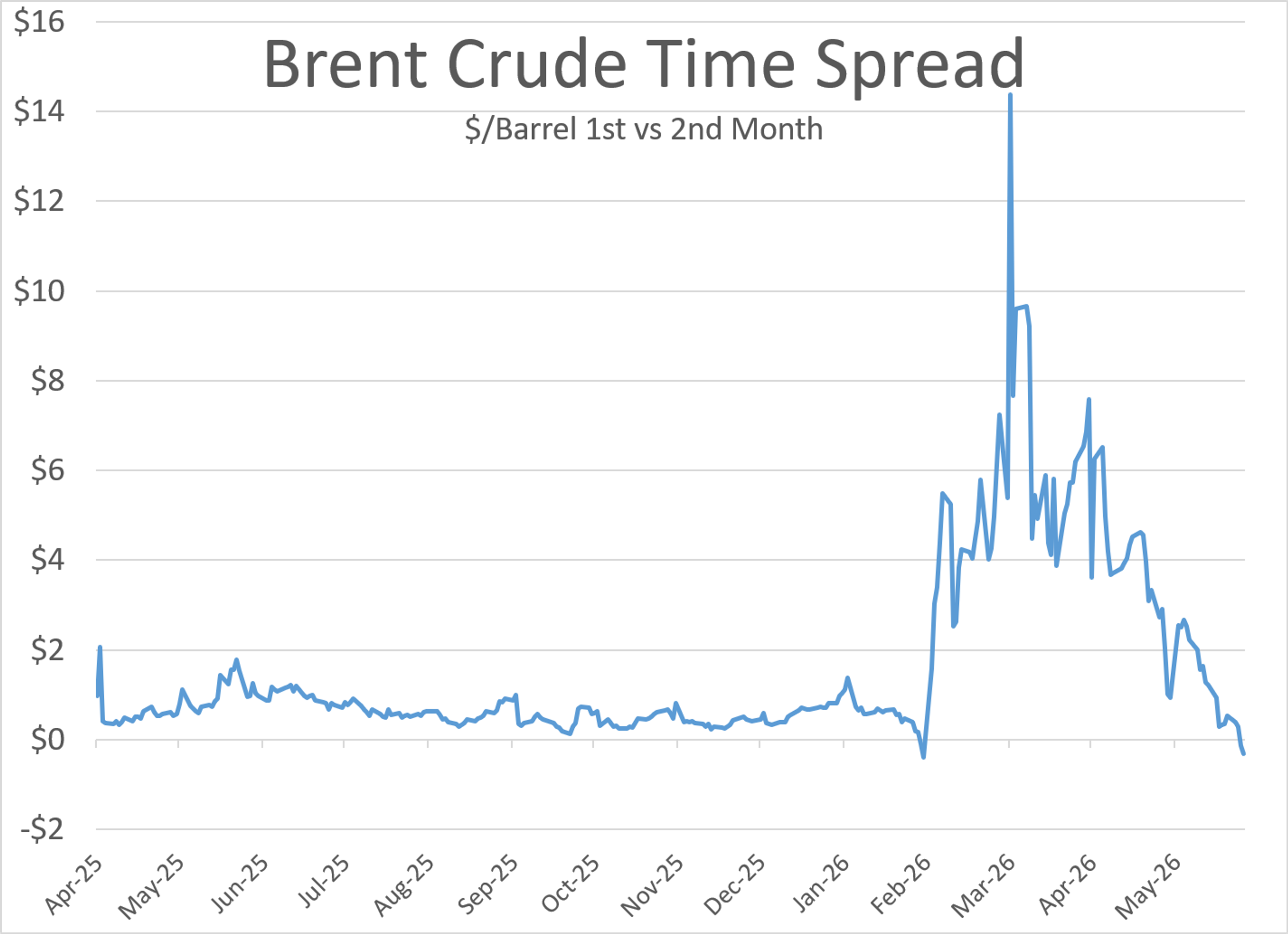
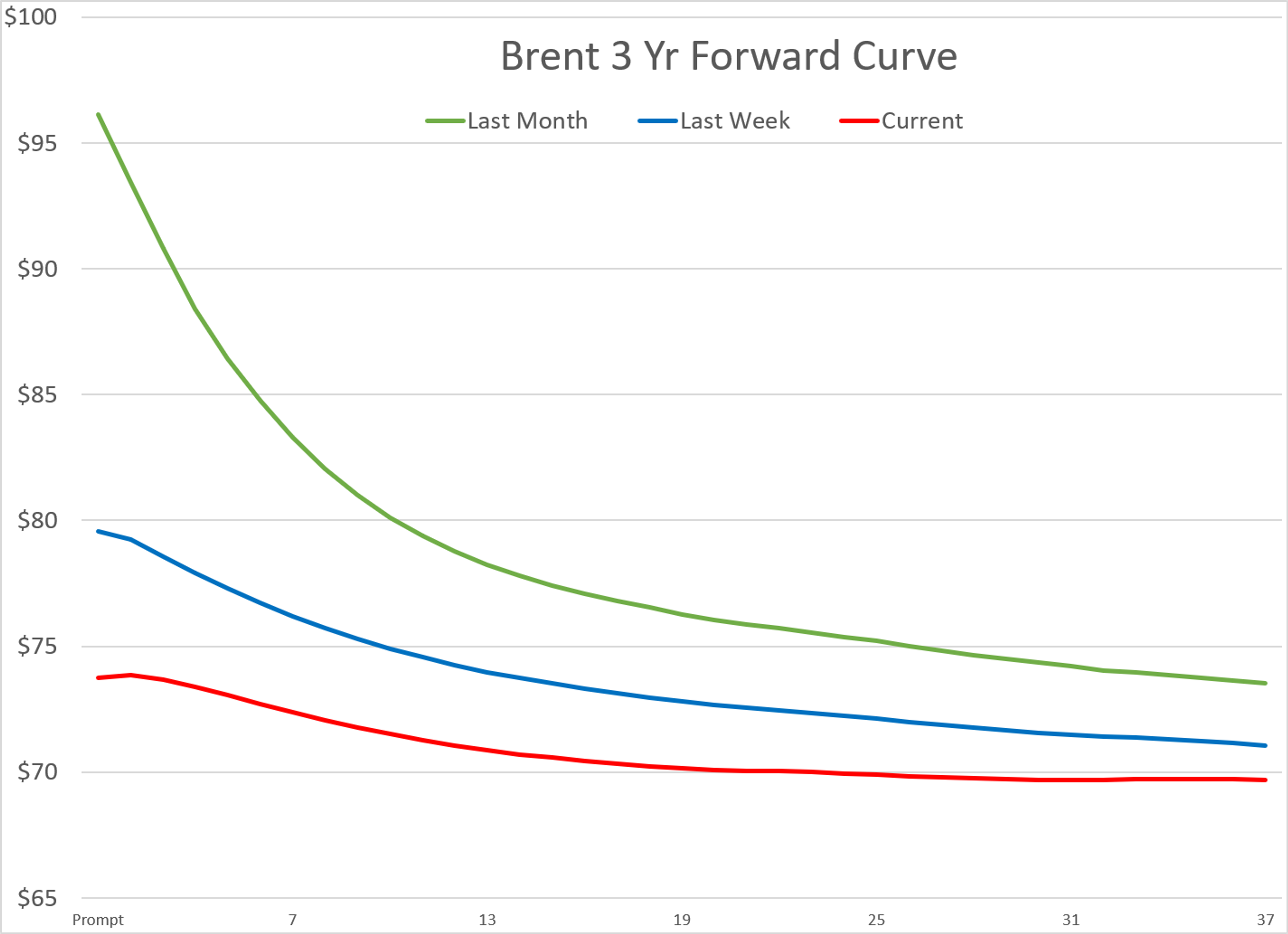
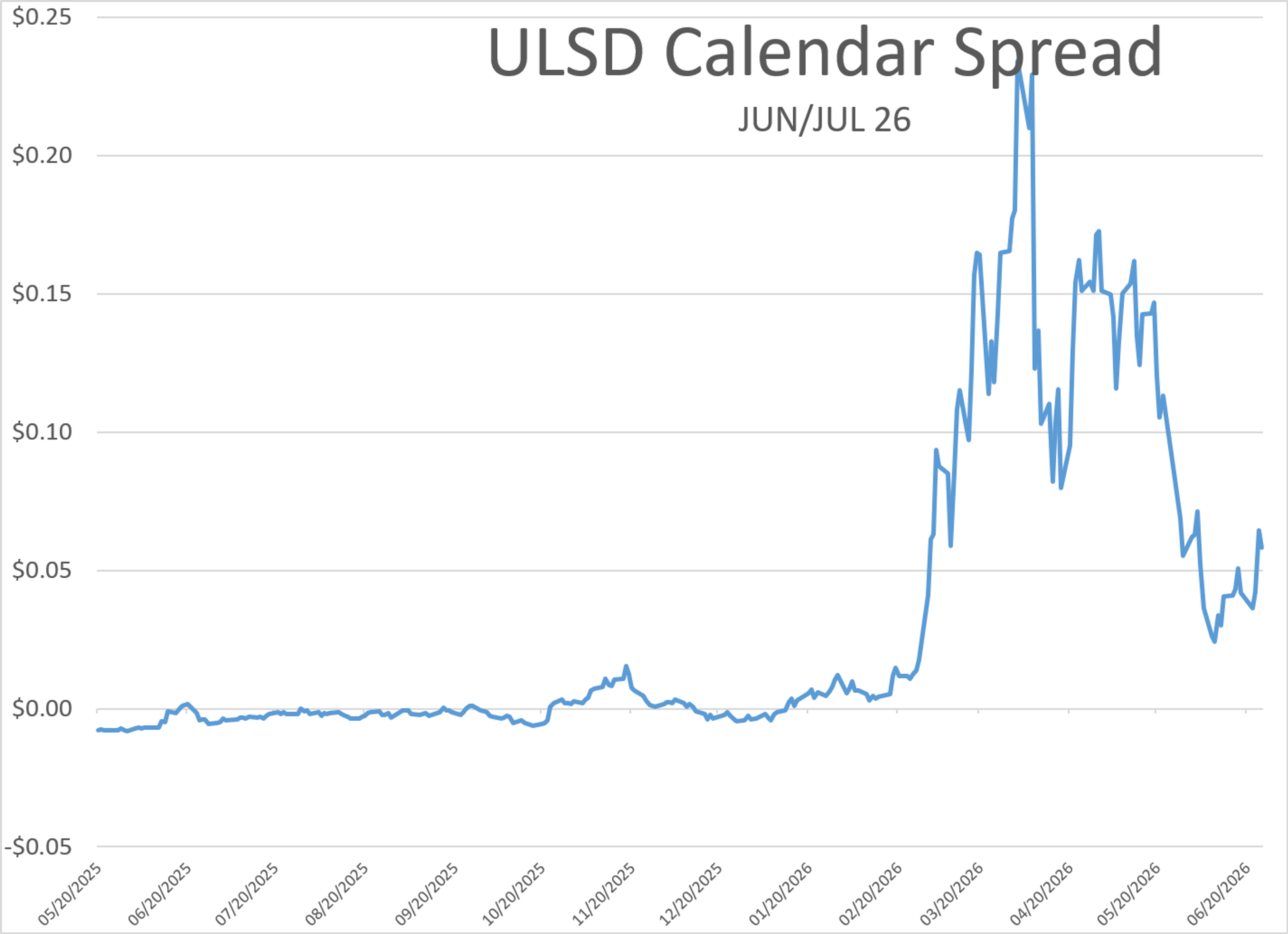
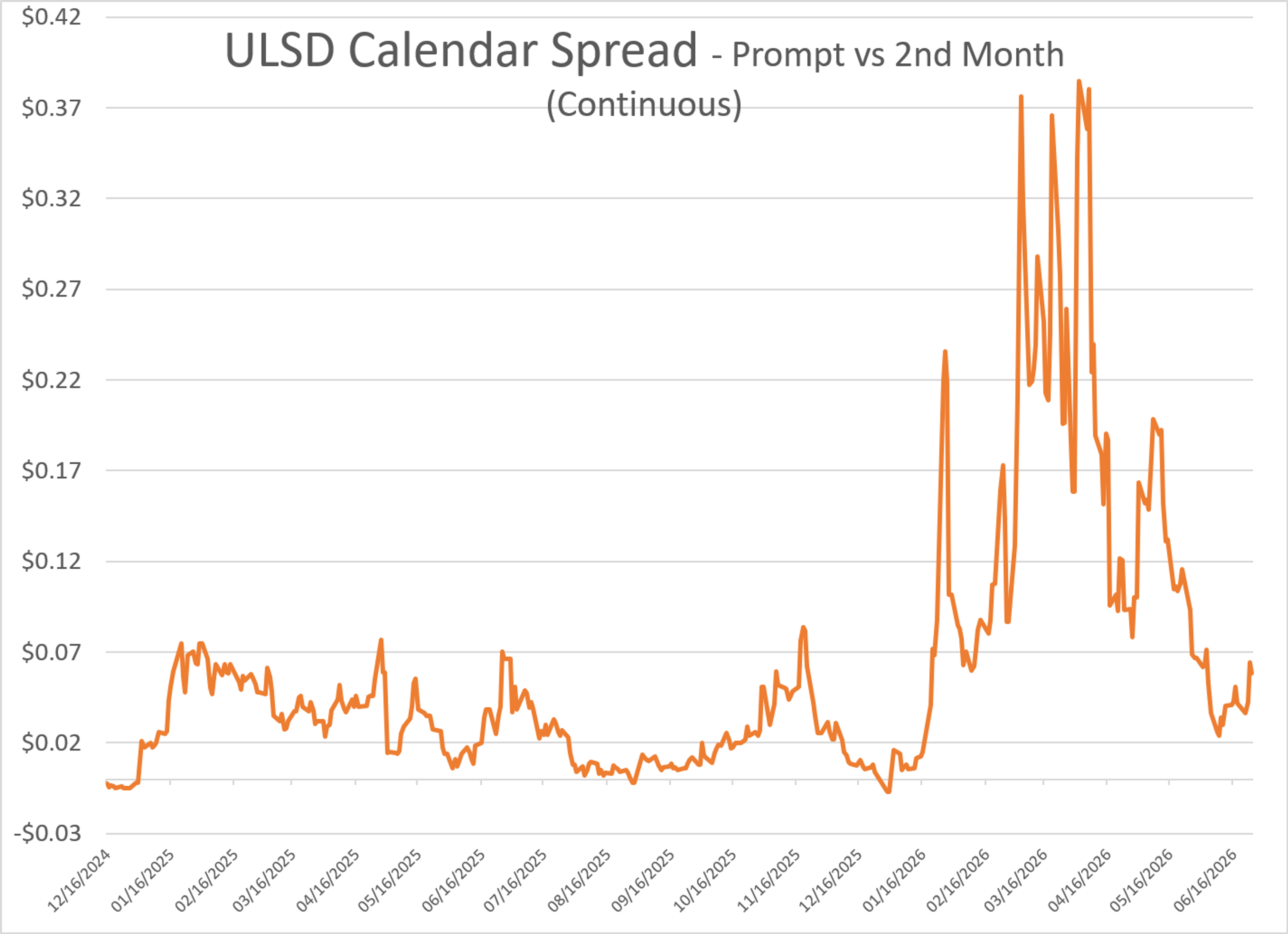
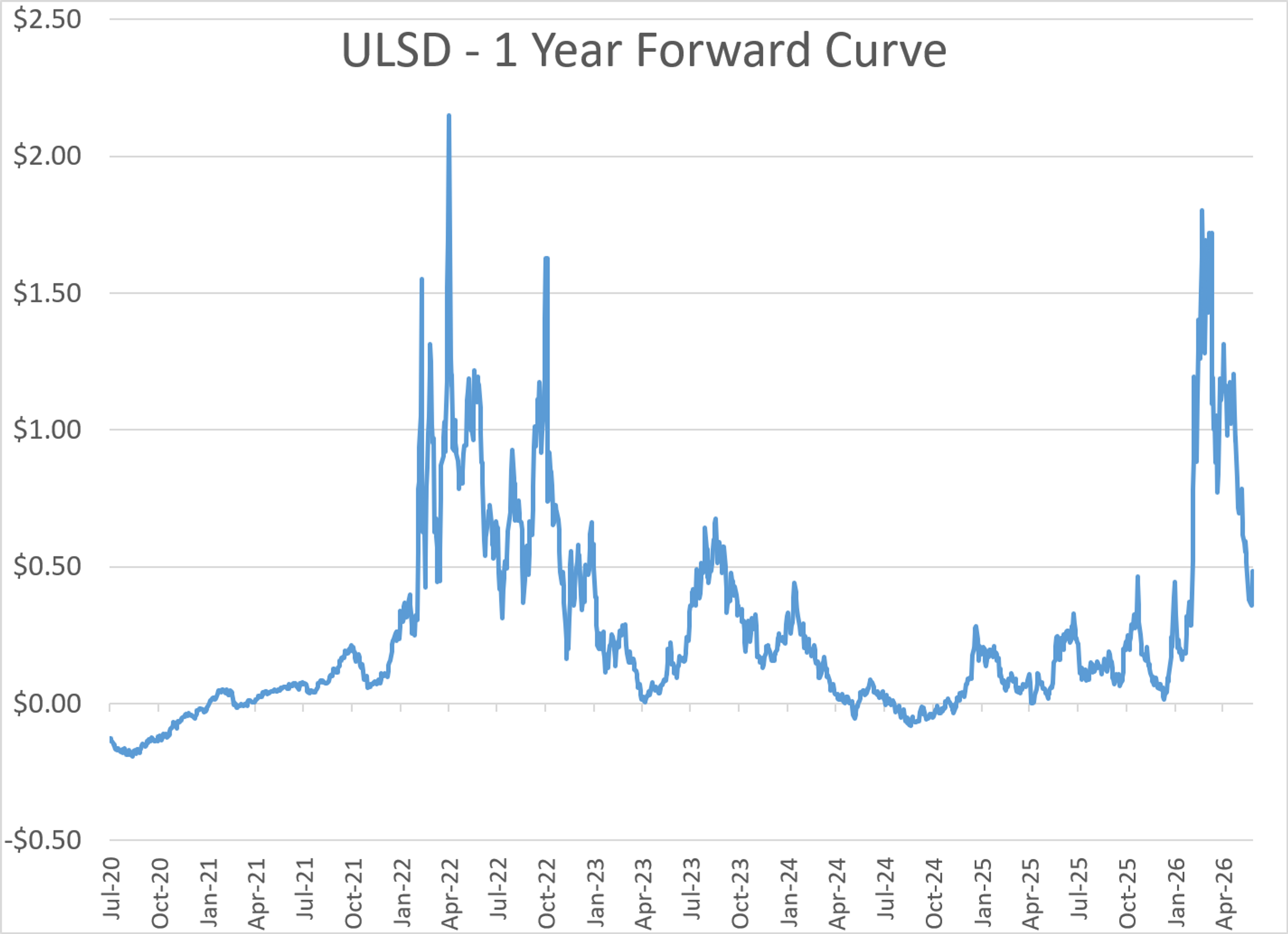
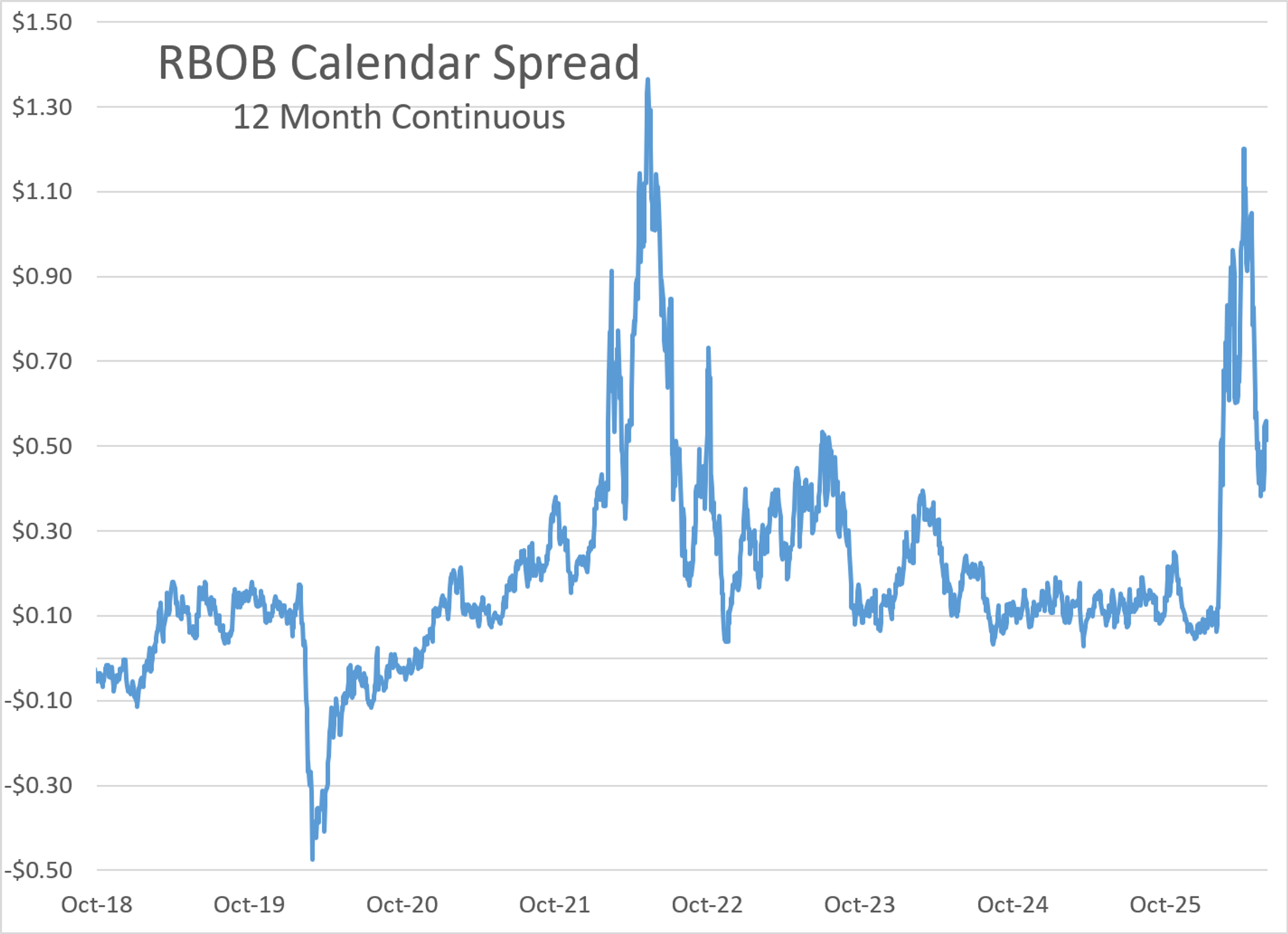
The easing of supply concerns has had a dramatic impact on the forward curves over the past few weeks, with the most notable example coming from Brent crude which has seen the front end of its curve shift into Contango this week, after being steeply backwardated for months. While some news outlets are hyping a sudden “Glut” of supply for this issue, the forward curve chart below shows this is a single month phenomenon likely due to the sudden surge in tankers moving out of the strait, but once they unload the normal transit cycles will take months to catch up and the re-stocking of reserves may still take years.
For refined products there is still roughly 50 cents of backwardation from prompt to 1 year forward values, so while it’s obvious that the “crisis” concerns are quickly moving into the rearview, we’re still facing a tighter than normal supply situation for the foreseeable future.
Of course, tight supplies in the U.S. are nothing like what the Russians are facing. Ukraine struck 2 more Russian refineries overnight, and Russia is now forcing electricity rationing in Crimea and considering a halt on diesel exports while having to ask Borat for more gasoline.
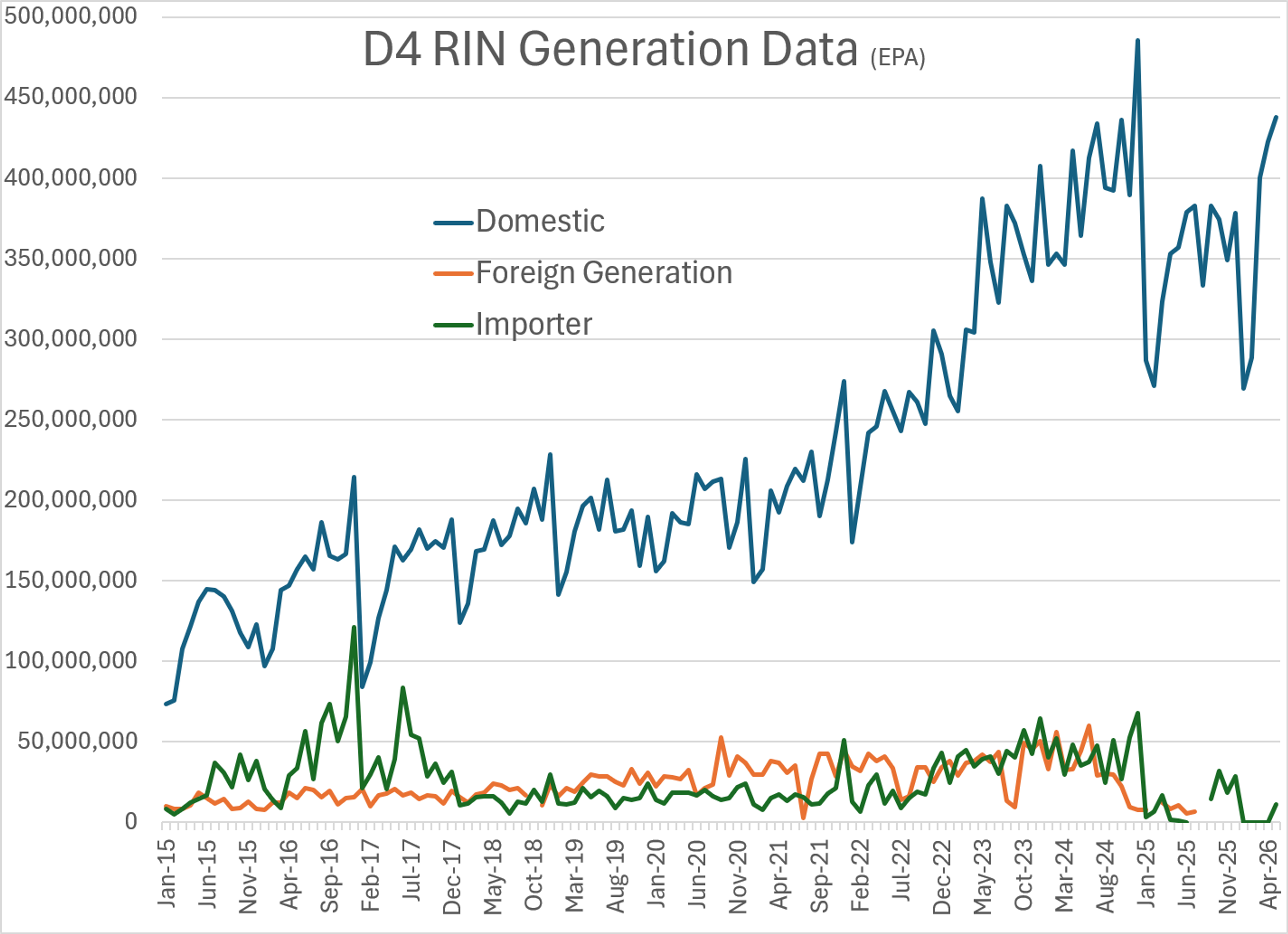
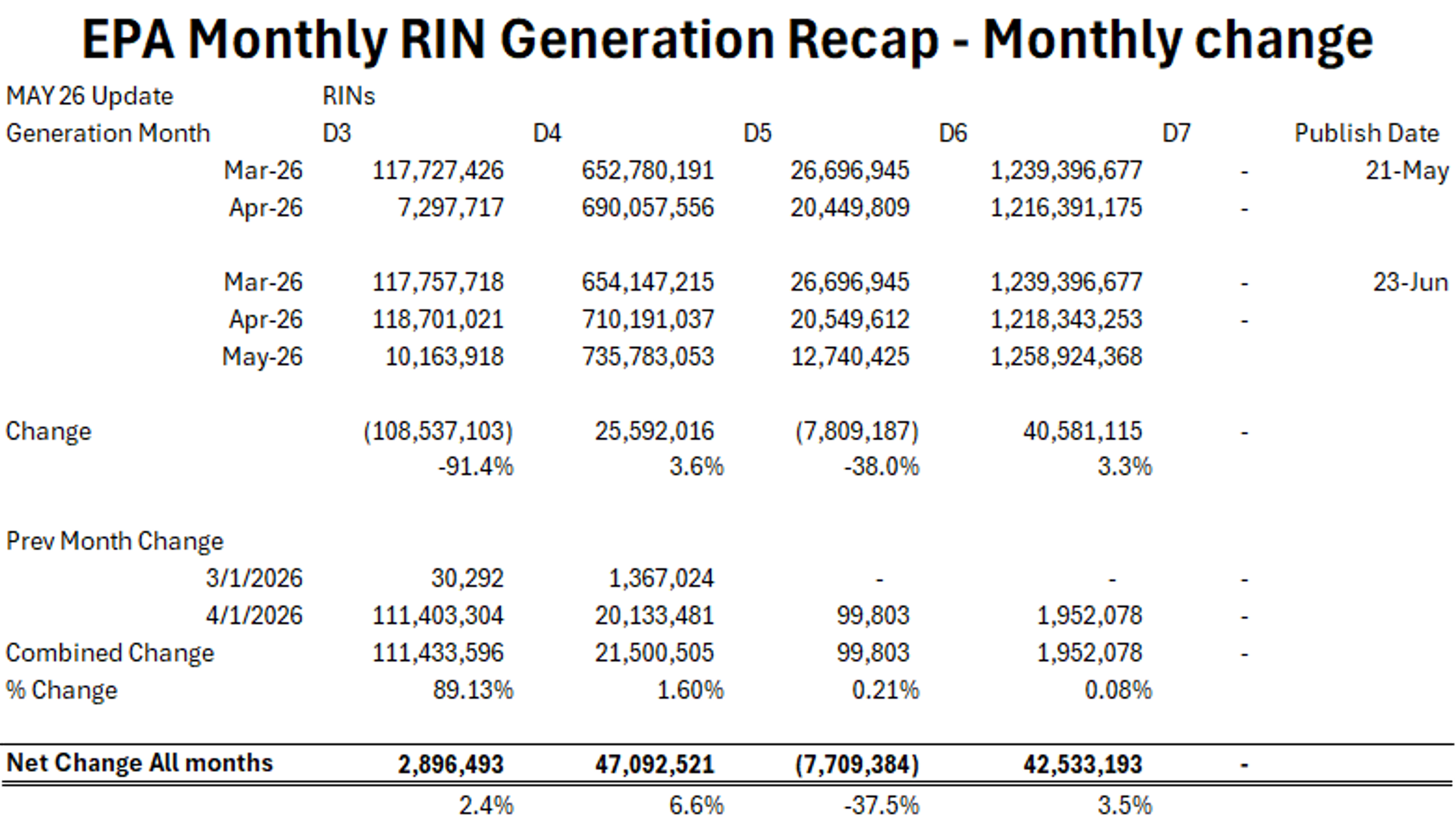
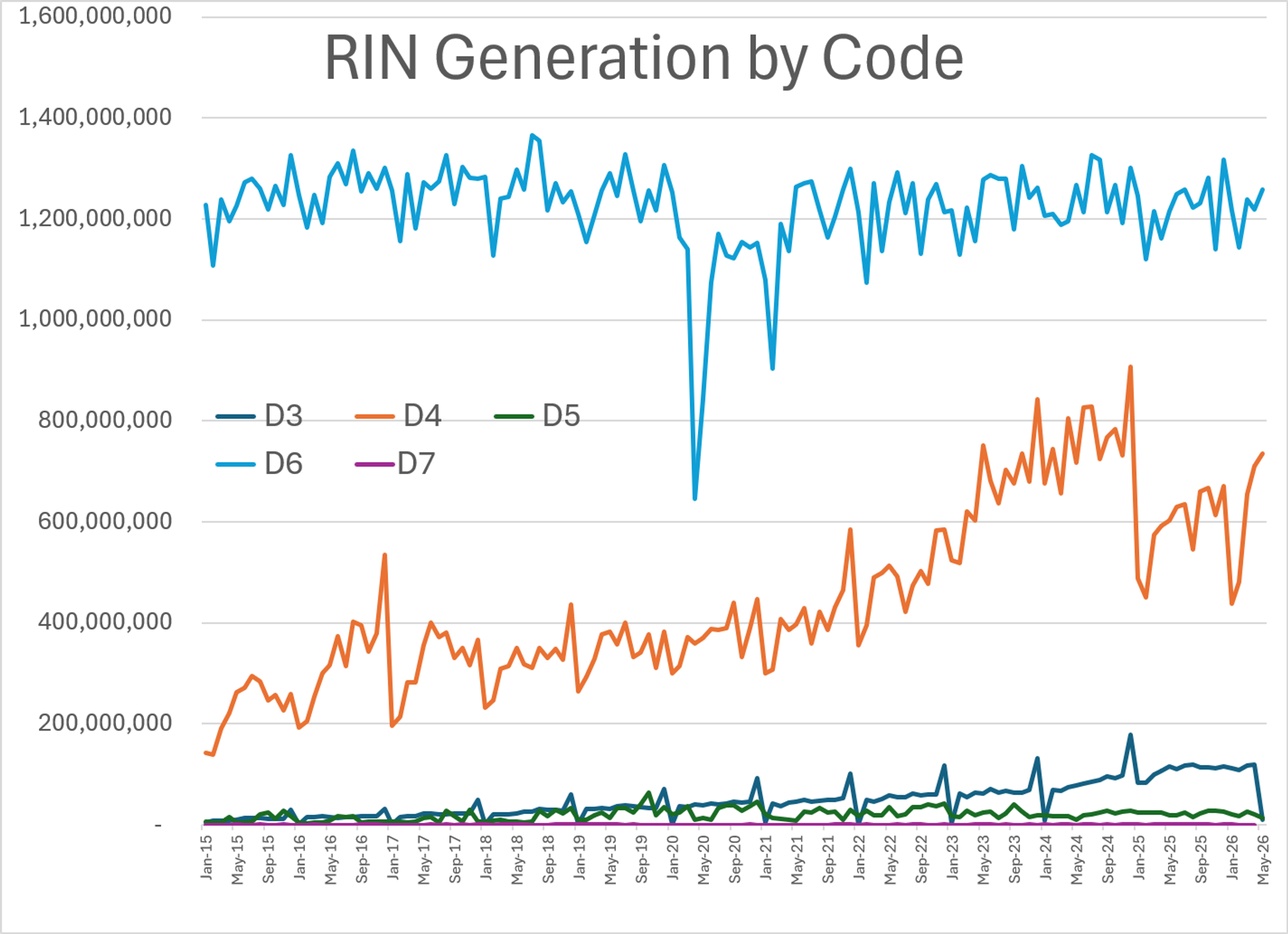
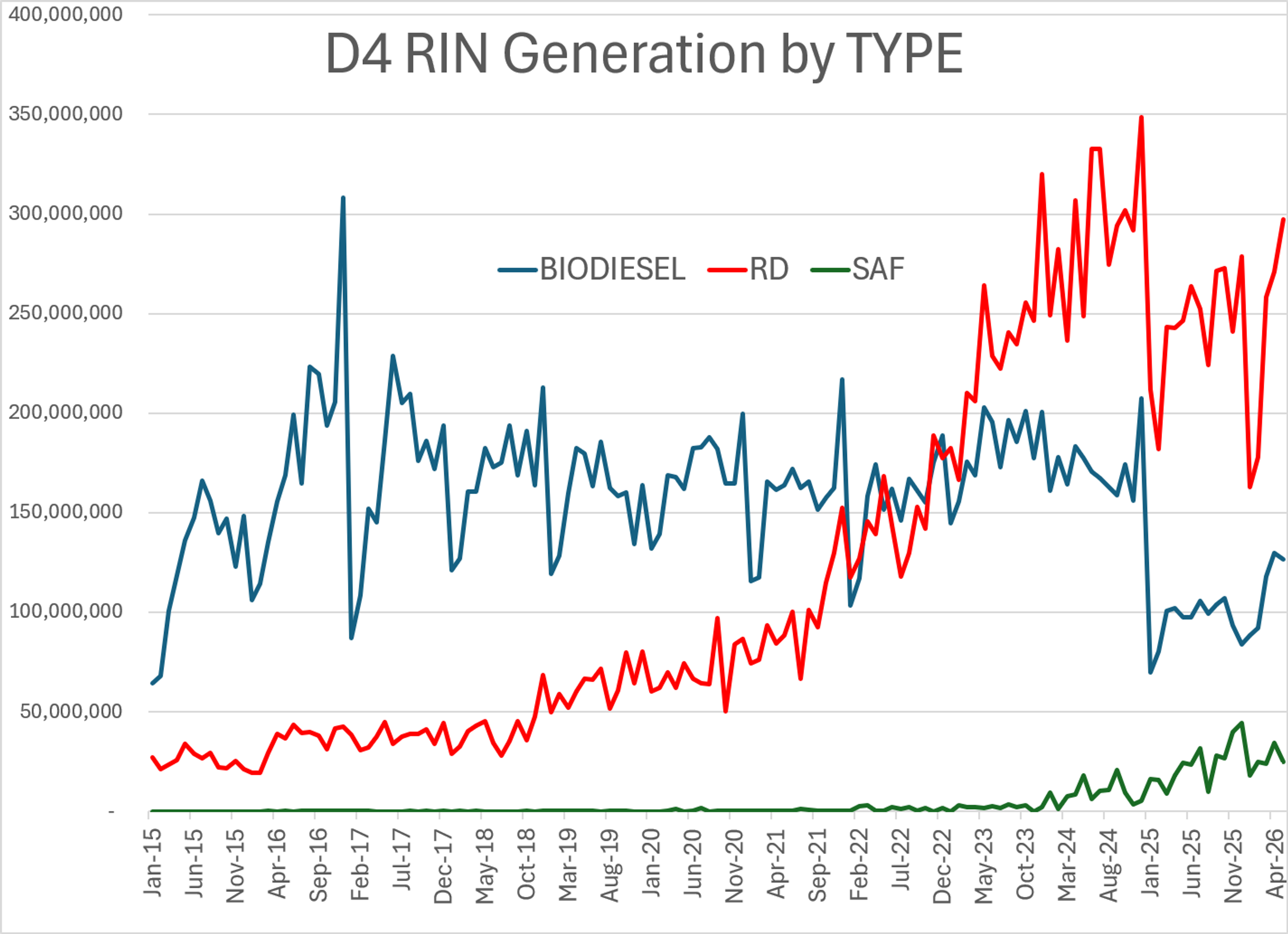
The EPA’s May RIN Generation data showed that U.S. Renewable Diesel production ticked up again, reaching the 2nd highest level on record (topped only by the December 2024 total which was when everyone raced to beat the clock on the BTC expiration) and yet that increased output STILL isn’t enough to meet the EPA’s RVO target for the year, keeping RIN values near all-time highs. That excess RD production (and European pushback on US Subsidized RD deliveries) continues to create a glut of supply along the West Coast, and backing up barrels into states like Texas and New Mexico.
Exxon’s 320mb/day refinery in Antwerp is reportedly set to stop production next week during a 4 day labor strike in protest the company’s job cuts.
It appears that the devastating earthquakes in Venezuela are unlikely to have a direct impact on the country’s recovering oil production as the quake was far from the production regions, although widespread electrical failures could pose challenges for industries near and far from the epicenter.
Human Analysis of the DOE report below. Charts and AI analysis of the weekly status report are attached.
U.S. crude stocks drew for a 9th straight week as increased production continues to send barrels out of the country. Cushing stocks have also declined for 9 consecutive weeks down to Oct 2014 levels and a seasonal low not seen in the past 22 years. The ongoing SPR releases pulled the reserve balance down to a fresh 43-year low. That combined with commercial crude stocks dropping to a seasonal 12-year low leaves total U.S. inventories sitting at levels last seen in 1984.
Refinery runs slowed a bit but are still running above the 5-year range in total. All PADDs declined except 5 which saw PBF Martinez fully return from a fire that knocked the facility offline back in Feb of ‘25. The PADD 5 increase was almost a wash with the drop in PADD 1 where Monroe Trainer’s hydrogen leak forced the facility offline for repairs. Reductions were smaller in the middle of the country with each of those PADDs still operating at seasonal 5-year highs.
Diesel stocks increased in all PADDs except 1 to move ahead of year ago levels for the first time in 9 weeks. Softer demand and exports led to the build, but U.S. inventories are still at the low end of the chart with each PADD running below average despite the increases. Imports to PADD 5 increased substantially but only account for about a fifth of the first significant stock build of the year. Combined with RD, total PADD 5 diesel is suddenly at a seasonal 5-year high.
Gasoline stocks also built everywhere except PADD 2 with a big downturn in demand and exports falling off sharply. PADD level stocks are still below average everywhere but PADD 4 (which is narrowly above) leaving total U.S. inventories about 13 million barrels beneath the 5-year average, a seasonal 12-year low.
Jet fuel production continued at record levels as exports held at seasonal highs. However, a big drop in demand helped push total U.S. stocks back to a seasonal 16-year high with PADD 2 hitting a seasonal level not seen since 2011.
Latest Posts
Week 38 - US DOE Inventory Recap
Refinery Economics Clash With Calls For A Diesel Export Ban
Diplomacy Knocks Crude Lower, But Diesel Bulls Aren’t Done Yet
Diesel Pullback Tests Market Nerves Amid Supply Risks
Diesel Strength Offsets Gasoline Weakness As Supply Concerns Mount
Diesel Under Pressure As Traders Discount Supply Disruptions
Social Media
News & Views
View All
Week 38 - US DOE Inventory Recap
Refinery Economics Clash With Calls For A Diesel Export Ban