Energy Markets Drift Lower Amid Supply Chain Progress

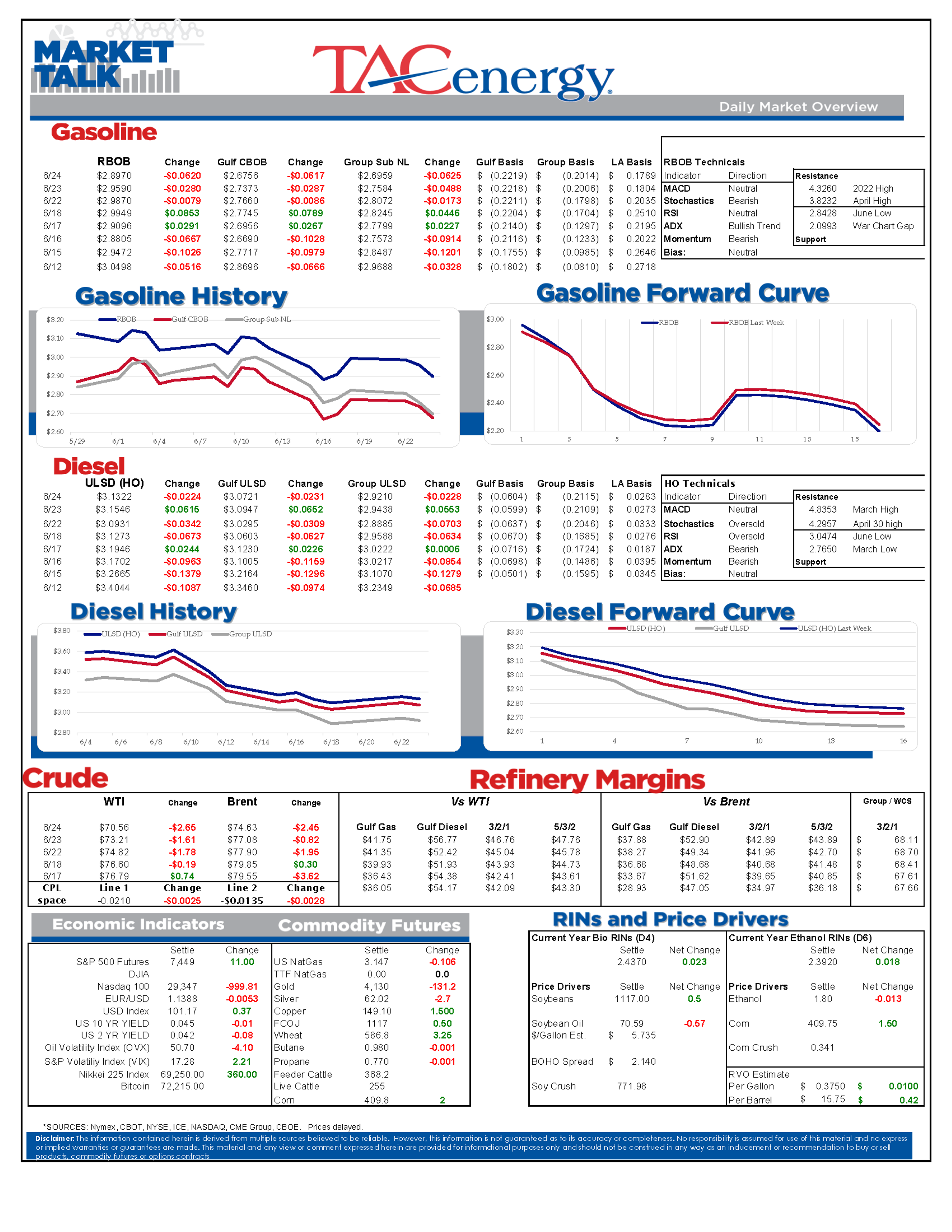
Energy markets are moving lower again Wednesday with crude oil futures hitting their lowest level since the Iran war broke out as more signs of progress in the race to normalcy for the global supply chain seem to be overshadowing short term challenges for refiners.
Gasoline and diesel prices have reversed roles this week, with ULSD finally finding a bid Tuesday while RBOB gasoline futures are taking the lead in the selling department. Although WTI crude oil prices are threatening a move below the $70 mark for the first time since February, neither refined product contract is yet in close striking distance to the 3 month lows they hit in the past week, so they appear more likely to move in choppy sideways pattern short term.
The API reported builds for both gasoline and diesel inventories last week of 1.2 million barrels for gasoline and 1.4 million barrels for distillates. While neither number is a major move for overall inventories, it does help end the drawdowns that were pushing domestic stockpiles towards multi-decade lows, despite refineries running at an unsustainably high pace. The industry group estimated a small drawdown in crude oil stocks of less than 1 million barrels last week, ending a streak of large reductions. The EIA’s weekly report is due out at its normal time this week, look closely at export figures to see what impact (if any) last week’s tropical storm had on the Gulf Coast’s record-setting pace of deliveries overseas.
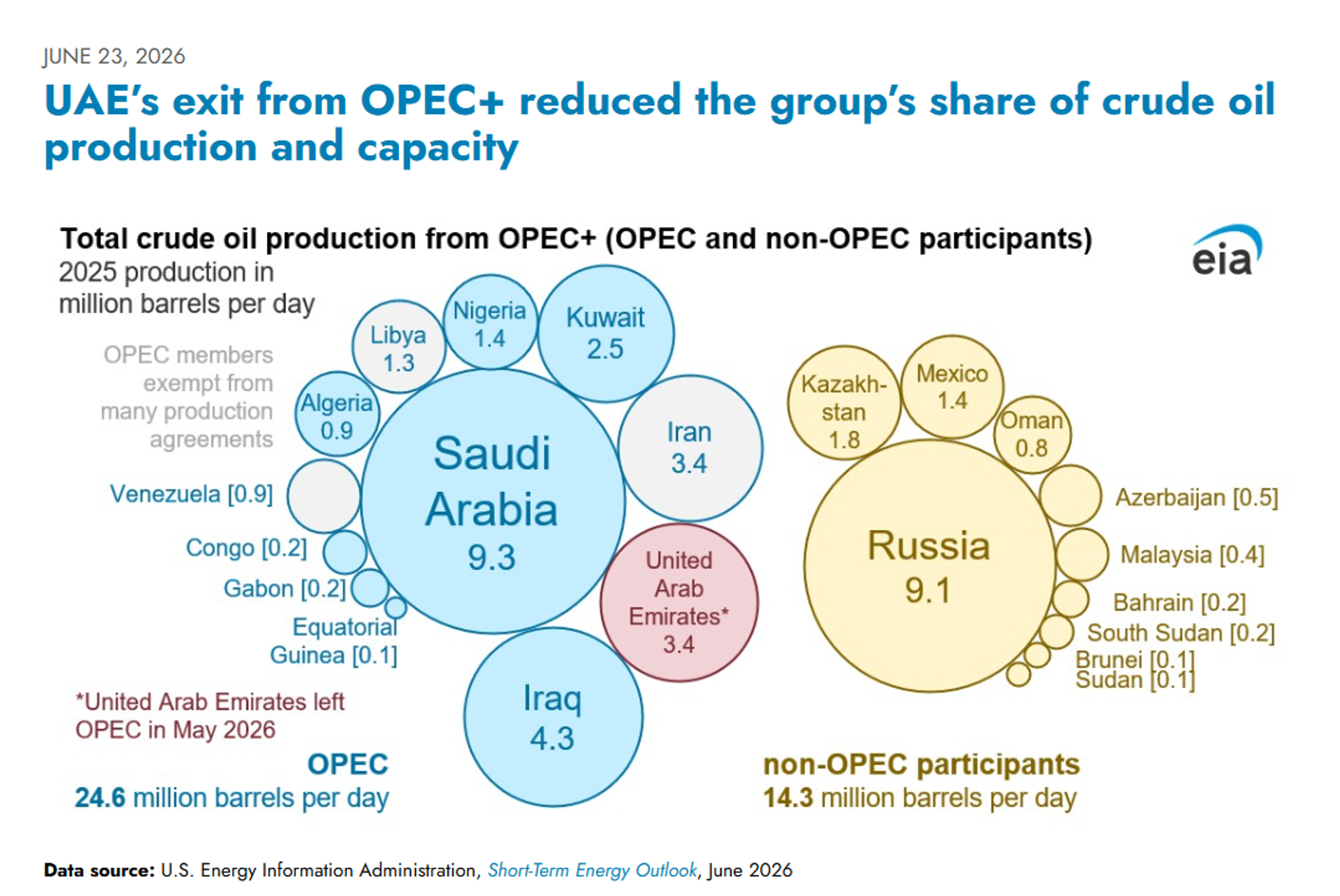
The EIA Tuesday highlighted the UAE’s exit from OPEC, and discussed how that may impact the cartel’s decision making going forward. It’s also worth highlighting here that Iran and Venezuela have both been exempted from the quotas agreed to by OPEC & Friends for the past several years, and now that both countries are at least temporarily relieved of sanctions, there’s a potential for incremental supply to come online if producers and shippers are able to get it moving.
Oman is said to be working with the UN-backed IMO to create a toll-free corridor through the strait, which is a positive signal after rumors that the country across from Iran could join in the toll-booth efforts. There are also reports that the U.S. and Iran are opening a direct line of communication to avoid miscommunication in the strait, in the latest sign of physical progress towards getting ships moving, even as the theoretical agreement on a wider peace deal still appears to have many challenges.
Will refiners be more afraid of a tweet than Iran was? Overnight the President’s latest social media threat was leveled at “The big Oil Companies” for “gouging” consumers. For those that deal with the “Up like a rocket, down like a feather” mantra of retail fuel pricing, the latest threats seem to be lacking a basic understanding of how the industry actually works. It’s also worth highlighting that the previous administration also directed the FTC to investigate oil companies for fuel price gouging, making it clear that the political influence of gasoline prices has no issue crossing the aisle. While the threats seem uneducated and unlikely to go anywhere, with any luck it will help encourage those refiners still dragging their feet on passing down savings from the EPA’s gasoline waivers to get moving.
Reuters is reporting that the Moscow refinery hit by drone strikes earlier this month (you know, the ones that taught us tank roofs can fly) will stay offline through the at least the end of the year for repairs. The increased frequency and accuracy of Ukraine’s long-range attacks seems to be a key driver in Russia’s recent willingness to discuss peace plans, even while the Russian leaders officially say they’re having “no effect” on the war.
Energy News Today is reporting that Monroe (Delta airlines sub) will attempt restart of its 190mb/day Trainer PA refinery after a leak a week ago forced the facility offline. That lack of production hasn’t seemed to have much impact on futures or cash markets in the NY Harbor, but has certainly tightened up rack supplies in markets like Philadelphia and up state New York where Monroe is a key supplier.
Total’s 238mb/day Port Arthur TX refinery remains offline following a lightning-induced power loss at the facility last weekend, with reports suggesting restart will be attempted near the end of this week. Unlike the Trainer refinery, the impact of the Total shutdown is harder to notice since Port Arthur/Beaumont area is a major origin point for Colonial Pipeline and a major export hub, the production lost seems to have been largely covered for by the giant refineries nearby.
Marathon’s 630mb/day Galveston Bay (Texas City) refinery reported yet another upset Tuesday, with brief flaring in an FCC unit after a product pump tripped offline. That facility is a frequent flier on the TCEQ’s emissions reporting page, and a fire at the facility forced a brief shelter in place order over the weekend, but this latest event seems like a non-issue for production.
Phillips 66 also reported a brief upset at its 265mb/day Sweeny TX refinery, its 2nd reported event in the past 4 days, but the flaring in a coker unit lasted only 23 minutes, so should not be a major event.
Latest Posts
Week 38 - US DOE Inventory Recap
Refinery Economics Clash With Calls For A Diesel Export Ban
Diplomacy Knocks Crude Lower, But Diesel Bulls Aren’t Done Yet
Diesel Pullback Tests Market Nerves Amid Supply Risks
Diesel Strength Offsets Gasoline Weakness As Supply Concerns Mount
Diesel Under Pressure As Traders Discount Supply Disruptions
Social Media
News & Views
View All
Week 38 - US DOE Inventory Recap
Refinery Economics Clash With Calls For A Diesel Export Ban