Crude Strength Continues As Refiners Navigate Storm Threats And Regulatory Shifts

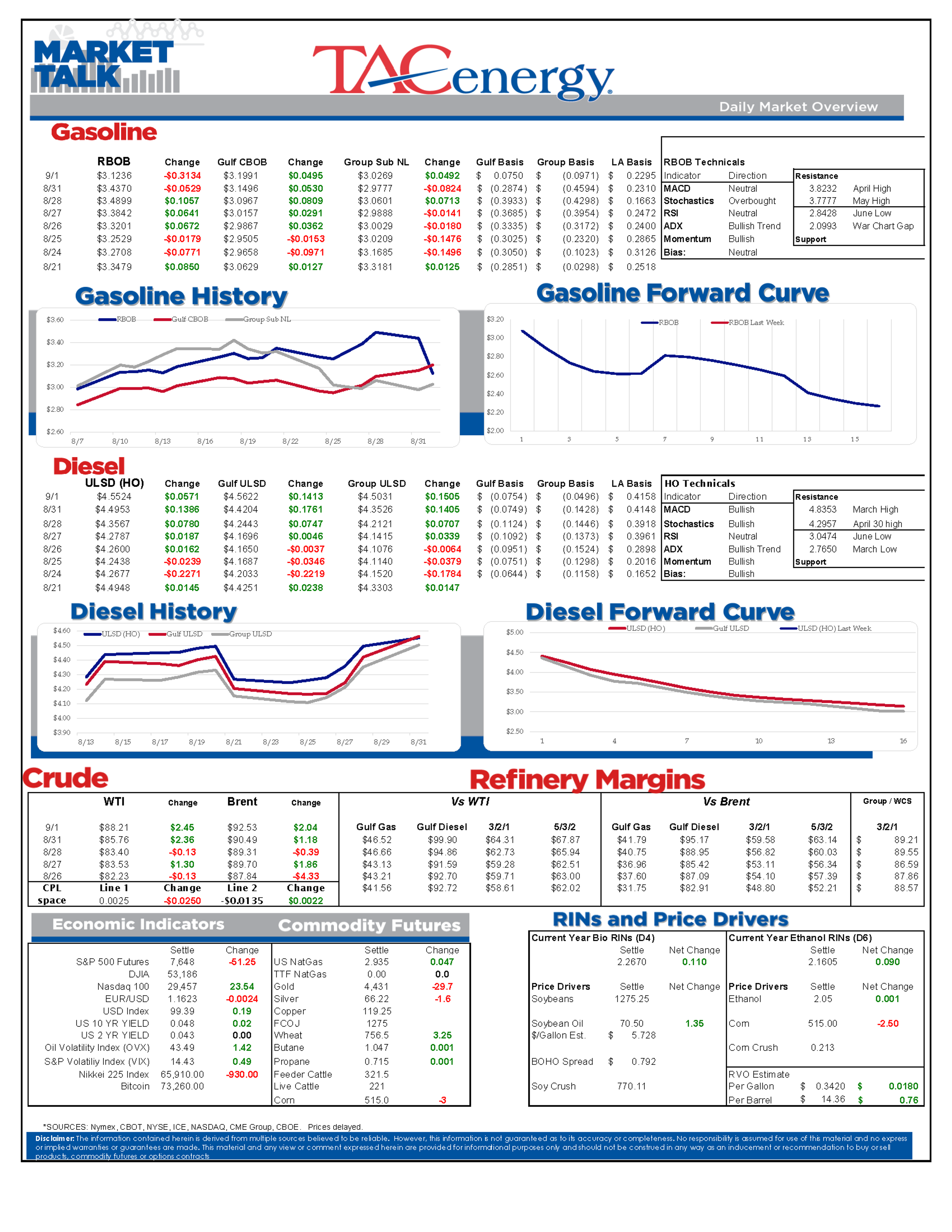
September trading is picking up right where August left off, with more strength in energy markets as fresh attacks in the Strait of Hormuz overnight promise additional escalation in the region following a month of relative calm.
Reminder that you’ll see big price changes in futures today (and in some basis values) as the October futures contracts take prompt position amidst very steep backwardation. Don’t feel bad if it’s confusing, the expiring September contracts fooled a senior market analyst at one of the price reporting agencies yesterday, and they charge subscription fees for their expertise.
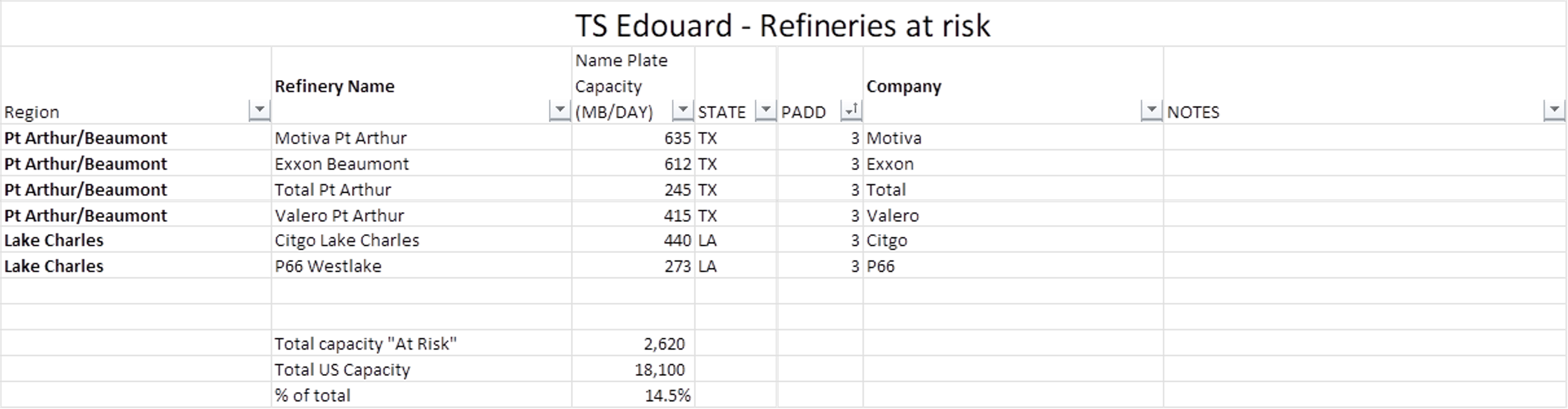
Tropical Storm Edouard is bearing down on arguably the most important refinery cluster in the country, Beaumont/Pt Arthur, home to 3 of the 10 largest refineries in the country, and more than 10% of the country’s total refining capacity spread across 4 facilities. This area is also a key import/export region, and one of the main origin points for Colonial pipeline. The refineries to the east in the Lake Charles LA area also have some modest concern as this storm passes, while the Houston/Pasadena/Texas City facilities are on the “clean” side of the storm which will reduce – but not eliminate – the risk of an upset as the system moves forward.
While the path of the storm is very threatening to refining interests, the good news is that it’s not expected to be a hurricane, it’s moving relatively quickly and will be gone by tomorrow. That speed and location of the storm so near to shore will prevent it from developing into a major storm, which is a real concern this year given the very warm water temperatures in the area. Power outages will be the main risk to refiners as the storm passes, and the record-pace of export activity along the coast will be forced to halt or slow down for a day or so as the storm passes.
U.S. Refinery executives are meeting at the White House today to discuss ways to lower fuel prices. With waivers already issued on a variety of ways, it’s hard to see what can be done short-term besides putting more pressure on the few companies that refused to pass along any savings from the gasoline waivers issued all summer.
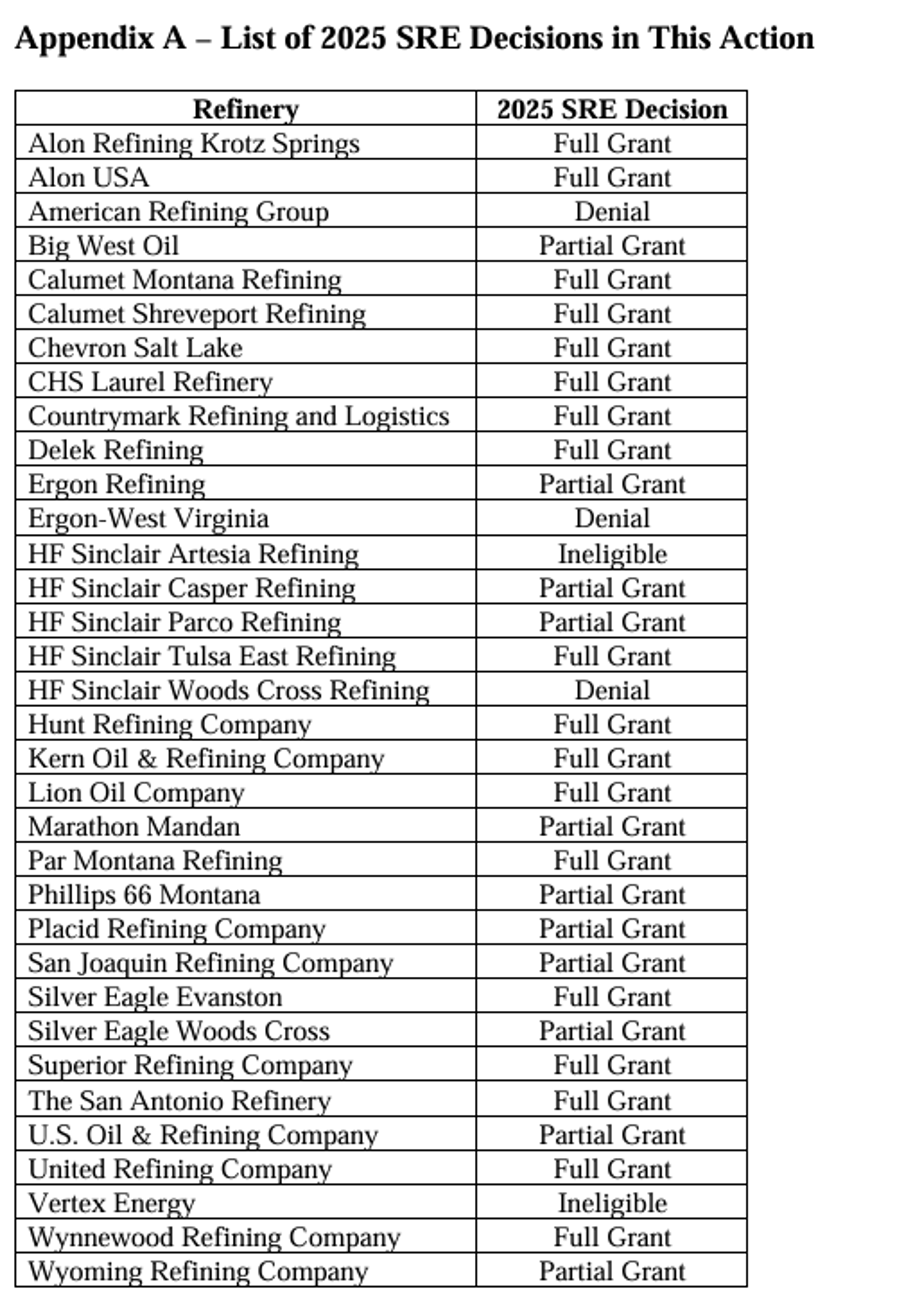
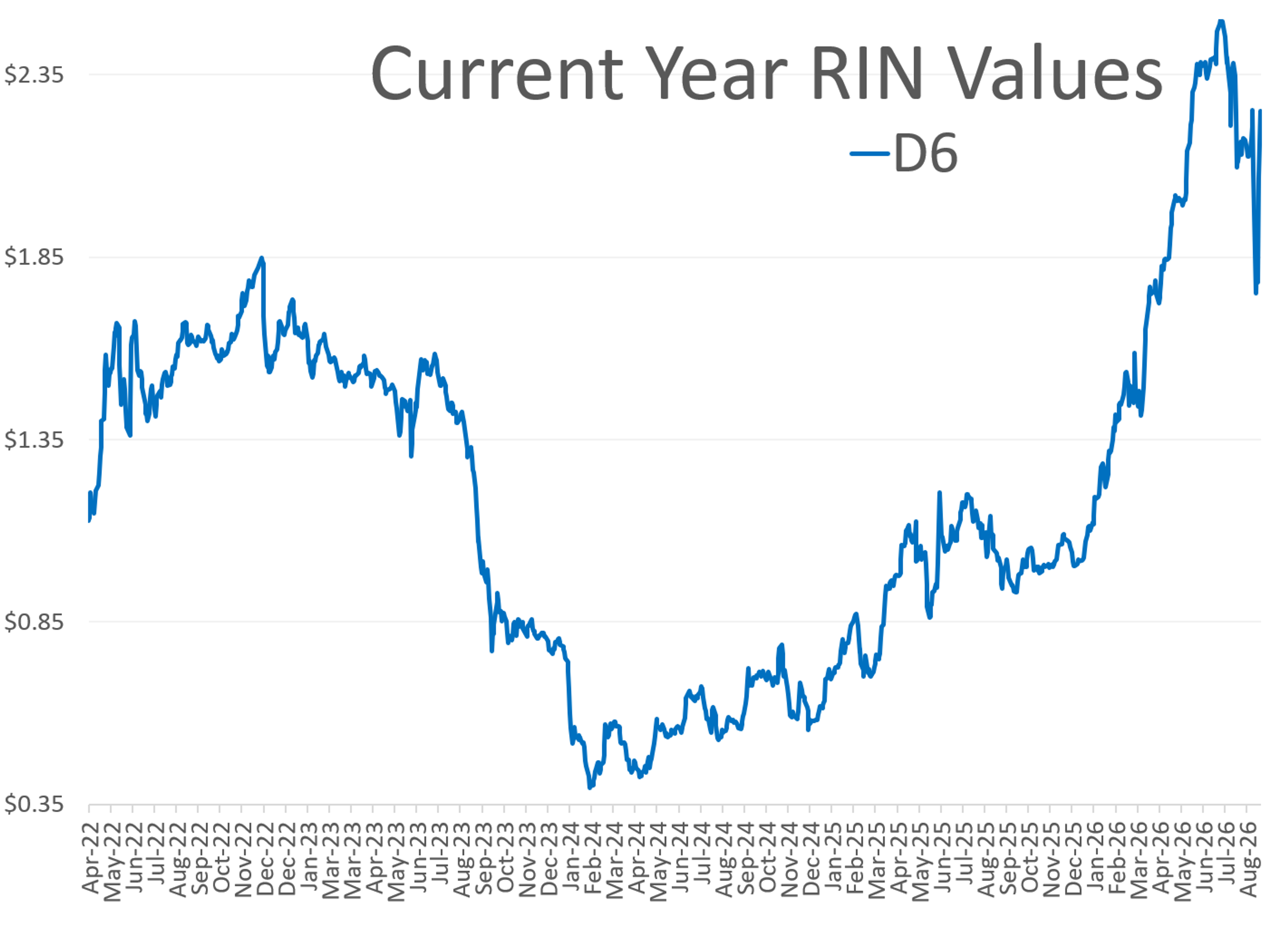
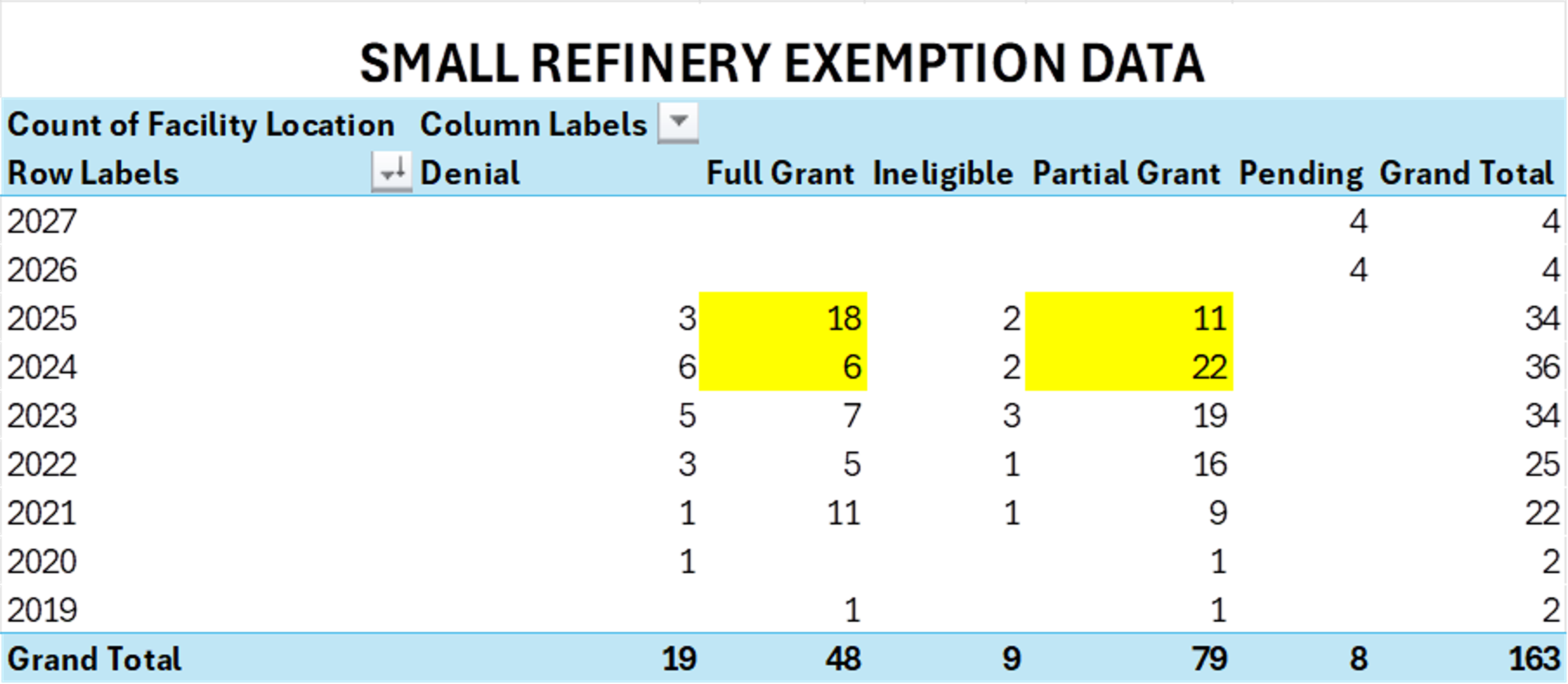
The EPA issued its 2025 Small Refinery Exemption decisions Monday afternoon, with 3 times as many “full” waivers approved as in 2024, which was widely rumored for the past week and had contributed to a drop in RIN values of from $2.25 on August 20th, to a low of $1.60 on the 26th. The surprise of the day was that the agency announced it would reallocate 100% of the exempt gallons into the 2026 and 2027 obligation, which helped D6 values climb right back up to $2.25. The new deadline for 2025 compliance will be set October 1. You can see the full detail of the waiver decision in the attached PDF, and a summary of the waivers in the tables below. Given that the EPA is once again changing the rules of the game on the fly, it’s expected that we’ll see more legal challenges to this latest ruling.
The EPA’s announcement also took a shot at the rumor mill that’s roiled RIN markets saying the “EPA has observed inaccurate and misleading reporting on the agency’s RFS actions that have contributed to significant market movements despite no official statement or action from the Administration. Most recently, misleading reports and information led to significant volatility in the RIN market. These incidents raise serious concerns about the potential misuse of material nonpublic information and possible market manipulation. EPA continues to work with the Commodity Futures Trading Commission and will expand its coordination to ensure compliance with all applicable federal laws and protect the integrity of the RIN market.”
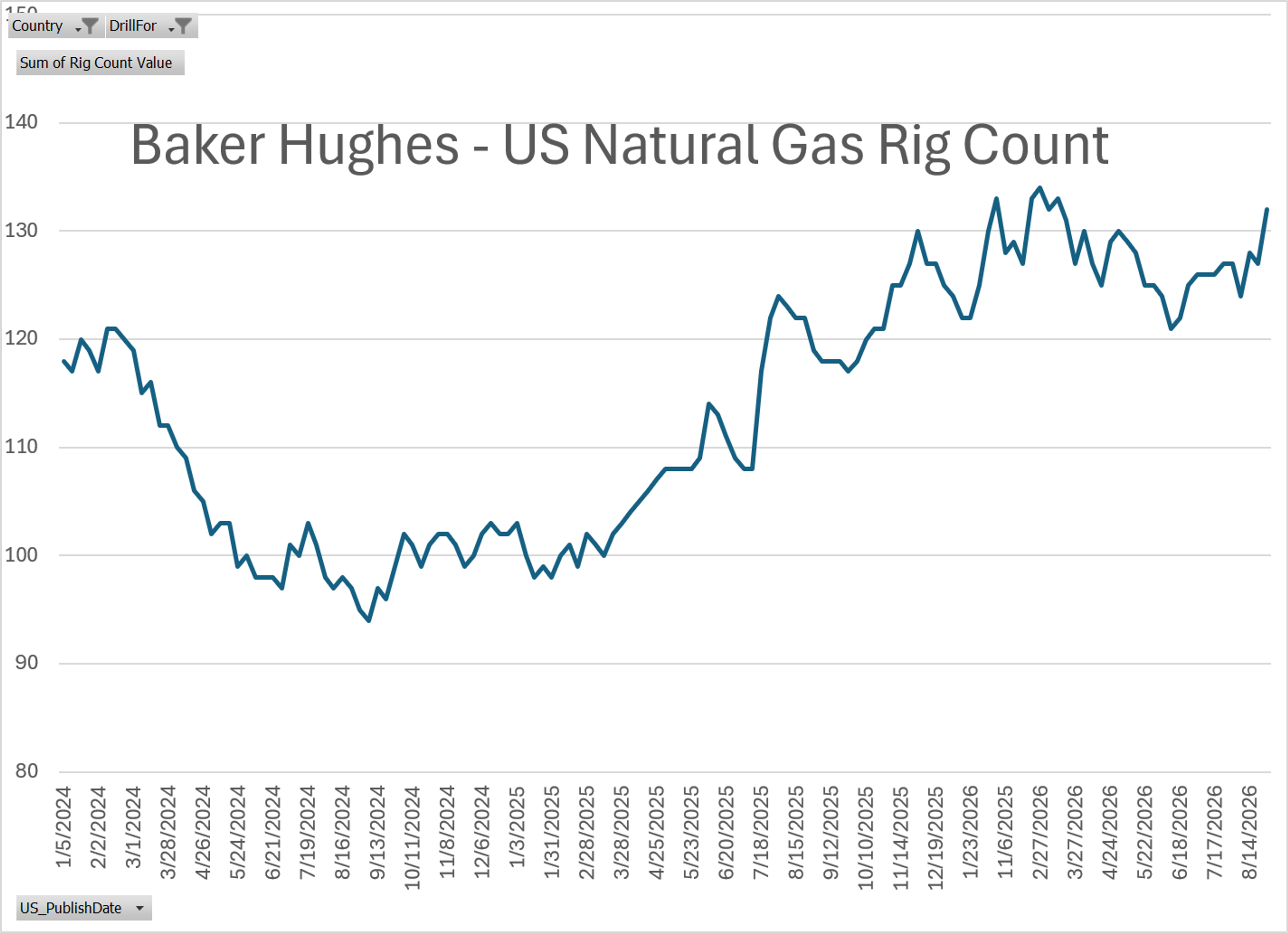
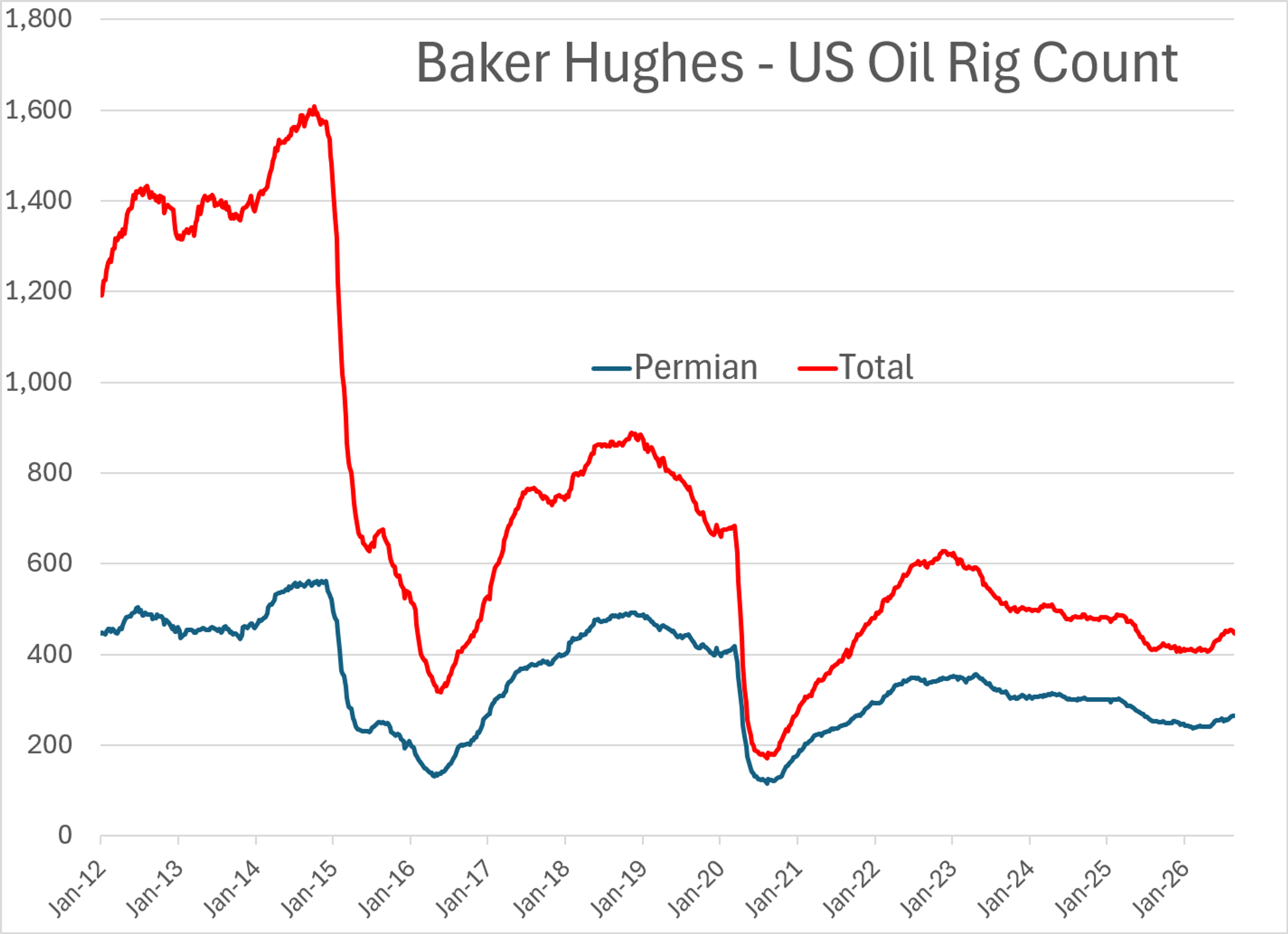
Baker Hughes reported a decrease of 5 oil rigs, and an increase of 5 natural gas rigs drilling in the U.S. last week. The decline in oil rigs came primarily from 2 gas-heavy basins, Haynesville and Utica, while the Permian oil rig count held steady.
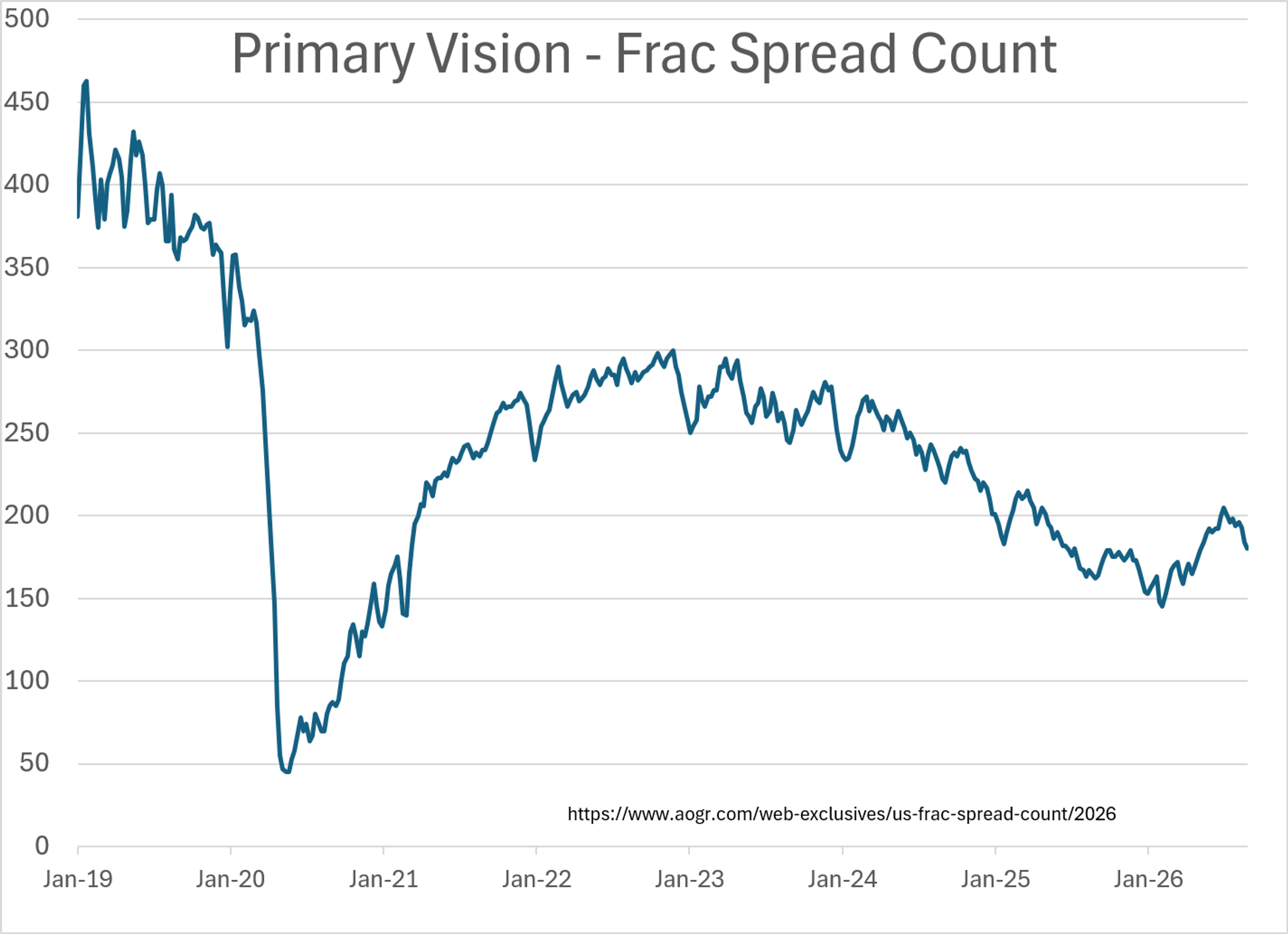
The Primary Vision count of fracking crews dropped by 4 on the week, and has now dropped by a total of 23 crews over the past 2 months. U.S. oil production isn’t following this trend however, proving that producers continue to find ways of being even more efficient in their operations.


Latest Posts
Bullish Diesel Fundamentals Overshadow Weakness In Gasoline Markets
Week 41 - US DOE Inventory Recap
Energy Markets Juggle Supply Risks, Inflation Pressures, And Geopolitical Conflict
Crude Climbs For A Fifth Day While Global Fuel Supplies Remain Under Pressure
Refining Margins, Tanker Attacks, And OPEC Growth Shape Energy Outlook
Oil Rises As Political Chaos And Supply Risks Shake Markets
Social Media
News & Views
View All
Bullish Diesel Fundamentals Overshadow Weakness In Gasoline Markets
Week 41 - US DOE Inventory Recap