Global Energy Markets Rattle As Hormuz Disruptions And Iranian Strikes Reshape Supply Lines

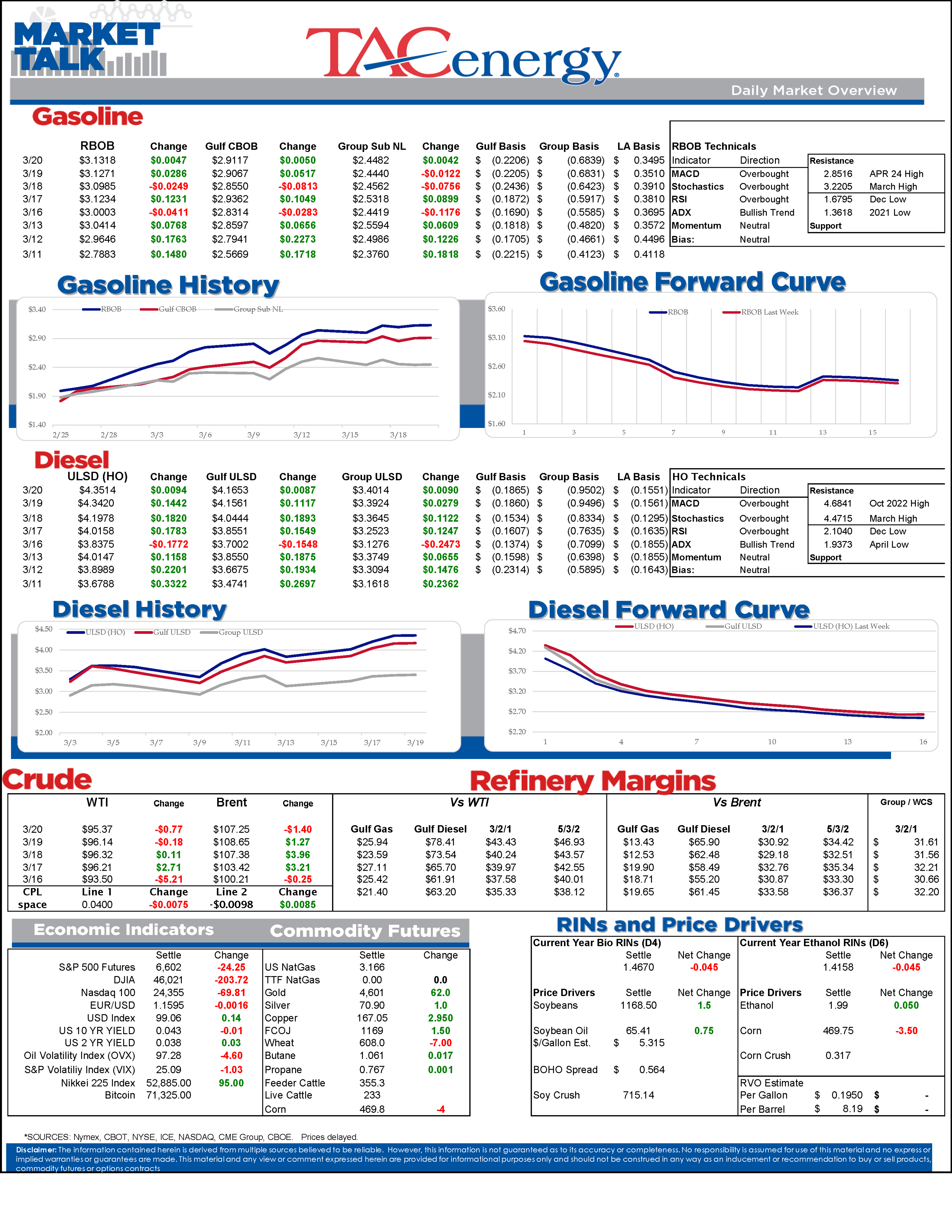
Energy futures were down this morning with world leaders officially acknowledging the need to get ships moving through the Strait of Hormuz and the U.S. Treasury Secretary’s comments on lifting Iranian oil sanctions. WTI and Brent crude are trading down around 65 cents and $1.60, respectively. Refined products started the morning down about .5% but both gasoline and diesel have since moved just north of flat.
QatarEnergy confirmed Thursday that Iranian strikes have taken out nearly a fifth of the country's LNG export capacity, triggering force majeure on contracts with European and Asian buyers, and an estimated $20 billion in annual revenue losses. The damage to two LNG trains and a GTL facility is expected to sideline 12.8 million tons per year of output for the next 3-5 years, but the damage isn’t limited to LNG. Condensate and LPG exports along with helium output will see double-digit percentage reductions as well. The company’s CEO said production won't restart until hostilities cease.
The ripple effects of the Strait of Hormuz disruption are now reaching domestic energy policy, with the current administration using the Defense Production Act to reopen the Santa Ynez pipeline that’s been shuttered since a 2015 oil spill. The move, citing national security and energy needs amid the war excursion on Iran, overrides state regulators and California’s governor has threatened legal action in response. With the P66 Wilmington refinery recently shutting and Valero Benicia’s closure on the horizon, this adds a layer of political risk to an already precarious supply outlook for the state.
A planned lockout at the 440kbd BP Whiting refinery started Wednesday night amid a contract dispute over proposed job cuts and pay reductions. BP has trained replacement staff in place and doesn’t expect any immediate disruptions, but with the Middle East conflict already pushing prices higher, a prolonged standoff could add further pressure at a particularly bad time for consumers.
Latest Posts
Diesel Under Pressure As Traders Discount Supply Disruptions
Week 37 - US DOE Inventory Recap
Oil Pulls Back After Rally While Distillates Extend Gains
Refinery Disruptions And Strait Closures Fuel Diesel Rally
Oil And Diesel Rally On Escalating Infrastructure Attacks
Energy Markets Pause After Historic Rally As Supply Risks Persist
Social Media
News & Views
View All
Diesel Under Pressure As Traders Discount Supply Disruptions
Week 37 - US DOE Inventory Recap