Deal Or No Deal? Energy Markets React To Fragile Middle East Calm

Deal or no deal?
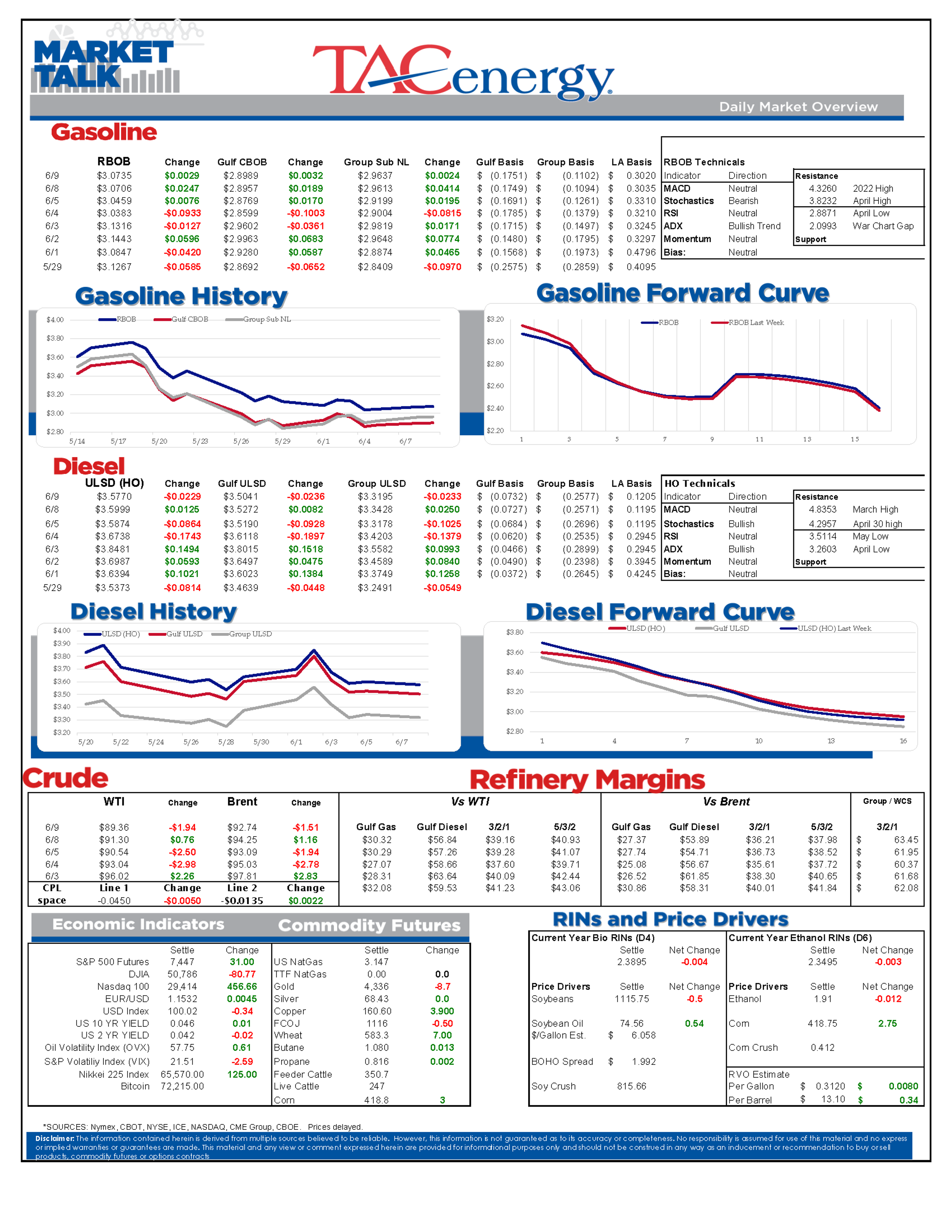
Energy futures have given up all of the gains we saw to start the week as the latest bombing campaigns have ended and the U.S. President insists that a deal is coming in “2-3 days” that will include opening the Strait of Hormuz “immediately”. Doubters will note the President also said that he would declare “total victory” over Iran in 2 weeks just yesterday, which doesn’t seem like it will aid in diplomatic efforts, and he also (in)famously claimed multiple times that he would end the war in Ukraine in 24 hours.
Once both Israel and Iran both confirmed they’d stopped their offensive operations for this round Monday, markets quickly cooled off and have continued lower overnight. Israel’s attacks on Iran’s largest petrochemical facility were the most noteworthy during this latest dustup, with estimates that the strikes could severely limit domestic supply chains dependent on polyurethane and other plastics component, most intentionally it may limit production of missile components. In Israel, most missiles were intercepted, while one direct hit on a neighborhood, but no casualties were reported.
Meanwhile, the Houthi’s re-entered the fray after sitting out most of the conflict so far which spreads the threat to shipping in the region. At this point, the Houthi’s are claiming they’ll only try to prevent Israeli ships from transiting the Red and Arabian seas, but as we saw last year, their judgement tends to be a little questionable in that regard. This will be an interesting detail to watch in the coming days as the Houthis had stopped their attacks following a U.S. air campaign targeting them last fall, which could mean the air force shifts its targeting towards this new threat, or Yemen becomes the latest bargaining chip between the U.S. and Israel.
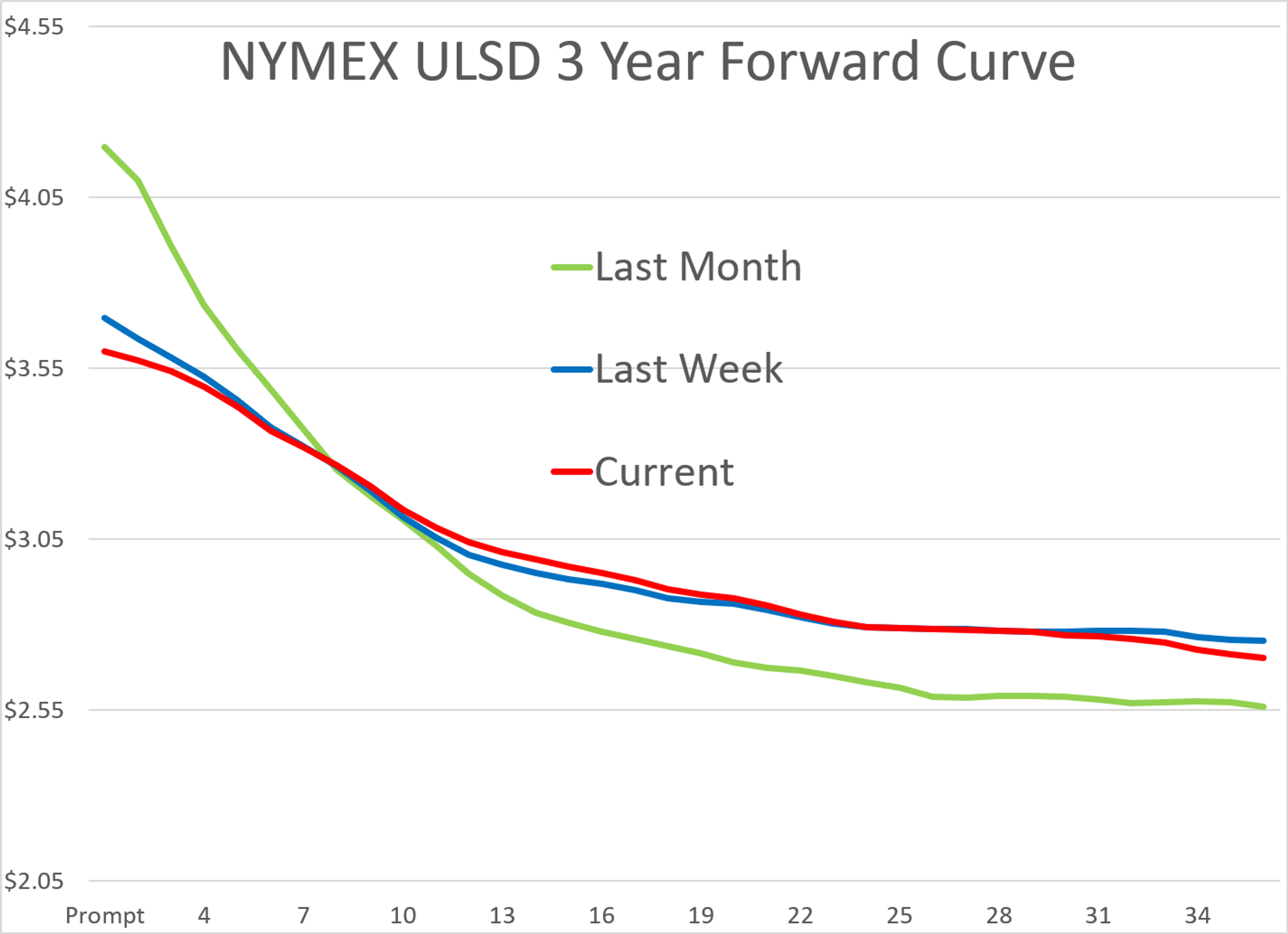
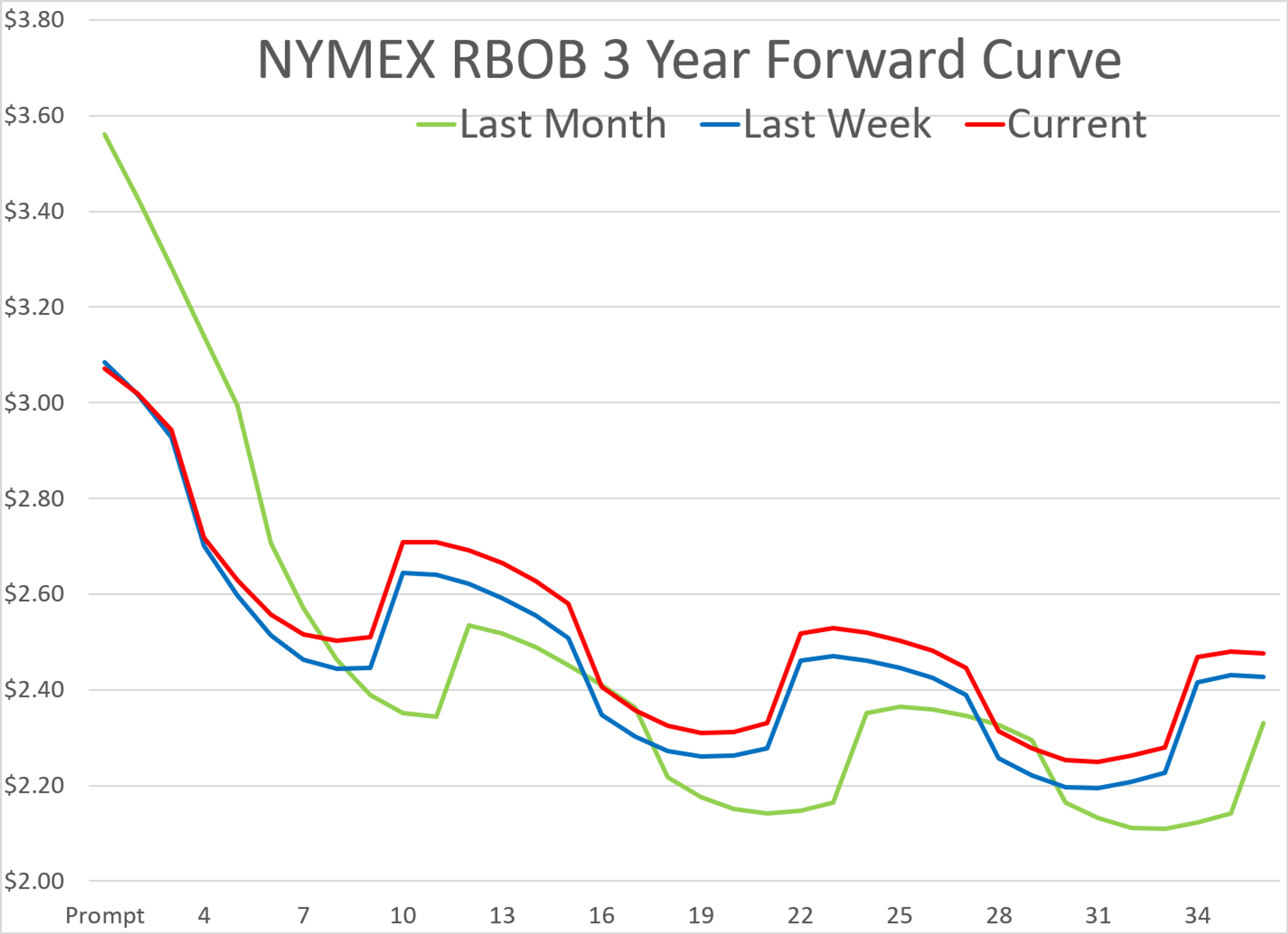
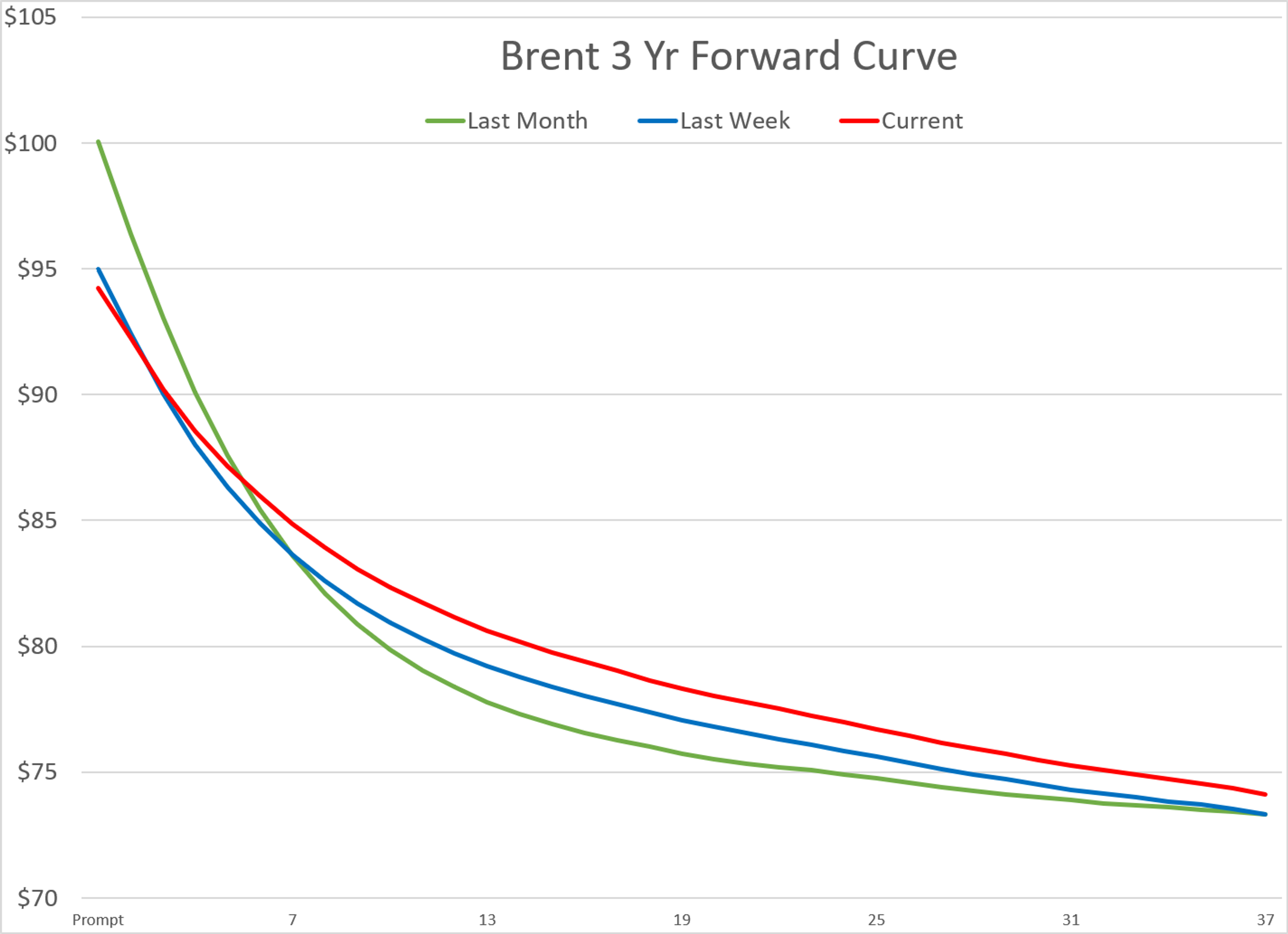
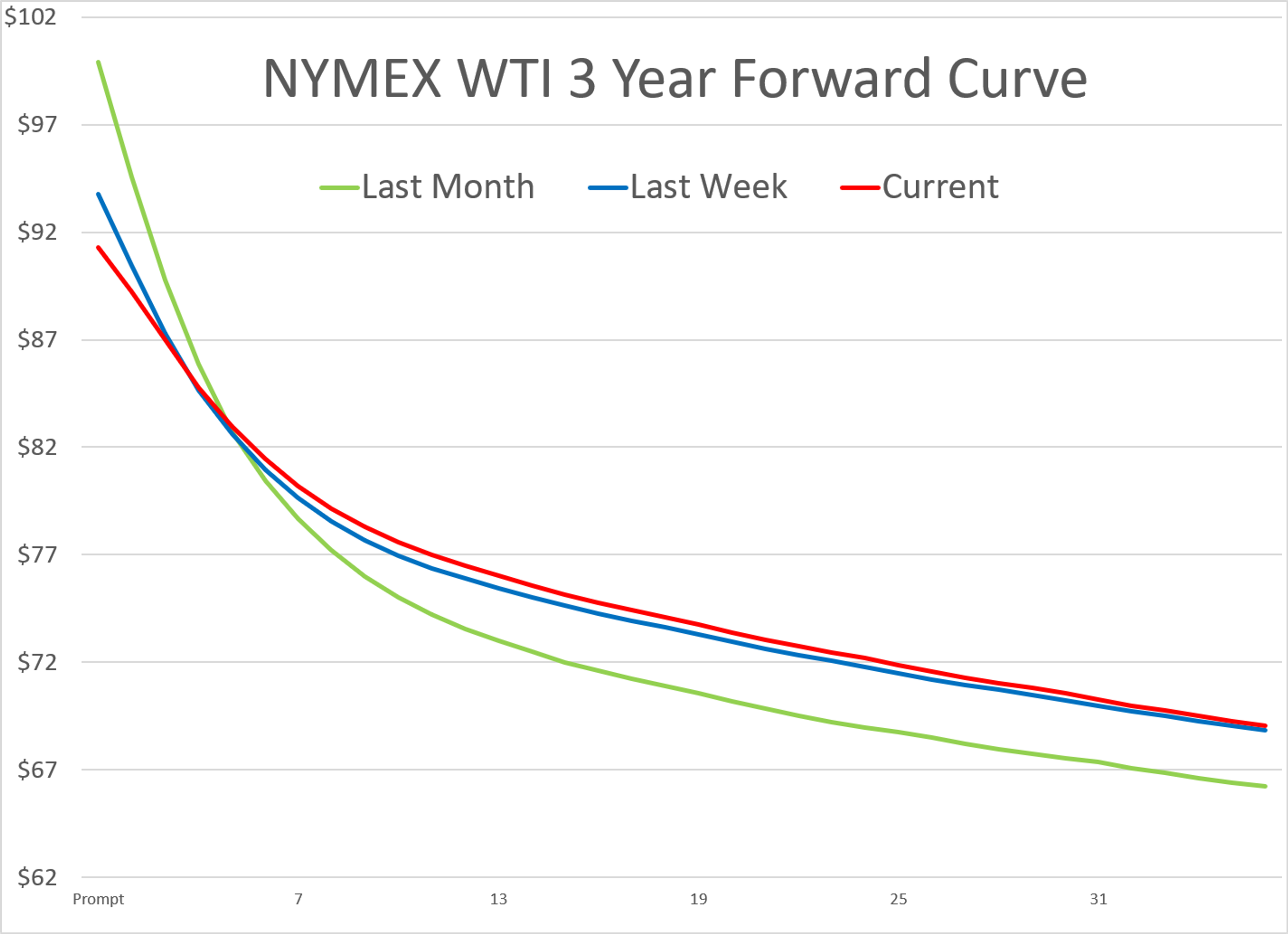
The forward curve charts below show a meaningful transition in prices over the past month, with the front of the curve easing as inventory drawdowns have helped reduce the worst of the supply shortages, while rising prices from 6 months forward and beyond are a recognition that the fallout from the war is going to last much longer than many were hoping just a month ago.
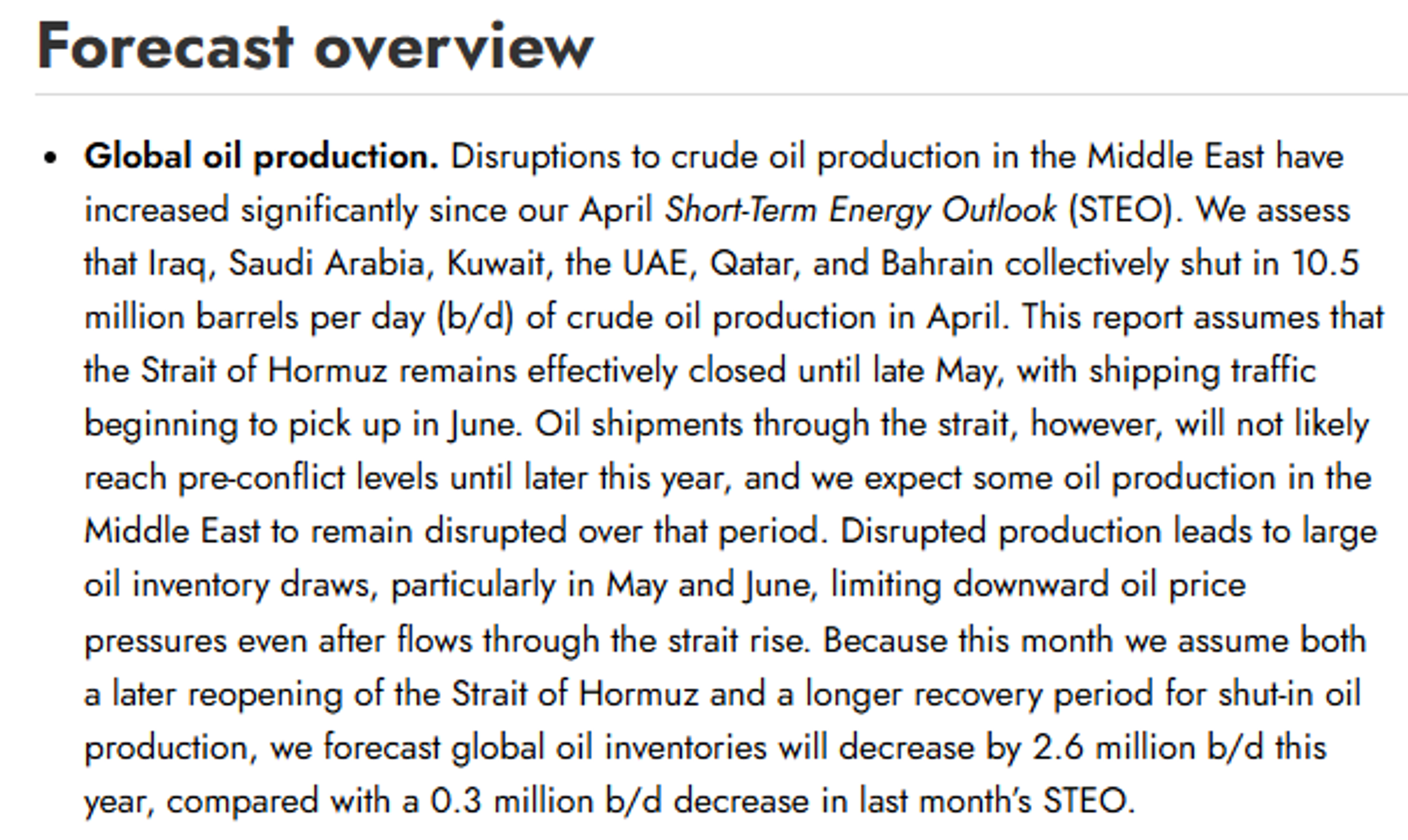
Speaking of which: later this morning the EIA will publish their monthly Short Term Energy Outlook, and since their last monthly report assumed shipping traffic would begin picking up in June – which hasn’t happened – it’s likely the forecast will have to once again reduce predicted inventory levels and increase prices.
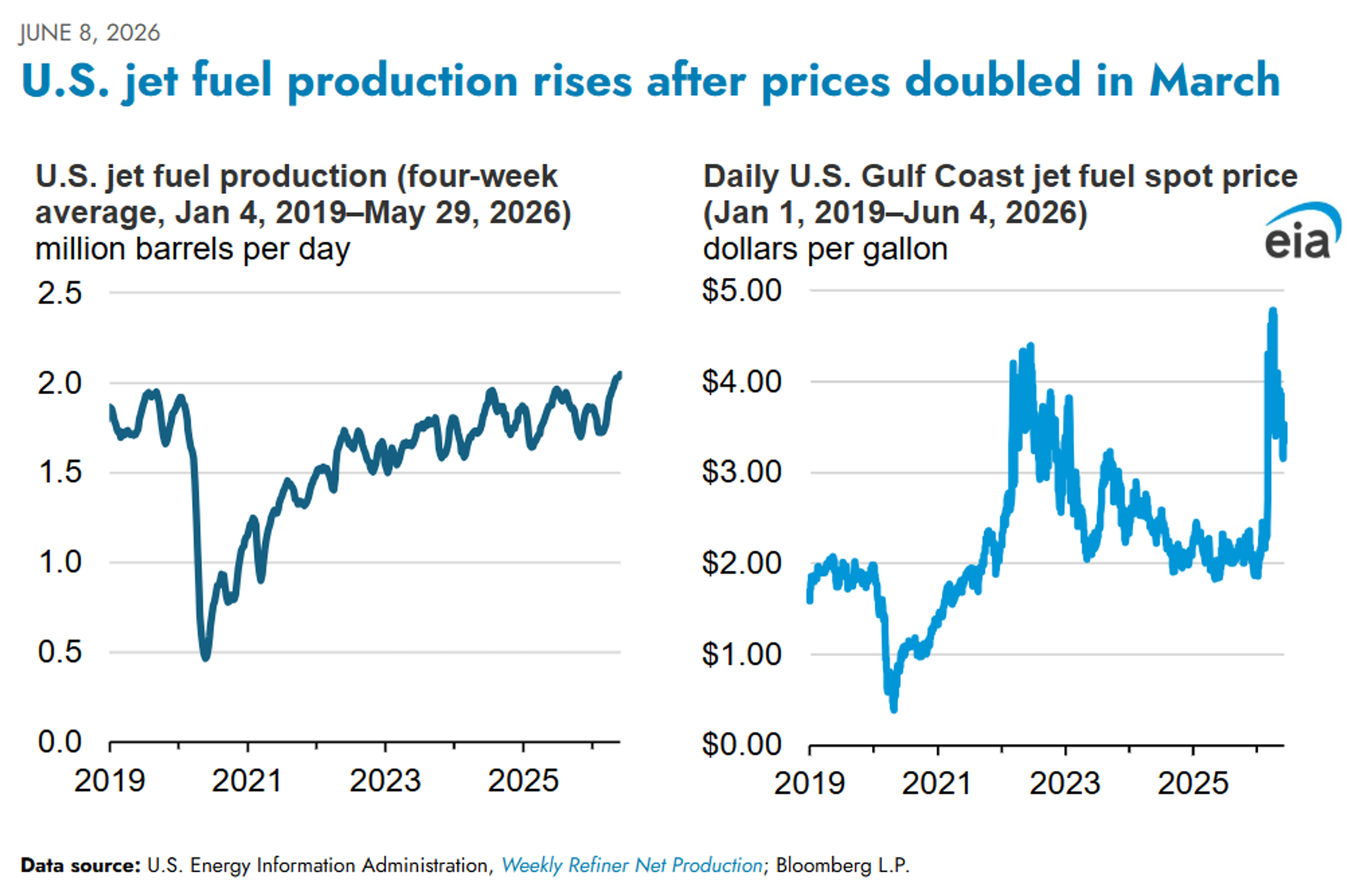
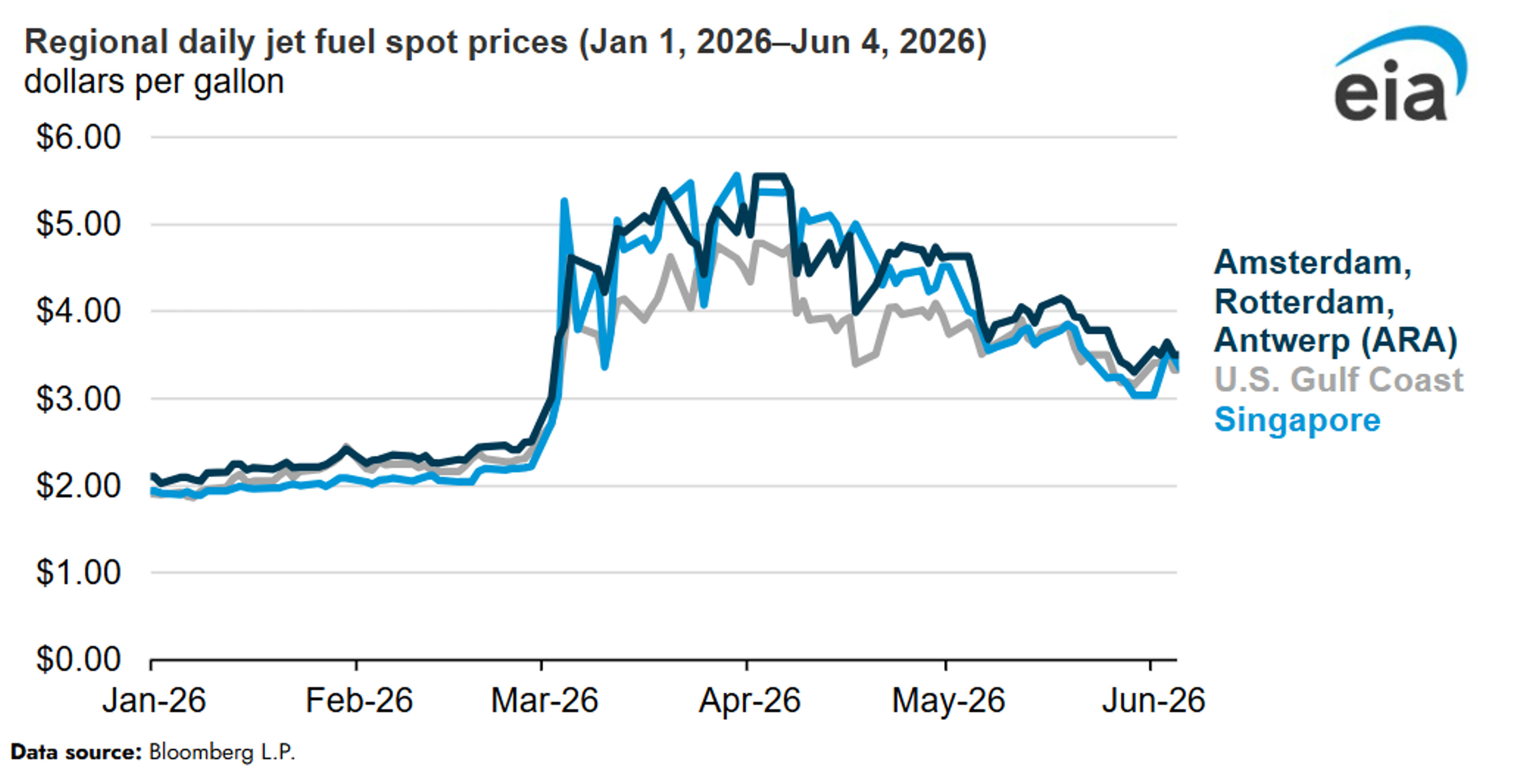
The EIA Monday highlighted what was noted in last week’s status report, that U.S. refiners have cranked up Jet Fuel production to record high levels since the war broke out, which is a big part of why U.S. inventories remain above average while much of the world is scrambling for supply.
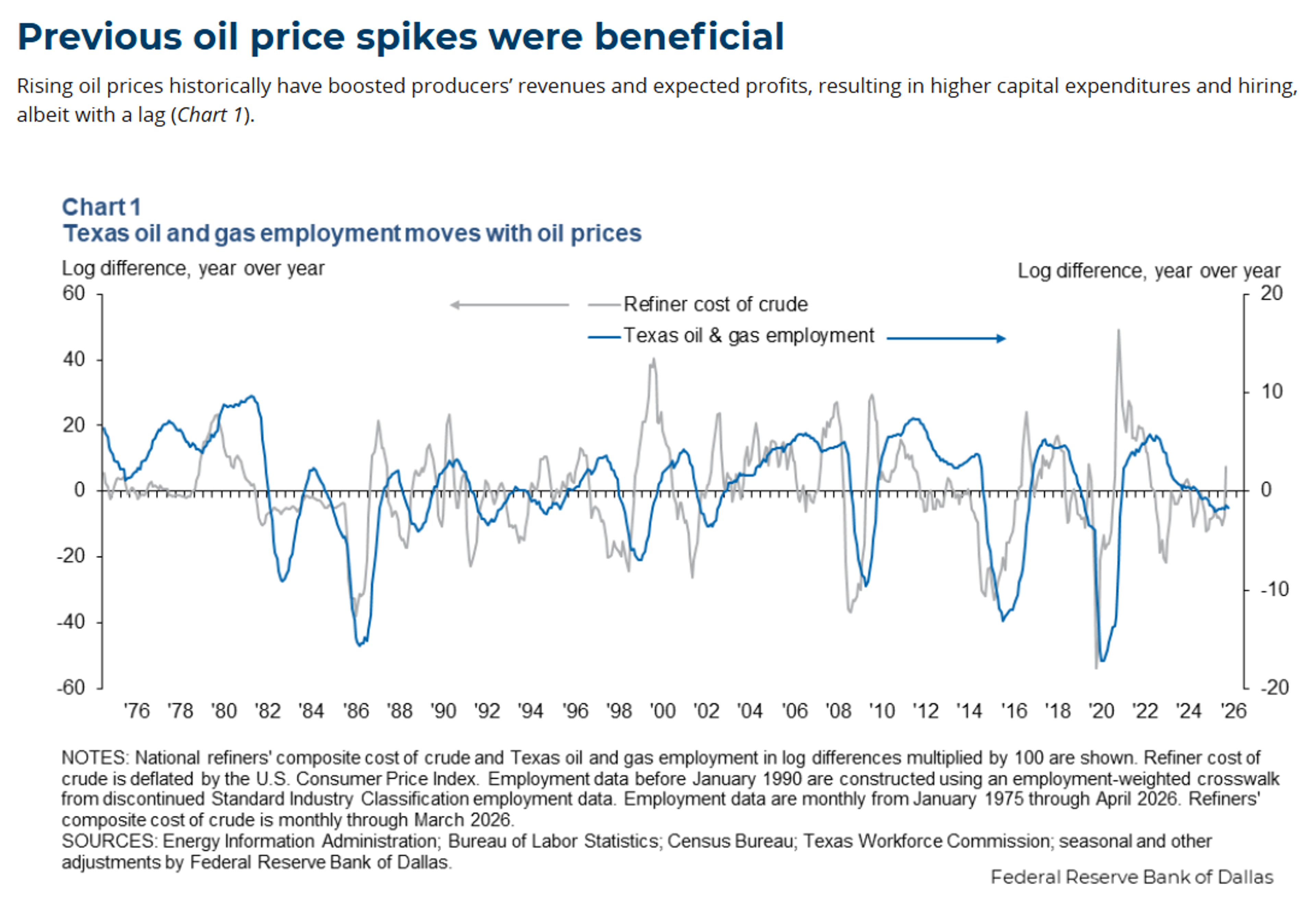
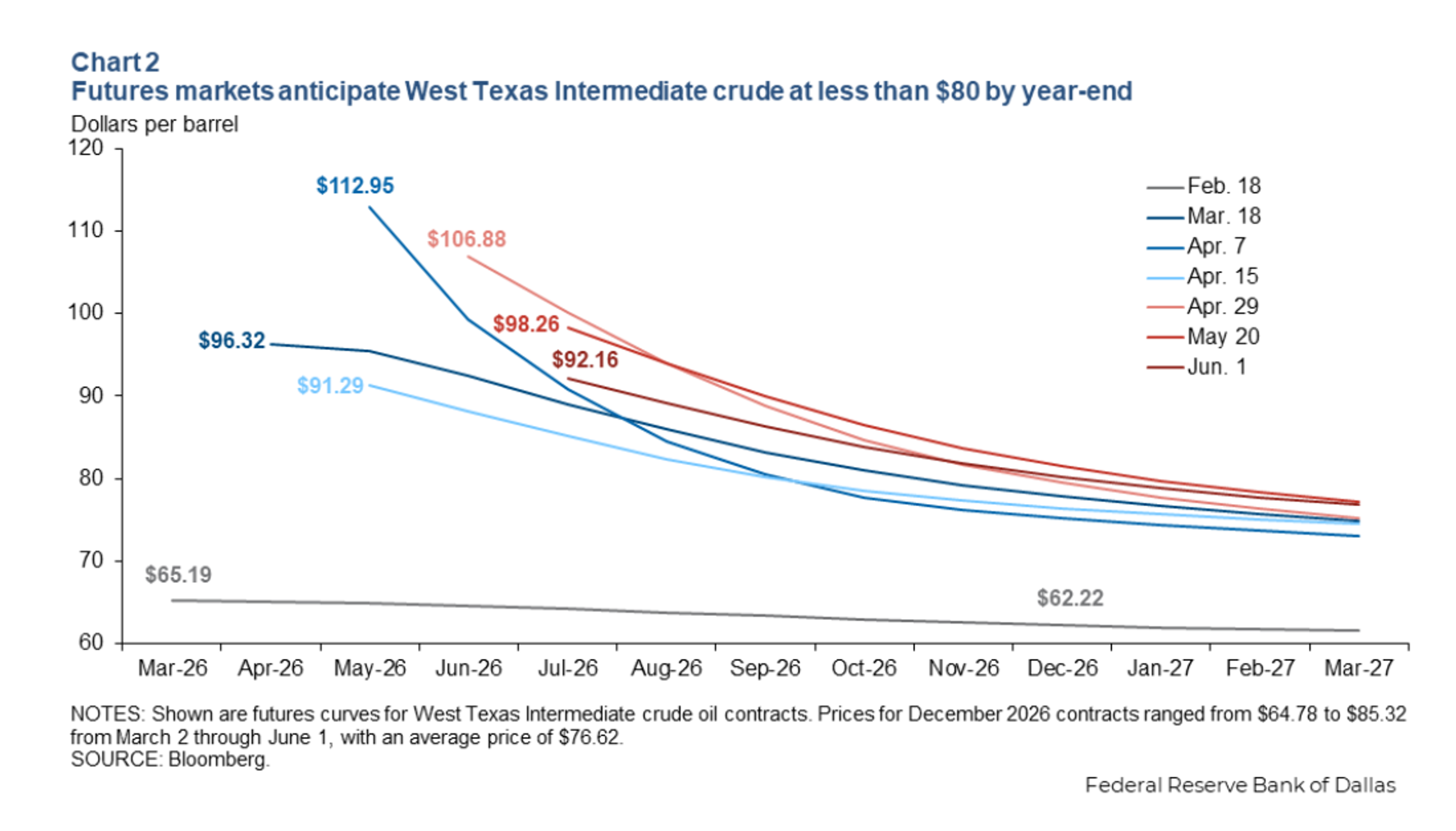
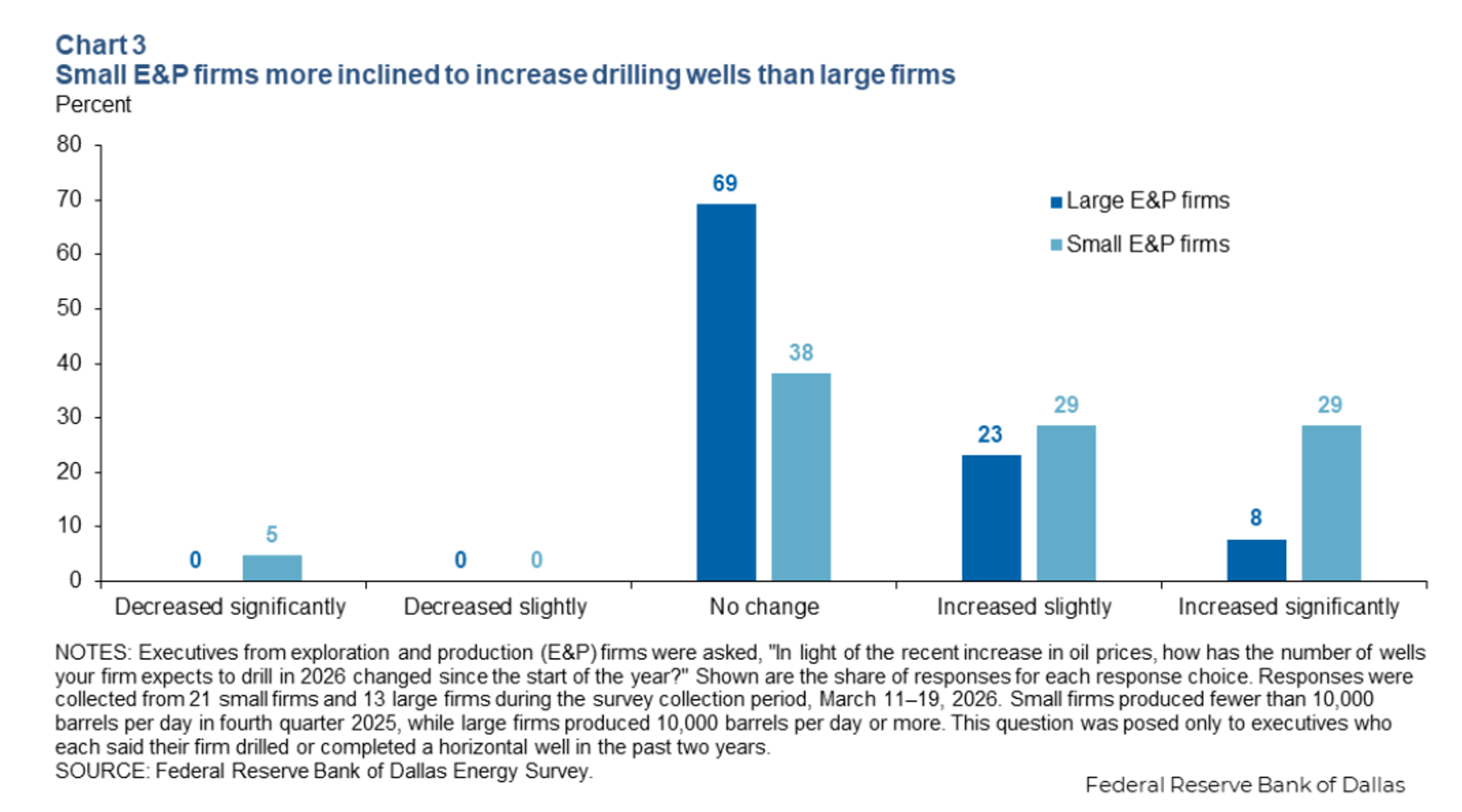
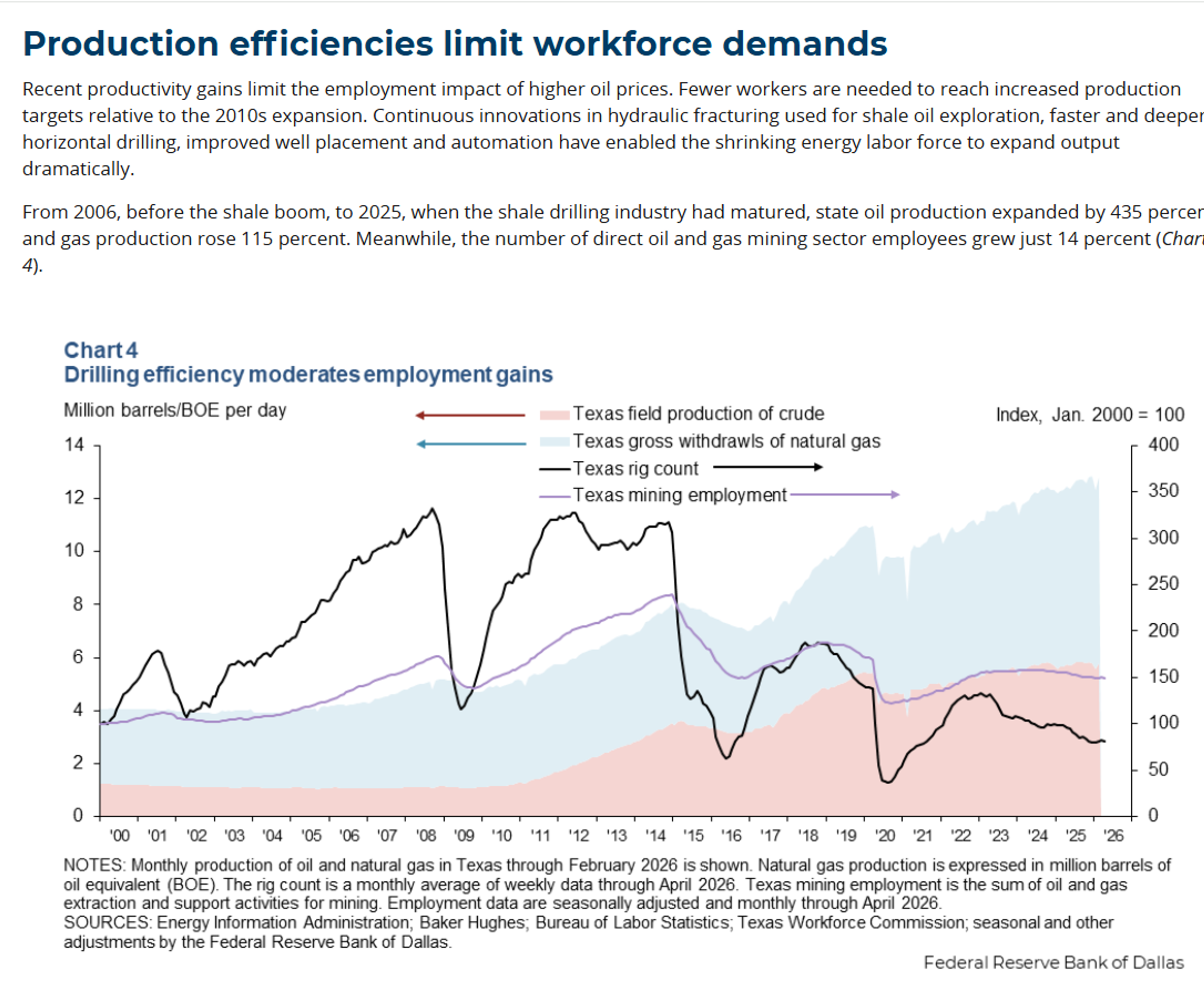
A report from the Dallas FED Friday looked at how oil price booms have contributed to strong employment growth in Texas. The report goes into detail on why things look different this time due to efficiencies in the drilling industry, challenges finding a home for excess natural gas and more financial discipline from larger players.
Latest Posts
Global Supply Risks And Strong Refining Margins Drive Energy Market Rally
Week 42 - US DOE Inventory Recap
Diesel Prices Swing Wildly Amid Tanker Attacks And Supply Concerns
Diesel's Breakout Signals Renewed Pressure Across Energy Markets
Oil Opens Soft Despite Escalating Supply Threats
Bullish Diesel Fundamentals Overshadow Weakness In Gasoline Markets
Social Media
News & Views
View All
Global Supply Risks And Strong Refining Margins Drive Energy Market Rally
Week 42 - US DOE Inventory Recap